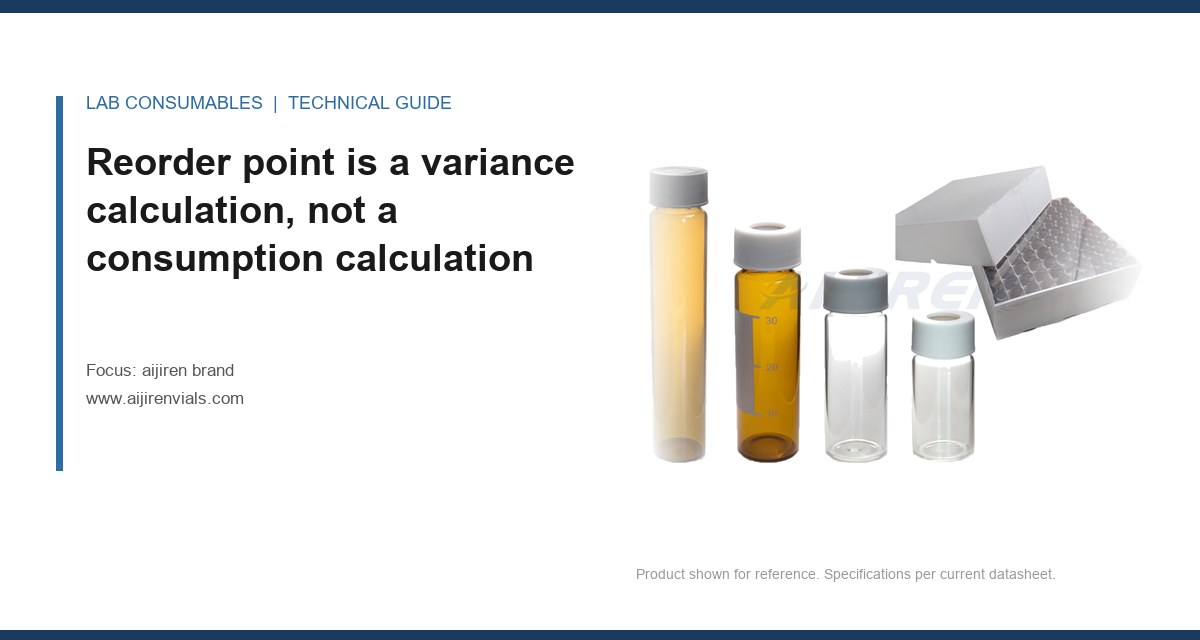
A 40-vial HPLC sequence on a 250 x 4.6 mm C18 column lost retention time on injection 27 by 0.08 min and split the early peak into a doublet. The mobile phase was 0.1% formic acid in water/acetonitrile, the tray was held at 8 °C, and the septa were a generic silicone/PTFE laminate. The failure was not the column and not the method. It was the wrong polymer for the solvent and the temperature, and it took a solvent blank plus a headspace GC scan to prove it. Deciding which aijiren brand material to use for a given solvent and temperature is the single most consequential call on a consumable spec sheet, and it is the one most buyers make last.
This guide is about that call. It covers PTFE, silicone, EPDM and the laminate constructions built from them, what each one does against the solvents you actually run, what pH and temperature windows they hold, and the specific failure each wrong choice produces. It does not cover dimensions, fit or price; those are answered elsewhere on aijiren brand pages. What follows is the chemistry-to-polymer decision rule.
Every polymer choice resolves to one question first: what does the sample and mobile phase do to the material at the temperature the tray or oven is set to. A septum is not a passive lid. It is a membrane in contact with vapor, and it has a partition coefficient, a swelling response and a thermal limit. Get the solvent class wrong and the polymer does not fail loudly. It fails by contributing peaks.
I sort the four families I specify into three solvent behaviour groups before I look at anything else:
- PTFE (polytetrafluoroethylene) and its skived or laminated forms: chemically inert against almost everything on a lab bench. No swelling in acetonitrile, methanol, dichloromethane, THF or DMSO. The trade-off is mechanical, not chemical.
- Silicone (usually a platinum-cured silicone): excellent reseal and puncture memory, but it is a permeable elastomer. It absorbs nonpolar solvents and lets small molecules through.
- EPDM (ethylene propylene diene monomer): strong against aqueous, polar and acidic mobile phases and against steam. Poor against nonpolar hydrocarbons and aromatic solvents, where it swells.
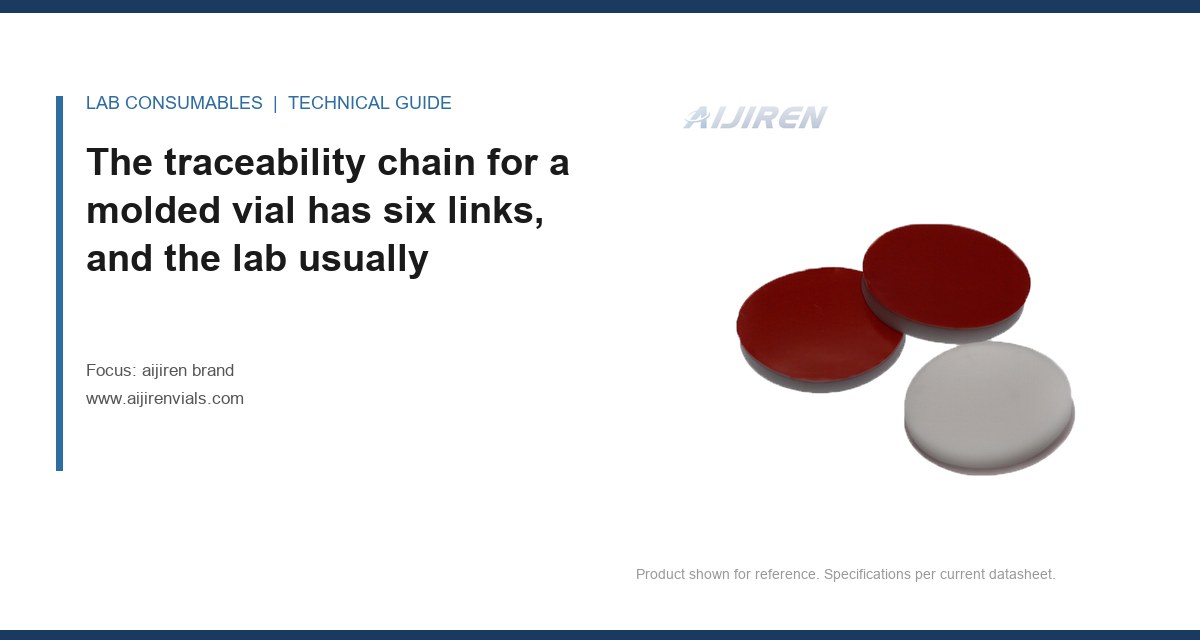
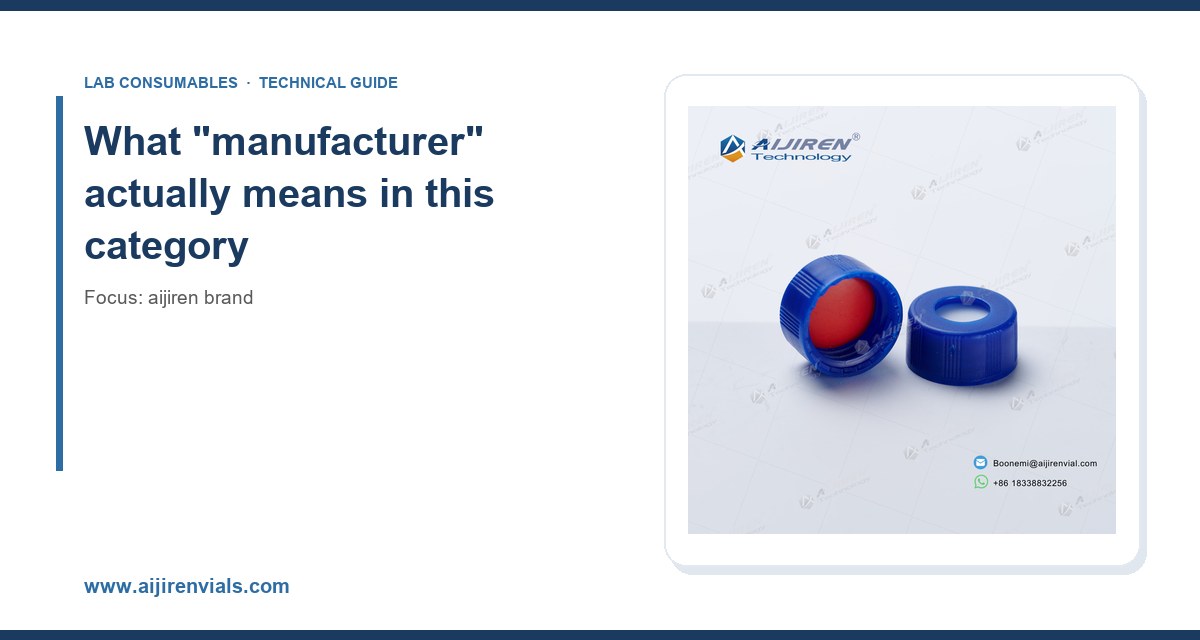
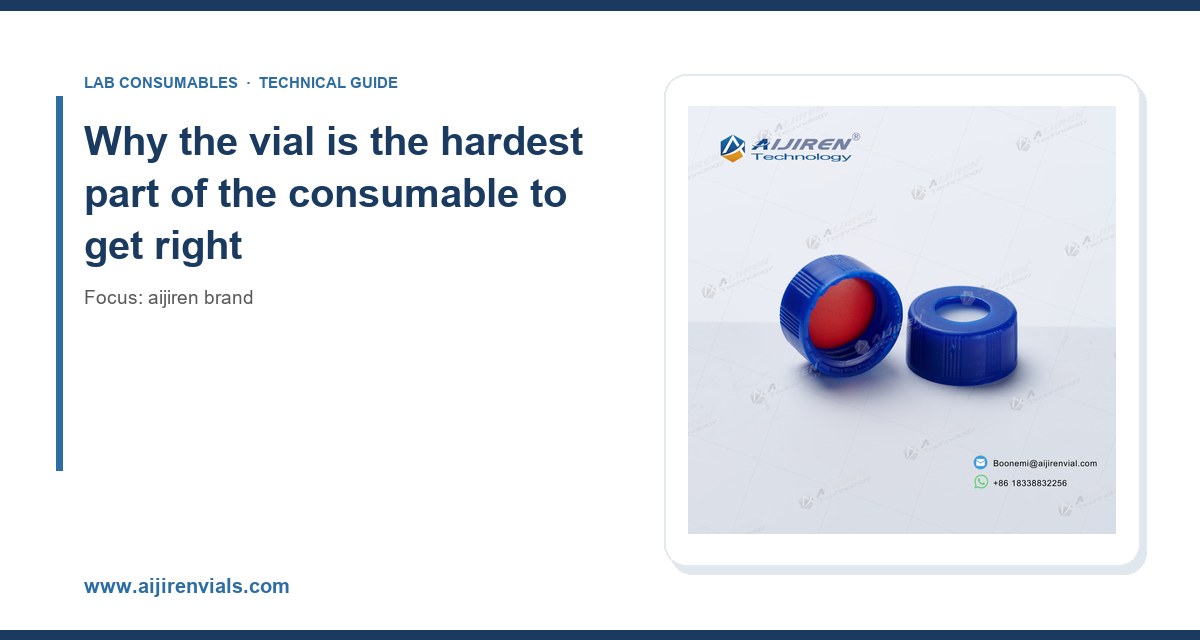
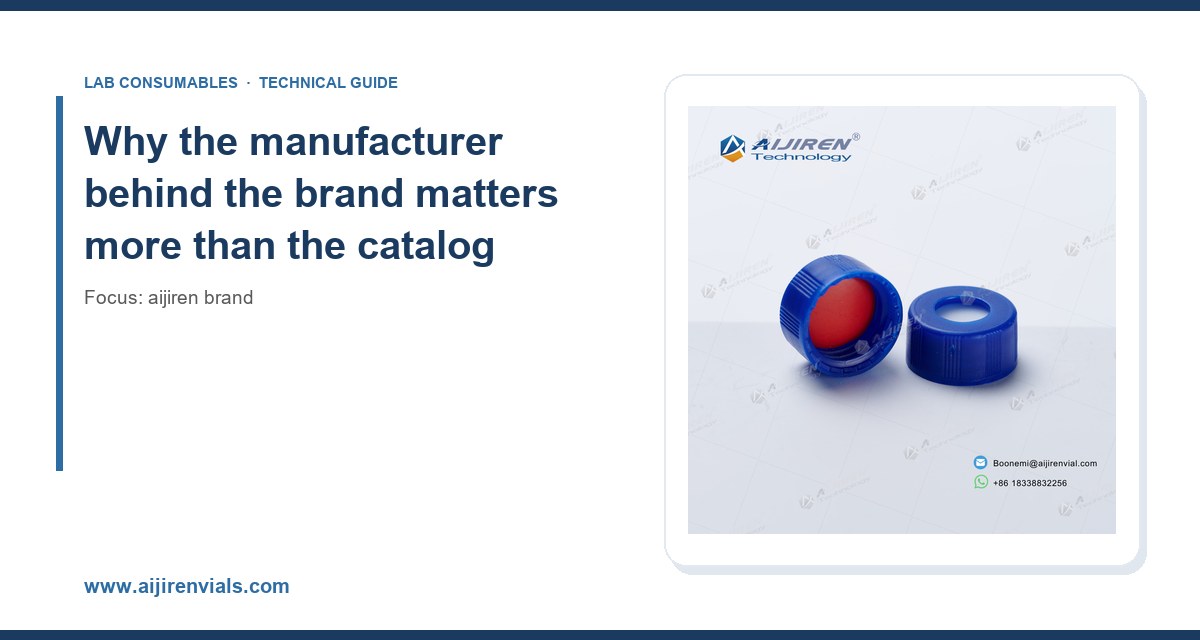
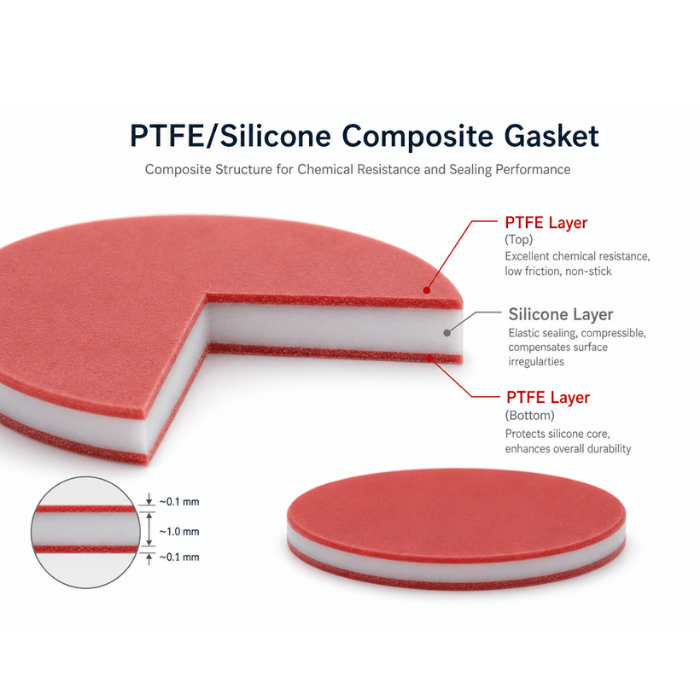
- Laminate (PTFE film bonded to silicone, or PTFE-faced silicone): the compromise most HPLC work actually needs, combining the chemical face of PTFE with the elastic reseal of silicone.
The mistake I see most is treating "PTFE-lined" as a universal answer. The lining protects the sample from the silicone, but it does not protect the silicone from the vapor that migrates around the edge, and it does nothing about the puncture channel if the needle geometry is wrong. That mechanical side is covered in vial septa selection material; here I stay on chemistry and temperature.
What each polymer does against the solvents you actually run
PTFE: inert everywhere, elastic nowhere
PTFE is the reference material for chemical resistance. It holds against concentrated acids (including HF), bases, ketones, esters, chlorinated solvents and DMSO with no measurable swelling. Its continuous service temperature runs to about 260 °C and it tolerates short excursions higher. On paper it is the answer to every solvent question.
In practice, pure PTFE septa are stiff. They do not reseal well after a needle withdraws, and a 22-gauge needle leaves a channel that stays open. That is fine for a single injection into a crimped headspace vial that is discarded, and it is a leak for a 96-position autosampler tray where the same septum takes multiple punctures. The failure PTFE produces is not chemical, it is a slow loss of headspace pressure and a drifting internal standard over a long run. If I specify pure PTFE it is for a single-use, high-temperature, aggressive-solvent case where reseal does not matter.
Silicone: the reseal champion that leaks nonpolar solvents
Platinum-cured silicone has the best puncture memory of the group. A good 1 mm silicone septum takes 50 to 100 punctures at 22 gauge before the reseal degrades, and it stays elastic from about −60 °C to 200 °C. For a chilled autosampler tray at 4 to 10 °C, silicone is the only one of the four that stays soft and seals.
The problem is permeability and absorption. Silicone absorbs nonpolar solvents (toluene, hexane, dichloromethane) and swells, and it lets small, volatile molecules through by permeation. Run a hexane extractable or a residual-solvent method with a plain silicone septum and you will find siloxane peaks in the chromatogram at m/z 73, 147, 207, 281 on GC-MS. That is the tell. The septum is bleeding, not the column. For a method that runs nonpolar analytes at trace level, plain silicone is the wrong polymer regardless of how well it reseals.
EPDM: right for aqueous and acidic, wrong for aromatics
EPDM is a saturated hydrocarbon rubber with no double bonds in the backbone, which is why it resists oxidation, steam and aqueous chemistry so well. It holds a pH range from roughly 1 to 12 and continuous temperatures to about 120 to 150 °C depending on grade. Against water, dilute acids, dilute bases and polar mobile phases it is stable and low-bleed.
Against nonpolar and aromatic solvents it swells badly. Toluene, xylene, hexane and dichloromethane will take up into EPDM and distort the septum, and a swollen septum in a crimp cap loses its seal. The failure mode is a visible bulge and a cap that will not hold pressure. If your method is reversed-phase with a high aqueous fraction and a low organic load, EPDM is a good, economical choice. If the same tray also runs a dichloromethane extraction, EPDM is the wrong polymer for half the plate.
Laminate: the default for mixed-solvent HPLC, with a caveat
A PTFE-faced silicone laminate is what most HPLC methods should specify. The PTFE face gives chemical resistance against the mobile phase; the silicone body gives the reseal. A well-made laminate holds 50 to 80 punctures at 22 gauge and works from about −40 °C to 200 °C. This is the construction I reach for when the method mixes acetonitrile, water, methanol and a buffer, which is most of them.
The caveat is bond integrity. A cheap laminate delaminates at the edge after repeated puncture or after a temperature cycle, and the silicone core is then exposed to the solvent it was supposed to be shielded from. The symptom is a sudden bleed of siloxanes partway through a run, not at the start. When I qualify a laminate lot, I check the bond line after 50 punctures, not just the first.
Temperature windows and where each one actually fails
Temperature changes the answer because it changes both the polymer's mechanical state and the vapor pressure of the solvent behind it. The table below is the working reference I keep for specification decisions. These are conservative service windows, not the absolute limits a datasheet may quote.
| Polymer | Continuous temp window | pH range | Strong against | Fails against | Puncture count (22 G) |
|---|---|---|---|---|---|
| PTFE (pure) | −200 to 260 °C | 0 to 14 | All solvents, acids, bases | Reseal; repeated puncture | Low (5 to 15) |
| Silicone (Pt-cured) | −60 to 200 °C | 3 to 10 | Reseal, cold trays, aqueous | Nonpolar solvents, permeation | 50 to 100 |
| EPDM | −40 to 150 °C | 1 to 12 | Aqueous, acids, steam | Aromatics, chlorinated, hexane | 40 to 70 |
| PTFE/silicone laminate | −40 to 200 °C | 0 to 14 (face) | Mixed mobile phases, reseal | Delamination at edges | 50 to 80 |
Read the temperature column against your actual setpoint, not the room. A tray held at 8 °C is well inside silicone and laminate territory and marginal for a stiff pure PTFE. A GC inlet at 250 °C is PTFE or laminate only; silicone will degrade and bleed. A headspace oven cycling to 150 °C is EPDM or laminate if the matrix is aqueous, and laminate if it carries any aromatic solvent.
The failure each wrong choice produces, and how to read it
This is where the guide earns its keep. Each polymer has a signature failure, and the signature tells you which choice was wrong before you tear down the instrument.
- Silicone against nonpolar solvent: siloxane peaks on GC-MS at m/z 73, 147, 207 and 281; on HPLC, a rising baseline and ghost peaks that appear only after the tray has sat. The septum is bleeding and absorbing.
- EPDM against aromatics: a visibly swollen or distorted septum, a cap that will not torque to spec, and a headspace pressure loss. On a crimp cap you will see the seal ring deformed.
- Pure PTFE under repeated puncture: a slow internal-standard drift on a long sequence as the puncture channel stays open. The first 20 injections are fine; injection 60 is not.
- Laminate with a bad bond: a sudden siloxane bleed partway through a run, not at the start, often after a temperature cycle. The edge has delaminated.
I have watched a team chase a "column problem" for two days on a siloxane bleed that was a plain silicone septum against a hexane extraction. The fix was a laminate, and the run came back clean on the next plate. That is the cost of the wrong polymer: it presents as an instrument fault and eats instrument time.
Two field cases that pinned the choice to the data
Case one: the chilled tray that grew a doublet
The opening scene. A reversed-phase method at 8 °C, 0.1% formic acid, water/acetonitrile gradient, generic silicone/PTFE laminate of unknown bond quality. By injection 27 the early peak split and retention drifted 0.08 min. A solvent blank injected from a fresh vial with a known-good laminate was clean. A headspace scan of the original septa showed siloxane and a solvent uptake signature. The laminate had delaminated at the puncture edge after repeated needle entry at low temperature, exposing the silicone core to the acetonitrile. The fix: switch to a qualified PTFE/silicone laminate with a verified bond line, and cap the tray at 50 punctures per septum. Retention came back within 0.01 min across a 60-injection sequence.
Case two: the EPDM that swelled on a dual-method plate
A contract lab ran an aqueous acids method and a dichloromethane extraction on the same autosampler plate, and specified EPDM because it was right for the aqueous half. The DCM wells swelled the septa within 30 minutes; caps lifted and the internal standard for those wells fell 12% short. The measurement that identified it was a simple septum thickness check before and after: EPDM had grown measurably in the DCM wells and not in the aqueous wells. The fix was to split the plate by method and use laminate for the DCM wells. The lesson is that a mixed plate needs the polymer that survives the worst solvent on it, not the average.
Both cases are documented against the same principle you will find in method validation guidance: the container and its closure are part of the validated system, and USP chapter 621 treats the whole assembly as the sample path. The polymer is not an accessory to the method; it is inside it.
A decision checklist you can run before the next lot
Work top to bottom. The first line that matches your method is your polymer.
- Any nonpolar or aromatic solvent (toluene, hexane, DCM, xylene) at any temperature: PTFE or PTFE/silicone laminate. Never plain silicone, never EPDM.
- Aqueous, acidic or basic mobile phase, no aromatic solvent, tray below 40 °C: EPDM is acceptable and economical; laminate if the plate is mixed.
- Mixed organic/aqueous gradient (the common HPLC case): PTFE/silicone laminate with a verified bond line. This is the default.
- Single injection, aggressive solvent, high temperature (GC inlet, headspace to 200 °C+): pure PTFE.
- Cold tray (4 to 10 °C) with any organic load: laminate; confirm the silicone body stays elastic at setpoint.
- More than 50 punctures per position: laminate or silicone, and plan a septum change mid-sequence; do not run pure PTFE past 15.
Two operational precautions ride alongside the checklist. First, match the needle gauge to the septum: a 22-gauge needle in a 1 mm septum is the design case; a larger bore widens the channel and shortens reseal life. Second, control the torque on screw caps to a consistent value (I use 0.5 to 1.0 N·m on a 9 mm screw thread, checked with a torque driver), because over-torque compresses the septum and accelerates the very failure you are trying to avoid. Crimp caps are set by the crimper, not by hand, and the seal ring should be flat, not cut.
If you are cross-checking against instrument vendor guidance, the sample-handling notes from Agilent and Thermo Fisher both assume a closure that matches the solvent; neither will save a method from the wrong polymer. The environmental method side is governed by U.S. EPA SW-846, and the technical notes at Restek are a useful cross-reference for bleed signatures. For the container assembly itself, the VOA vial and septa references cover the fit side that this article deliberately leaves out.
The decision rule to carry into the next spec
Match the polymer to the worst solvent on the plate at the actual setpoint temperature, and let the reseal requirement pick the construction within that polymer class. In practice: nonpolar or aromatic solvent means PTFE or laminate, never silicone or EPDM; aqueous or acidic with no aromatic load means EPDM is fine and laminate is safer; a mixed gradient means laminate with a verified bond line; a single hot aggressive injection means pure PTFE. Then hold the puncture count and the cap torque to numbers, because the right polymer specified without a puncture limit and a torque value still fails, just more slowly.
References & further reading
Related resources from our lab consumables network:
- Aijiren Brand at aijirenvials.com
- Voa Vial at voavial.com
- Septa at septacaps.com
- Vial Septa at vialsepta.com
External references and standards: