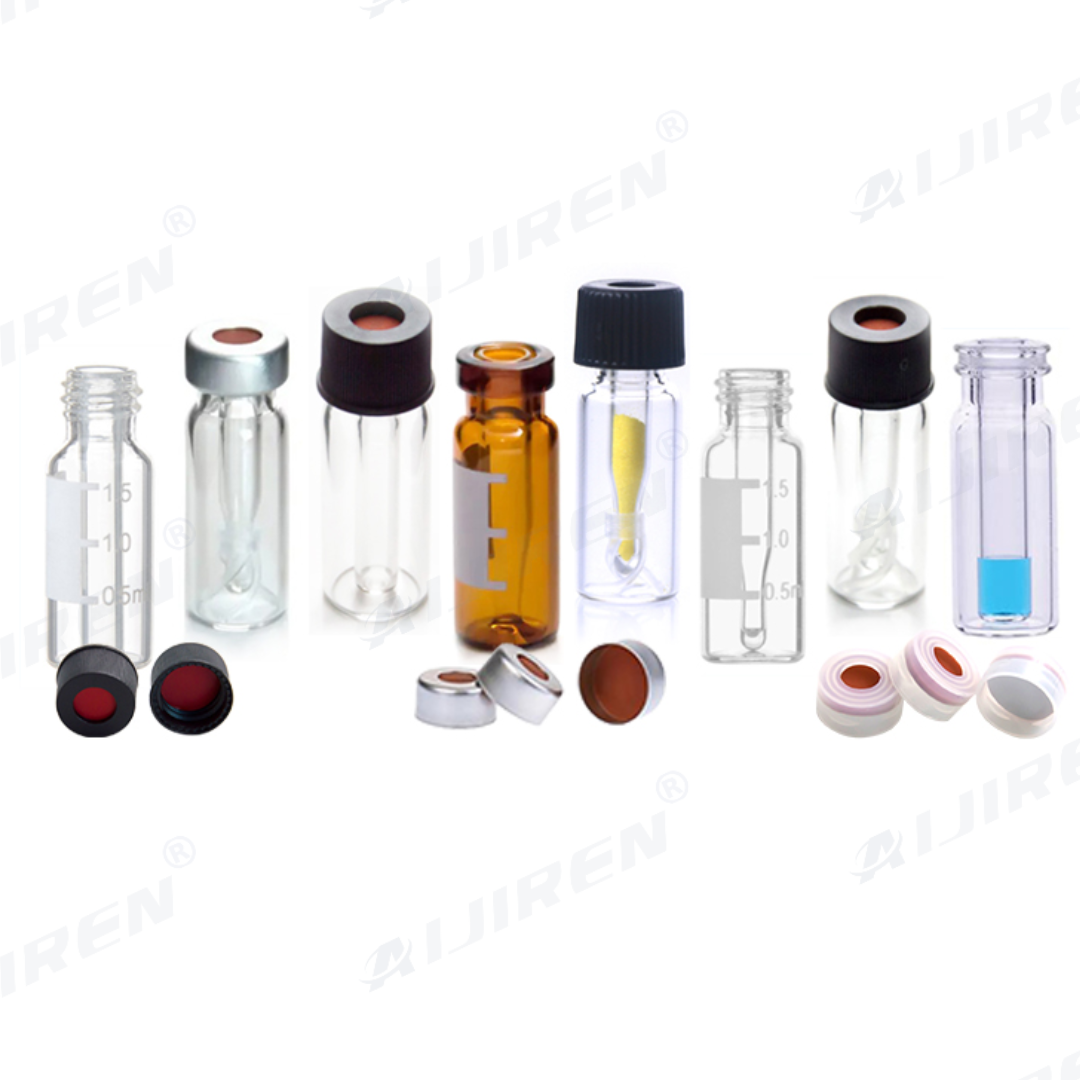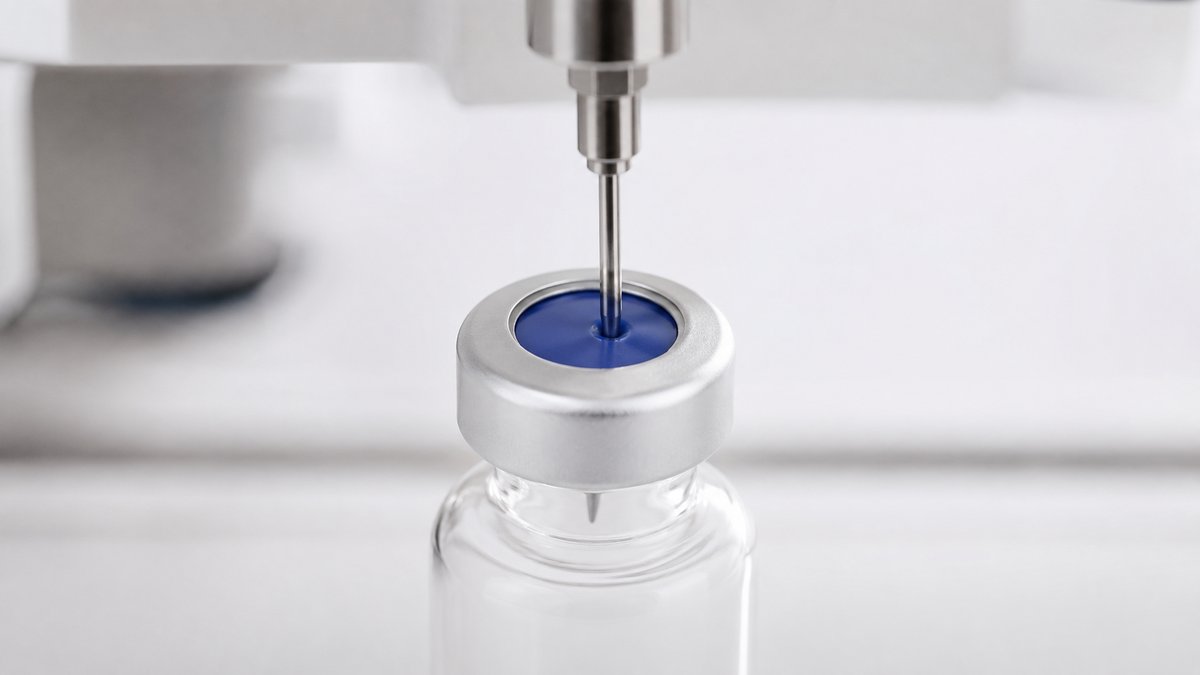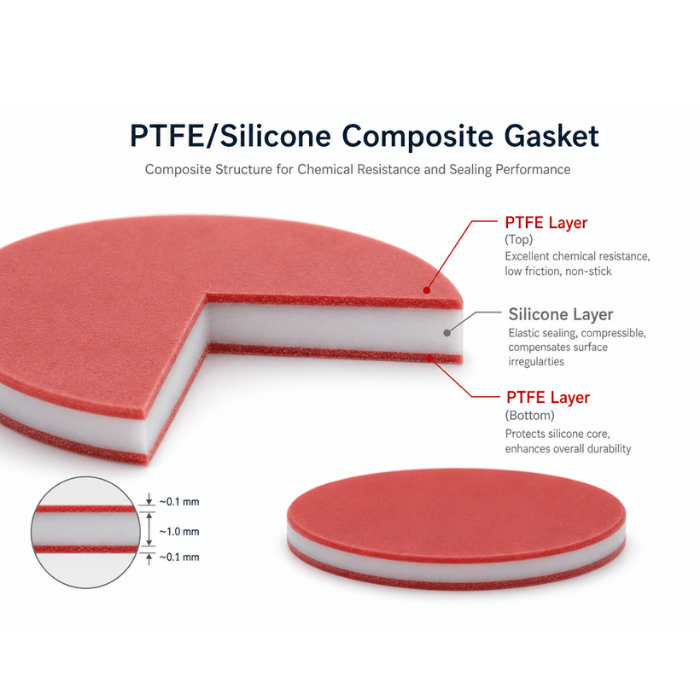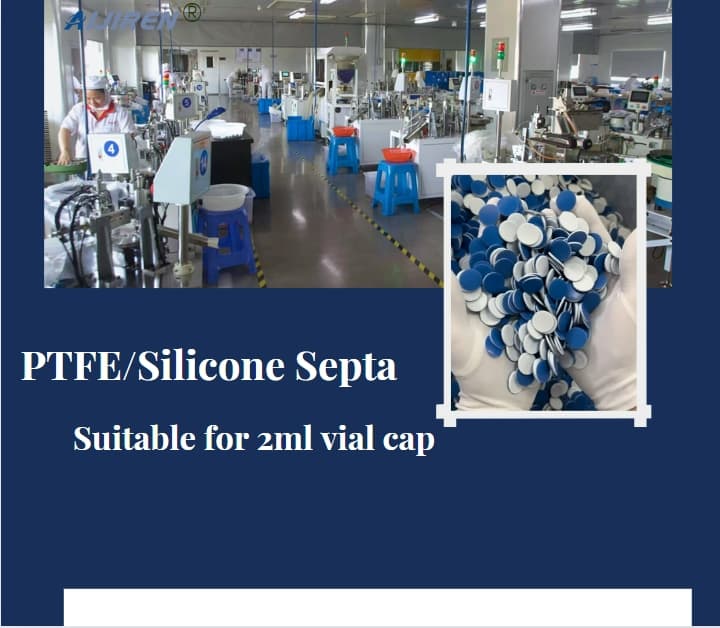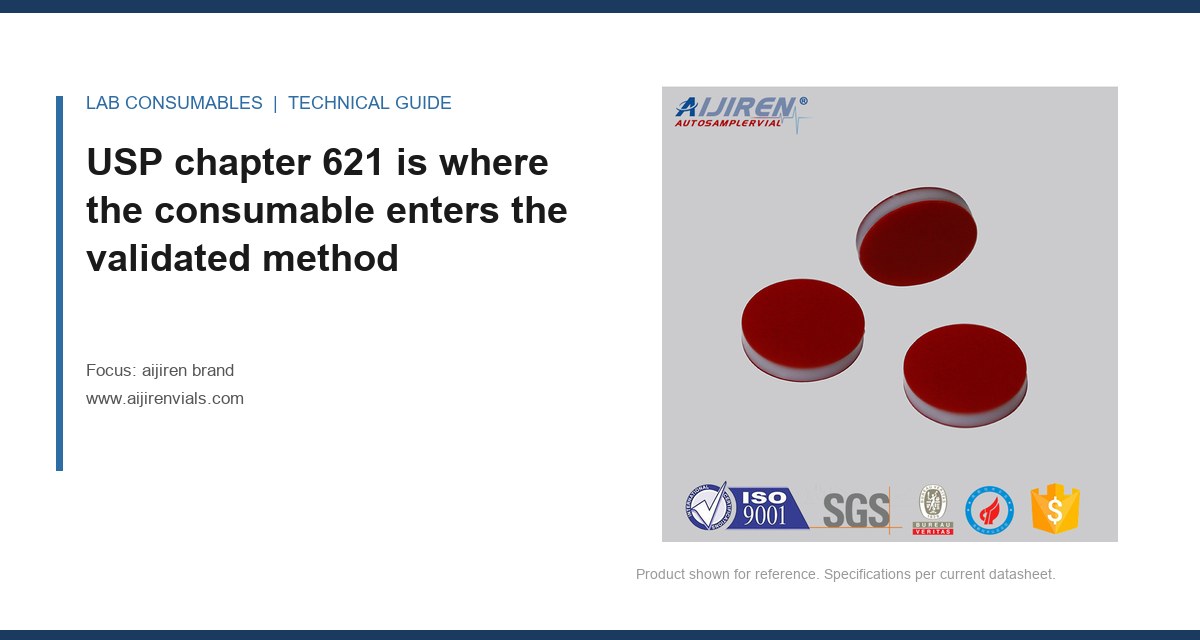
A 9 mm screw-thread vial order that normally lands in 21 days sat at 47 days last March, and the lab running EPA 8260 volatiles ran out on a Tuesday with 340 samples queued. The root cause was not the factory. It was a 5,000-piece minimum order quantity on a crimp cap color the buyer had added to the PO as a favor for a method development group. That one line item pushed the whole shipment into a consolidated production slot. This is what happens when aijiren brand MOQ lead time and reorder point planning gets treated as a purchasing formality instead of a stock-control problem.
I have run this calculation on both sides of the desk, as a distributor and as the guy who gets the angry phone call when the autosampler tray runs dry. The math is not hard. What is hard is getting procurement to accept that the reorder point for a 2 mL clear crimp vial is a different number than the reorder point for a pre-assembled cap, even when both come off the same aijiren line, because the lead-time variance is different. This article is about how to set those numbers and what the MOQ does to the cost of holding them.
Most spreadsheets I see set the reorder point as average monthly usage times lead time in months, plus a fudge factor someone calls safety stock. That gets you a number, and the number is usually wrong, because it treats lead time as a constant. It is not. On aijiren brand SKUs the lead time is a distribution, and the width of that distribution is what sets your safety stock.
The working formula is straightforward:
ROP = (d × L) + Z × √(L × σd² + d² × σL²)
Where d is average daily demand, L is average lead time in days, σd is the standard deviation of daily demand, σL is the standard deviation of lead time, and Z is the service-level multiplier (1.65 for 95%, 2.33 for 99%). The second term is the safety stock. If your lead time is genuinely stable, σL goes to zero and the formula collapses to the textbook version. In practice σL on imported consumables runs between 4 and 11 days depending on whether the SKU is a stock item or a make-to-order item. That term dominates.
Here is the part buyers miss. The two variance terms are not interchangeable. A SKU with high demand variance and stable lead time wants a different buffer than a SKU with flat demand and erratic lead time. The first wants a demand buffer. The second wants a time buffer, and a time buffer means you need to know when to place the order, not just how much to hold.
Worked example on a 9 mm clear crimp vial
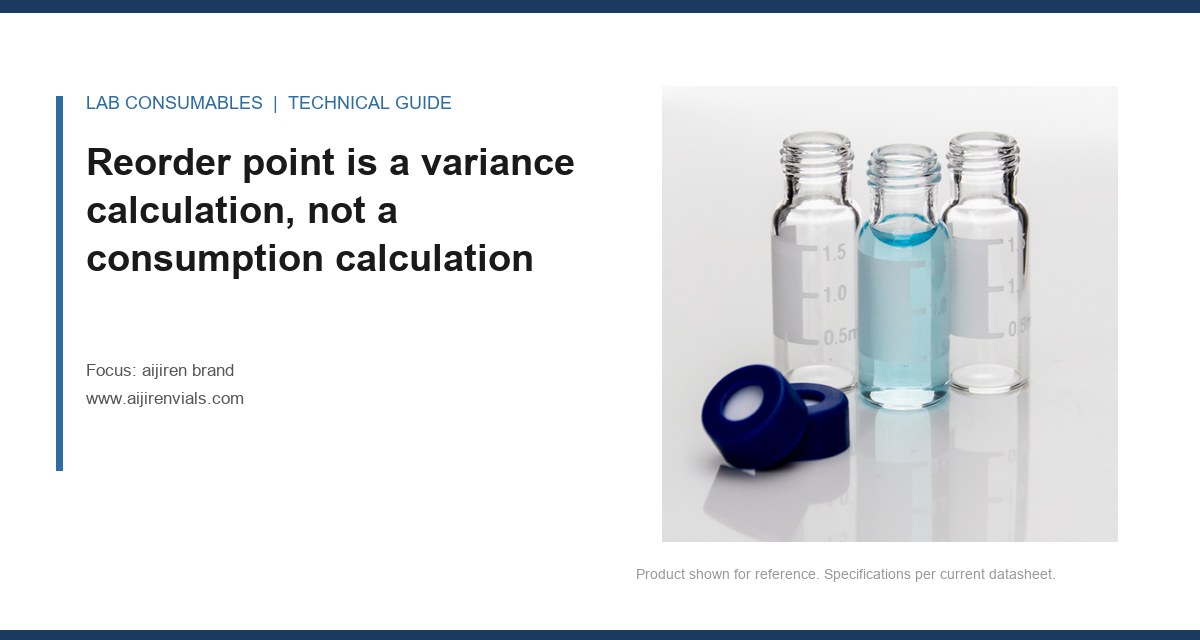
Take a mid-size environmental lab running 12,000 vials a month on a 2 mL clear glass crimp vial, 11 mm crimp finish, with pre-assembled caps. Daily demand is roughly 545 pieces on a 22-working-day month. Demand standard deviation runs 90 pieces because the sample backlog spikes after long weekends. Lead time on the stock SKU averages 18 days with a standard deviation of 5 days.
At 95% service level:
- Average demand over lead time: 545 × 18 = 9,810 pieces
- Safety stock: 1.65 × √(18 × 90² + 545² × 5²) = 1.65 × √(145,800 + 7,425,625) = 1.65 × 2,750 ≈ 4,538 pieces
- Reorder point: 14,348 pieces
That is 26 days of cover at average demand, not 18. The eight extra days are the lead-time buffer. If that lab rounds the reorder point to a convenient 12,000 pieces (one month of usage), it will stock out roughly once a quarter. I have watched this exact calculation get argued down by a procurement manager who wanted a round number, and I have watched the lab go short eleven weeks later.
What the aijiren MOQ does to carrying cost
Minimum order quantities on aijiren brand consumables are not uniform across the catalog. They vary by SKU family, by packaging configuration, and by whether the item is a stock line or a made-to-order line. A standard 2 mL clear crimp vial in a 100-piece tray, 10 trays per case, typically carries an MOQ of one case. A custom septa durometer, a colored cap, or a non-standard closure can carry an MOQ of 5,000 to 20,000 pieces. That is the number that wrecks the reorder point math.
Carrying cost is where the MOQ bites. The standard carrying cost rate I use is 22% to 28% of unit cost per year, covering capital, storage, insurance, obsolescence, and handling. If a 5,000-piece MOQ forces you to buy 5,000 when your economic order quantity is 2,200, you are carrying 2,800 pieces of excess inventory for however long it takes to consume them. On a $0.14 vial that is $392 of tied capital, which sounds trivial. On a $1.85 pre-assembled cap with a bonded septa it is $5,180 of tied capital plus rack space plus a shelf-life clock.
Where MOQ stops being a rounding error
The break point is when the forced order quantity exceeds three months of consumption. Below that, the excess inventory is absorbed by normal demand noise. Above it, you are holding a position in a consumable that has a shelf life, and you have converted a variable cost into a fixed one. I have seen a lab lock into a 20,000-piece MOQ on a specialty septa for a single GC method, then watch the method get replaced and the septa go into a cabinet where they sat for two years. The septa were still within shelf life. The method was not.
The other thing MOQ does is change your supplier risk. A single large order from one supplier at one point in time means one shipment, one inspection, one lot number. If that lot has a dimensional problem you find out at the autosampler, and you find out with no second lot to fall back on. Smaller, more frequent orders spread that risk. The aijiren brand line is deep enough that most labs can split a large annual commitment into quarterly releases against a blanket PO, which keeps the MOQ benefit (price tier) without the carrying cost penalty. Ask for it. Most distributors will write it.
Lead time is a distribution, and you have to measure yours
Published lead time is a promise. Measured lead time is a fact. They are rarely the same, and the gap is what your safety stock is paying for. I keep a rolling 12-month log on every aijiren SKU a lab buys, with two columns: PO date and receipt date. The difference is the realized lead time, and I plot the standard deviation, not the mean.
The variance sources, in the order I see them:
- Production slot consolidation. Small orders get batched into a production run, and the batch date moves. This is the single largest source of σL on make-to-order SKUs, and it can add 10 to 15 days.
- Custom or non-standard configuration. A colored cap, a non-standard septa durometer, a printed label, or a special packaging format adds a setup step and a queue.
- Inspection and release. Dimensional and lot-release checks add 1 to 3 days on a stock item and more on a first article.
- Freight mode. Air versus ocean on an imported line changes the mean by weeks and the variance by days. This is where the freight terms article lives, so I will leave it there.
The practical move is to classify every SKU as either a stock item or a make-to-order item and set two different service levels. Stock items get 95% service (Z = 1.65). Make-to-order items get 99% (Z = 2.33), because the recovery time if you miss is measured in weeks. The extra safety stock on the make-to-order SKU is cheap insurance against a 6-week stockout.
Setting the reorder point by SKU class, not by catalog page
The mistake I see most often is applying one reorder rule across the whole aijiren catalog. The catalog is not homogeneous. The dimensional families behave differently, and the closure configurations behave differently again. A 2 mL clear crimp vial and a 2 mL amber screw-thread vial with a bonded septa are not the same stock-control problem even though they sit on the same page.
Here is the classification I use, with the numbers that go with it:
| SKU class | Typical MOQ | Lead time mean / σ | Service level | Reorder rule |
|---|---|---|---|---|
| Stock 2 mL clear crimp vial, 11 mm finish | 1 case (1,000 pcs) | 18 d / 5 d | 95% | ROP at 26 days of cover |
| Stock 2 mL amber screw-thread vial, 9 mm | 1 case (1,000 pcs) | 21 d / 6 d | 95% | ROP at 29 days of cover |
| Pre-assembled cap with bonded septa, 11 mm | 1 case (1,000 pcs) | 24 d / 8 d | 97% | ROP at 34 days of cover |
| Custom septa durometer or color | 5,000 to 20,000 pcs | 35 d / 11 d | 99% | ROP at 50 days of cover, blanket PO |
| Non-standard closure or packaging | 10,000 pcs | 42 d / 12 d | 99% | ROP at 58 days of cover, annual commitment |
The pattern is obvious once it is on one page. Every step away from the stock configuration adds roughly 5 to 8 days to the mean and 2 to 4 days to the standard deviation, and the standard deviation is what drives the safety stock. The custom septa line carries nearly twice the buffer of the stock vial line, and it should. The septa and closure side of the catalog is where the lead-time variance lives.
Two field cases where the reorder point was the fix
Case 1: the drifting lot that was not drifting
A contract lab running semivolatile extracts on a 2 mL clear vial started seeing peak area RSD climb from 1.8% to 4.6% over a two-week window. The method was validated at 2.5% RSD. The first instinct was instrument drift, and the GC got a new liner, a trimmed column, and a fresh standard. No change. The second instinct was the septa, so they swapped to a different lot and the RSD dropped to 2.1%.
The measurement that identified it was a dimensional check on the vial neck, not on the septa. The lot in question had a neck ID at the top of the tolerance band, which changed the compression on the crimp and the seal geometry. The fix was not a different supplier. It was a reorder point change. The lab had been running the stock SKU down to a two-week buffer before reordering, which meant they were consuming the last of a lot while the next lot was still in transit, and they had no overlap window to run a lot-to-lot comparison before committing to the new lot. Raising the reorder point to 30 days of cover gave them a two-week overlap window on every lot transition. The RSD problem did not recur. The vial was fine. The stock policy was not.
Case 2: the MOQ that ate the capital budget
A pharma QC lab standardized on a pre-assembled cap with a bonded PTFE-lined septa for a stability program. The aijiren MOQ on that configuration was 10,000 pieces. The lab's annual consumption was 14,000 pieces, so the MOQ was 8.5 months of cover. The math looked acceptable on the PO. What it did not account for was that the stability program was scheduled to end in 11 months, and the method was going to be replaced by a UPLC method with a different vial format at the end of it.
The measurement that identified the problem was a shelf-life audit, not a stockout. The lab pulled the septa lot records and found that 3,200 pieces would expire before the program ended. The fix was a blanket PO with quarterly releases at 3,500 pieces per release, which kept the price tier and cut the carrying cost by roughly 60%. The vial septa shelf life is real, and it is shorter than most buyers assume, especially on bonded configurations where the adhesive layer ages.
The operational checklist I hand to every new buyer
This is the list I actually use. It takes about an hour per SKU the first time and five minutes per quarter after that.
- Log 12 months of PO and receipt dates for every aijiren SKU. Compute mean and standard deviation of lead time. If you have less than 6 data points, use the published lead time as the mean and 8 days as σ until you have data.
- Classify each SKU as stock, pre-assembled, custom septa, or non-standard closure. Assign the service level from the table above.
- Compute ROP with the variance formula. Round up to the nearest case, not the nearest round number.
- Set a lot-overlap window of at least 10 working days on any SKU where lot-to-lot dimensional variation matters. That window is a floor on your reorder point, regardless of what the formula says.
- Negotiate a blanket PO on any SKU where the MOQ exceeds 90 days of consumption. Quarterly releases at the MOQ price tier. Get the release schedule in writing.
- Track shelf life on every septa and pre-assembled cap SKU. Flag any lot with less than 6 months remaining and rotate it to the front.
- Run a quarterly review against actual consumption. If realized demand differs from forecast by more than 20%, recompute the ROP. Do not adjust the safety stock by feel.
The dimensional tolerances that matter for lot-to-lot comparison are the neck ID, the crimp finish height, and the septa thickness. A 11 mm crimp finish with a 0.5 mm septa has a different compression profile than a 0.9 mm septa, and the torque or crimp setting that seals one will over-compress the other. If you are running a mixed lot, measure before you commit. The VOA vial configurations are particularly sensitive to this because the headspace geometry is part of the method.
What to do when the reorder point and the MOQ conflict
They will conflict. The formula will tell you to order 2,200 pieces and the MOQ will tell you the minimum is 5,000. The resolution is not to override the formula. The resolution is to change the order structure.
Three options, in order of preference:
- Blanket PO with scheduled releases. Commit to the annual volume, take the MOQ price tier, and schedule quarterly or monthly releases. This is the cleanest fix and most distributors will write it on aijiren stock lines. It converts a one-time MOQ problem into a cash-flow problem, which is easier to solve.
- Consolidate SKUs. If two method groups are buying slightly different cap colors at 5,000-piece MOQs each, standardize on one and cut the MOQ exposure in half. The color does not affect the chromatography. I have never seen a method that required a specific cap color.
- Accept the excess and budget for it. If neither of the above works, the excess inventory is a real cost and it belongs in the budget, not hidden in the consumables line. A 5,000-piece overage on a $1.85 cap is $9,250 of working capital. That is a number a finance director will want to see.
The one thing I would not do is let the MOQ drive the reorder point. If you set the reorder point at the MOQ level to make the numbers line up, you have inverted the logic. The reorder point is set by demand and lead-time variance. The MOQ is set by the supplier's production economics. They are independent variables and they need to be managed independently.
Where the standards come in
Two references are worth keeping on the wall. EPA SW-846 sets the container and holding-time requirements for the methods most labs running aijiren vials are working under, and holding time is a stock-control parameter, not just an analytical one. If your reorder point gives you 26 days of cover and your method holding time is 14 days, the vial inventory is not the binding constraint, but the extract holding time is, and the two need to be reconciled on the same calendar. The other is the instrument manufacturer's consumable specification. Agilent, Thermo Fisher, and Restek all publish the vial and septa dimensions their autosamplers are designed around. If the reorder point math says you can run a non-standard configuration, check the instrument spec before you commit to an MOQ on it.
The decision rule, in one sentence: set the reorder point from the measured lead-time variance at a 95% service level for stock SKUs and 99% for anything made to order, negotiate a blanket PO with scheduled releases on any SKU where the MOQ exceeds 90 days of consumption, and never let the MOQ set the reorder point.
References & further reading
Related resources from our lab consumables network:
- Aijiren Brand at aijirenvials.com
- Voa Vial at voavial.com
- Septa at septacaps.com
- Vial Septa at vialsepta.com
External references and standards: