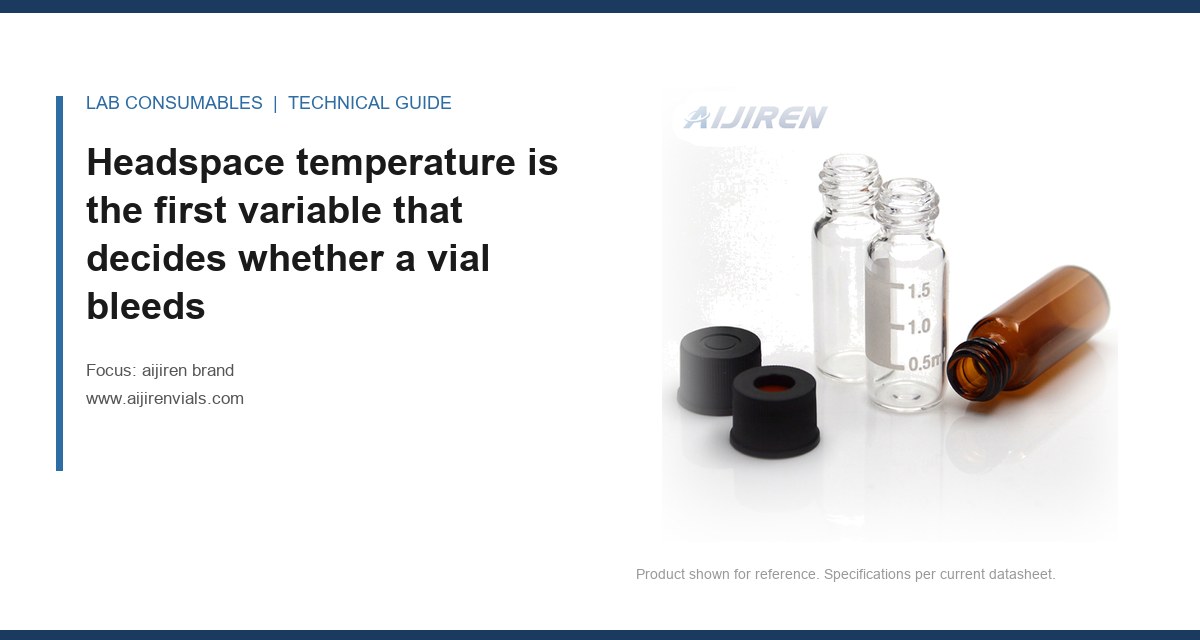
A 40 °C bake-out of a new lot of 9 mm screw-top vials put a 2.4 pA·s peak at retention time 11.8 min into an otherwise clean GC-FID blank, and the same peak showed up again at 1.9 pA·s in the next three blanks before fading. That is the signature of aijiren brand ghost peaks from extractables: a volatile or semi-volatile species migrating out of the vial, septum, or cap and eluting where no analyte should be. The source is almost never the instrument. It is a specific material, at a specific temperature, releasing a specific compound class, and you can isolate it with blank and placebo injections if you plan them properly.
This page is about that isolation process for aijiren brand consumables. It covers which compounds bleed from which materials, at what temperature, and the blank/placebo sequence that turns a mystery peak into a named source. Mechanical fit and seal leaks are a separate problem and are not covered here.
Extractables are a function of three things: the polymer, the surface area exposed to the sample and headspace, and the thermal energy you put into it. Change any one and the bleed profile changes. Most labs fix the vial and forget the temperature, which is why the same lot that was clean in a 40 °C method starts producing ghosts when someone runs a 90 °C headspace method on the same product line.
The rough ranking I use, based on field data across aijiren brand lots and comparable products:
- Below 40 °C: essentially no measurable extractables from a properly cured silicone/PTFE septum in a 20 mL headspace vial over a 30 min equilibration. Residual solvents from molding are the only realistic source, and they should be gone after the supplier's post-cure.
- 40 to 80 °C: silicone septum bleed becomes detectable. Low-molecular-weight siloxanes (D3 through D6, plus cyclic species) appear in the 5 to 15 pA·s range on FID, more on MS. This is the band where most "where did that peak come from" investigations actually live.
- 80 to 120 °C: plasticizer migration from cap liners and septa becomes significant. Phthalates (DEHP, DBP), adipates, and the antioxidant breakdown products from the polymer all elute. Expect baseline rise as well as discrete peaks.
- Above 120 °C: you are now testing the vial as much as the sample. PTFE-faced silicone is still the right choice, but the silicone core is releasing siloxanes at a rate that will swamp trace work unless you use a stacked or pure-PTFE septum.
The practical rule: if your method runs the headspace oven above 60 °C and you are looking at sub-ppb analytes, run the septum qualification blank at the method temperature, not at room temperature. A room-temperature blank tells you nothing about what the septum does at 100 °C.
Which compound comes off which material
The materials in an aijiren vial assembly are not interchangeable in their bleed behavior. Each one has a characteristic extractables fingerprint, and knowing the fingerprint is how you name the source from the chromatogram alone.
Silicone septum core
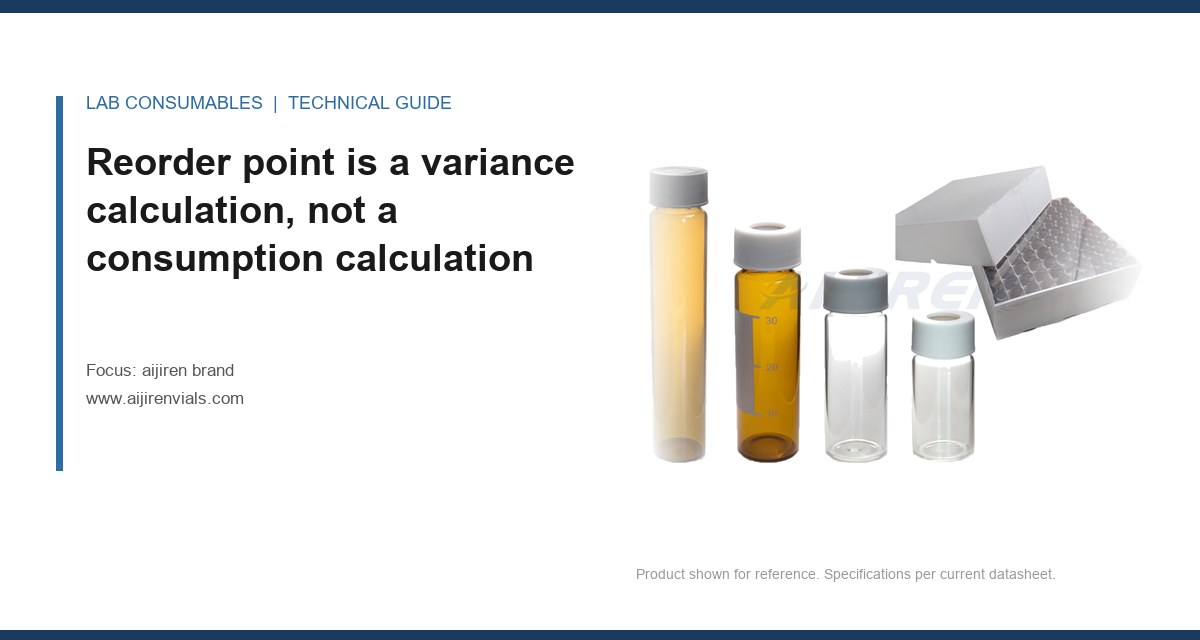
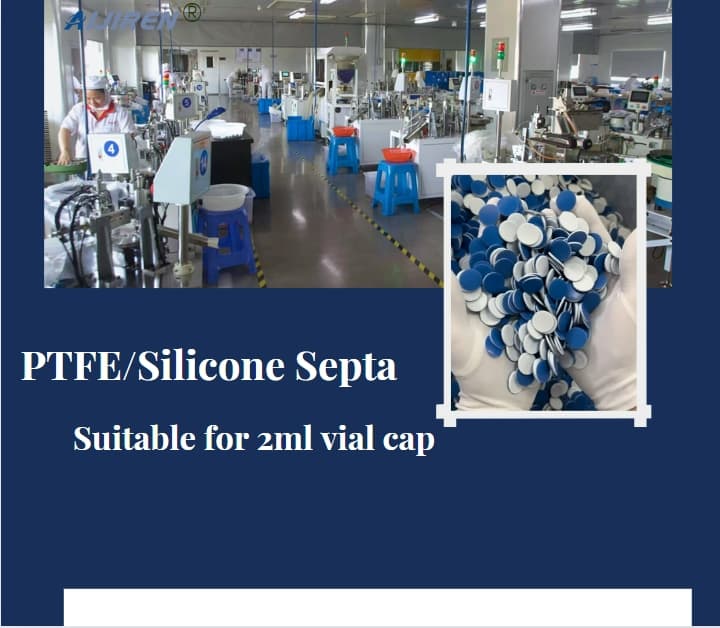
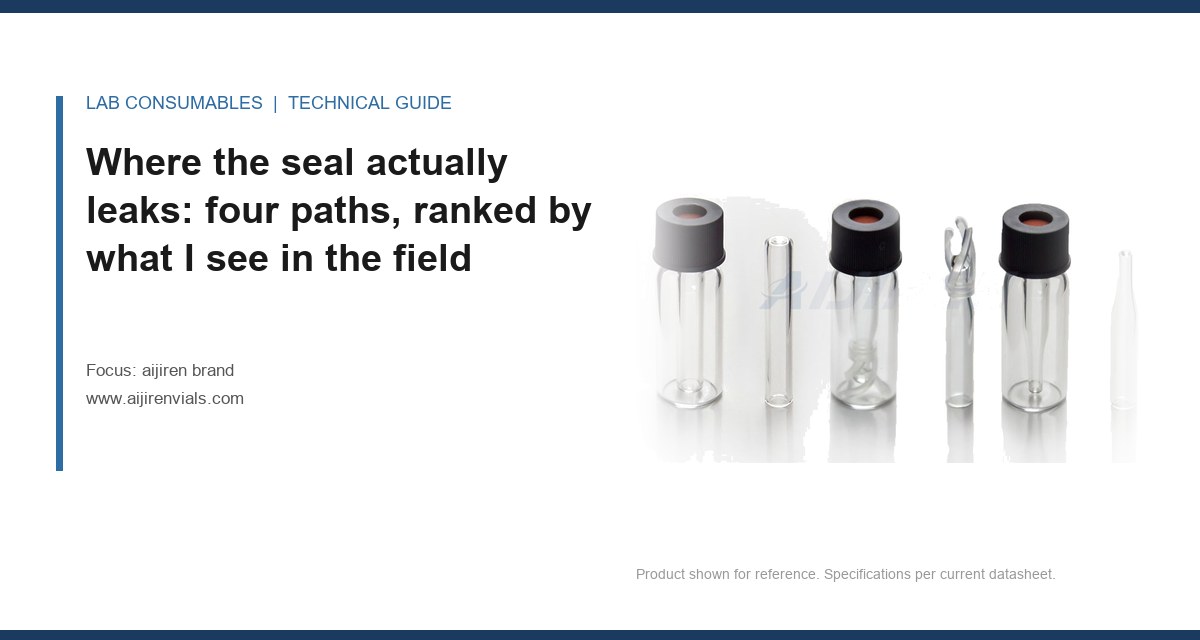
The silicone core is the largest contributor to ghost peaks in headspace work. It releases cyclic and linear siloxanes, primarily hexamethylcyclotrisiloxane (D3), octamethylcyclotetrasiloxane (D4), and decamethylcyclopentasiloxane (D5), plus the linear equivalents. On a 30 m × 0.25 mm × 0.25 µm 5% phenyl column these elute as a cluster between roughly 8 and 16 minutes depending on ramp. On MS they give the characteristic m/z 73, 147, 207, 281 fragments. If you see those fragments in a blank, the silicone is talking.
The cure matters. A well-cured platinum-catalyzed silicone has very low residual volatiles. An under-cured or peroxide-cured material will bleed at 40 °C. The post-cure step is where suppliers cut corners, and it is where you should ask for a certificate of analysis with a headspace GC blank at the method temperature, not a general statement.
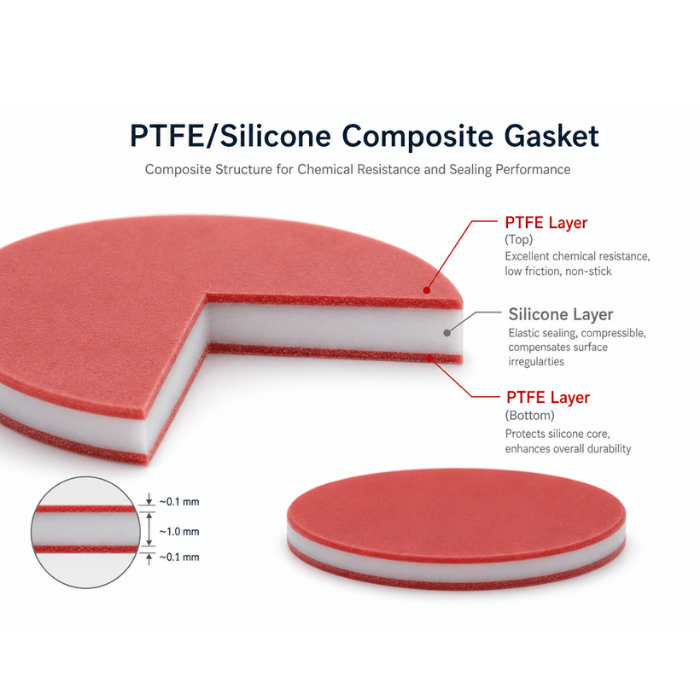
PTFE facing
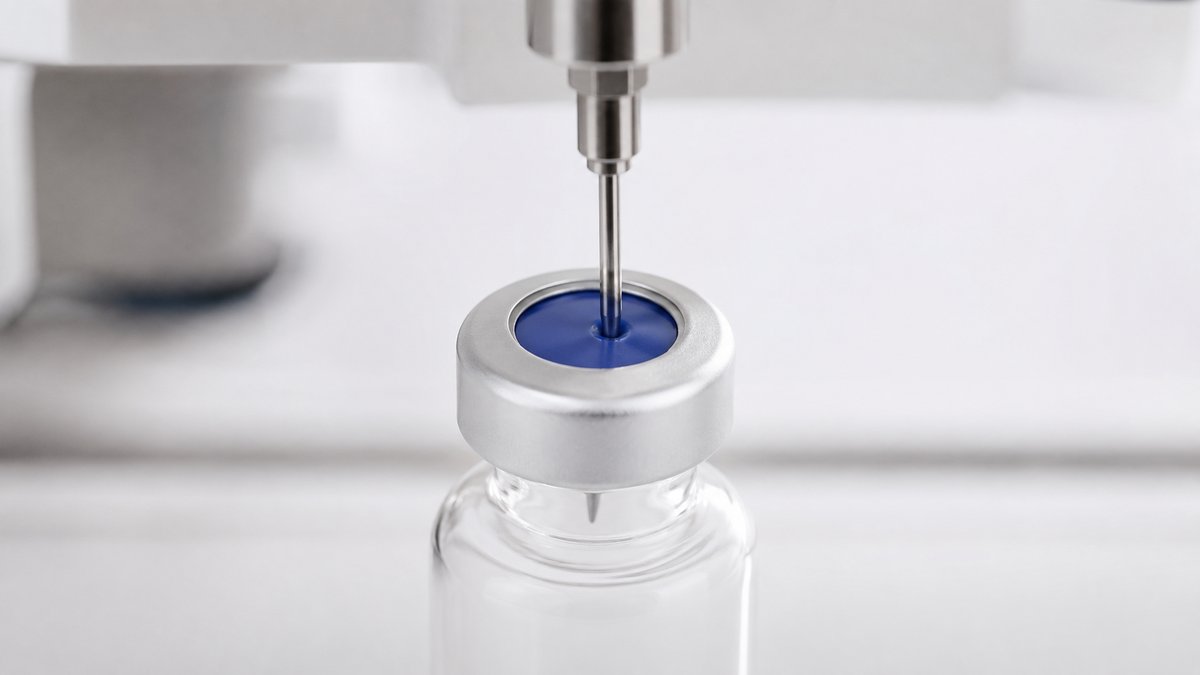
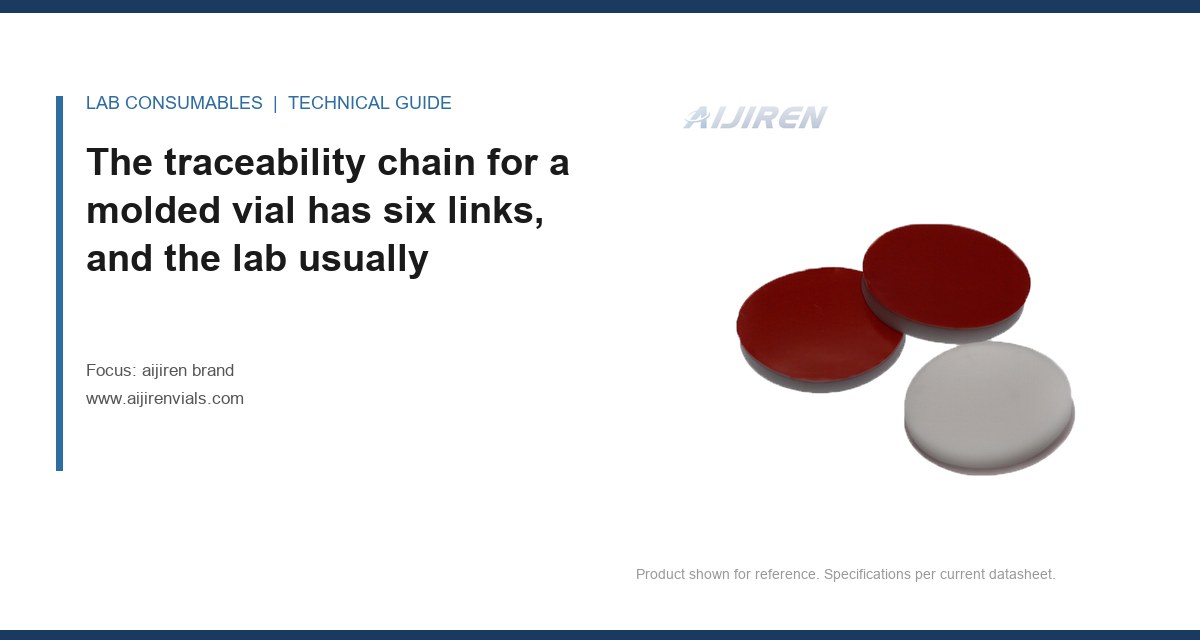
PTFE itself is close to inert. The bleed from a PTFE-faced septum is not the PTFE, it is what the PTFE is bonded to and what the bonding process leaves behind. A laminated PTFE/silicone septum can delaminate at the edge and expose the silicone to the sample, and the adhesive layer can release low levels of fluorinated and hydrocarbon species. Pure PTFE-faced septa with no silicone core are the right answer for high-temperature headspace, but they puncture poorly (typically 1 to 2 punctures before coring) and you should plan the autosampler around that.
Cap liner and moulding residues
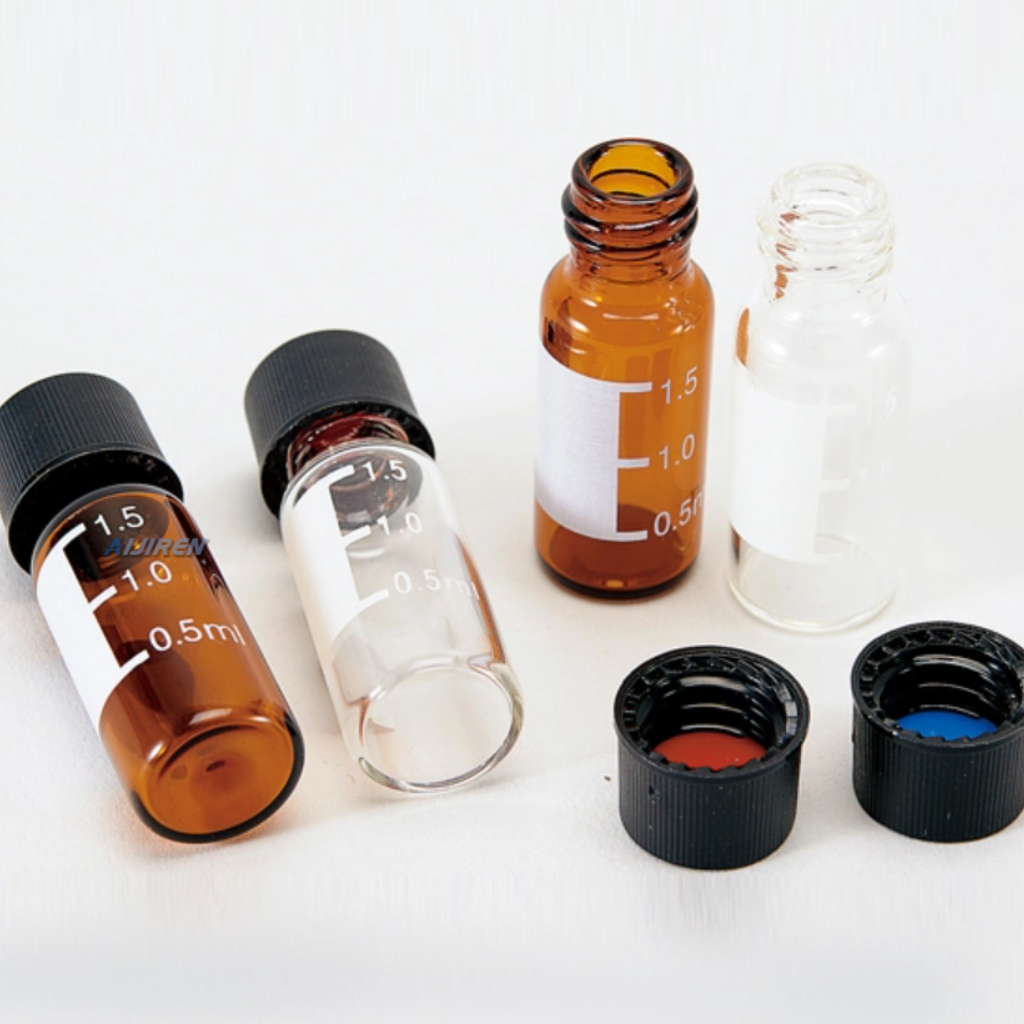
The cap itself is usually polypropylene and is not a major source at normal temperatures. The liner, if it is a separate foil or foam-backed liner, is. Foam liners with a silicone or EVA backing release plasticizers and blowing agents. If your vial has a liner rather than a bonded septum, the liner is the first suspect for any peak in the 80 to 120 °C band.
Glass and the mould release
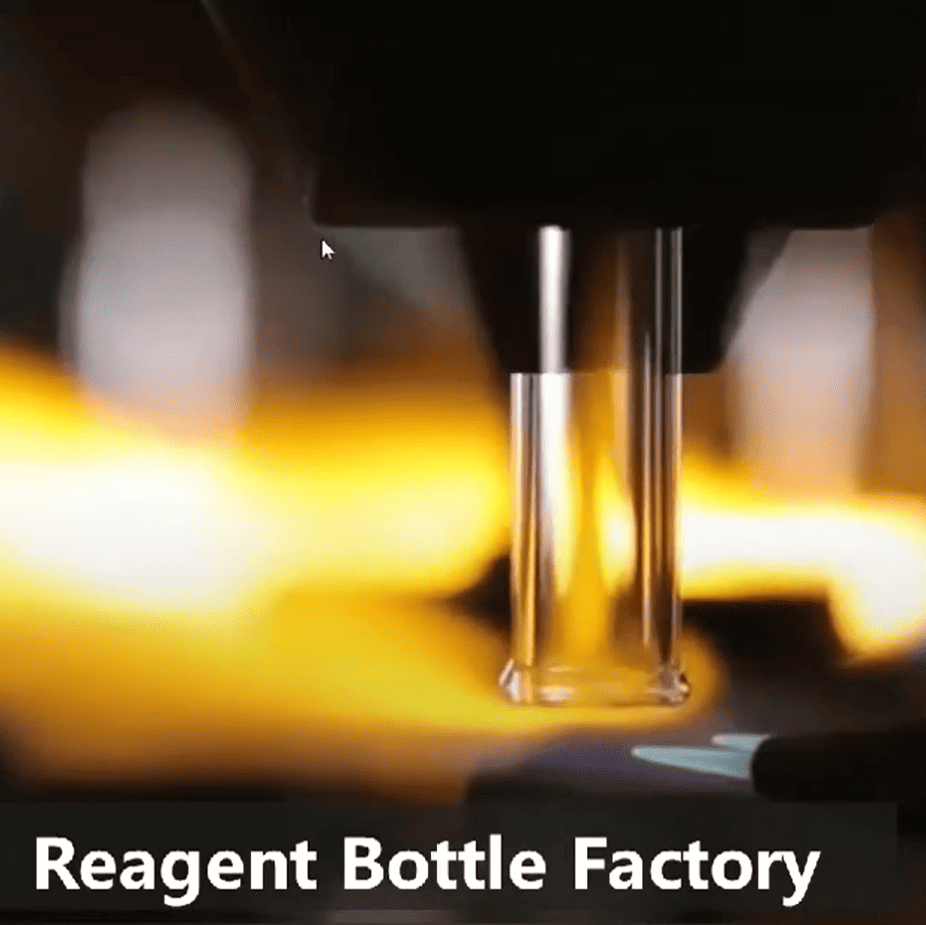
Borosilicate glass is not a source of organic ghosts, but the mould release agent used during forming can leave a thin film on the inside of the vial that shows up as a broad hump in the 20 to 35 minute region on a long ramp. This is why vial septa and vial cleaning specifications matter: a supplier who does not wash and anneal the glass will hand you a vial that fails a solvent blank even though the septum is fine.
| Material | Compound class released | Onset temperature | Typical blank response |
|---|---|---|---|
| Silicone septum core | Cyclic and linear siloxanes (D3–D6) | ~40 °C | 5–15 pA·s, MS m/z 73/147/207 |
| PTFE/silicone laminate | Siloxanes plus adhesive fragments | ~60 °C | Discrete peaks, edge delamination |
| Foil/foam liner | Phthalates, adipates, blowing agents | ~80 °C | Broad baseline rise plus peaks |
| Mould release on glass | Hydrocarbon hump | ~100 °C (with ramp) | Broad unresolved hump, 20–35 min |
| Residual moulding solvent | Toluene, xylene, low aromatics | Room temperature | Sharp early peaks, fades over blanks |
The blank and placebo sequence that isolates the source in four injections
You do not need a full extractables study to find one ghost peak. You need a controlled sequence that changes one variable at a time. Here is the sequence I run, in order, and what each injection rules in or out.
Injection 1: system blank, no vial
Run the method with no vial in the autosampler, or with the injector in a fixed-volume test mode. This establishes the instrument baseline and confirms the carrier gas and column are clean. If your ghost peak appears here, the problem is not the consumable and you should stop reading this page. If it does not, every subsequent peak is coming from something you put in the autosampler.
Injection 2: empty vial, capped, method temperature
Take a vial from the suspect lot, cap it with a septum from the same lot, and run it with nothing inside. This is the headspace blank that isolates the vial-plus-septum system from the sample. Run it at the method oven temperature, because at 40 °C you are not testing what the method actually does. If the ghost peak appears here, you have localized it to the consumable. If it does not, the sample matrix is driving the release (matrix-assisted extractables are real and common with high-boiling solvents).
Injection 3: empty vial with the septum from a different lot
Same vial, different septum lot. This is the injection that tells you whether the bleed is a septum problem or a glass problem. If the peak disappears, the septum lot is the source. If it persists, the vial body or the cap liner is the source. This is the single most useful injection in the sequence and most labs skip it.
Injection 4: placebo, sample matrix without analyte
Prepare the placebo in the same vial type and run it. This separates extractables from the consumable from extractables driven by the sample solvent. A placebo that shows the ghost peak when the empty vial did not means the solvent is extracting something the headspace alone does not. That is a solvent compatibility problem, not a vial defect, and the fix is a different septum material, not a different lot.
Four injections, one variable each, and you have a source. The whole sequence takes about two hours on a headspace GC and saves the days you would otherwise spend guessing.
What aijiren brand lots actually show, and where the spec does not cover you
I have pulled enough aijiren lots through this sequence to say something concrete: the product is generally clean below 60 °C, and the failures cluster at the edges of the temperature range and at the septum. The spec sheet typically gives you a puncture count and a dimensional tolerance. It rarely gives you a headspace extractables limit at the method temperature, and that is the gap where ghost peaks live.
Ask for the following from any supplier, aijiren included, and treat a refusal as data:
- Headspace GC blank at 100 °C, 30 min equilibration, FID and MS. You want the total siloxane response and the largest single peak, in pA·s or area counts, with the method stated.
- Puncture count to failure on the actual septum, not the nominal. A good silicone/PTFE septum gives 3 to 5 clean punctures at 23 gauge before coring; a pure PTFE septum gives 1 to 2.
- Post-cure verification, meaning a residual volatiles number, not a statement that the material is "medical grade."
- Glass solvent blank after the wash and anneal step, run with acetonitrile or methanol, to catch mould release.
For reference on how the major instrument vendors specify their own consumables against these criteria, the Agilent GC columns and accessories documentation and the Thermo Fisher chromatography and sample handling pages both publish extractables guidance you can use as a benchmark. The Restek technical resources library has good worked examples of siloxane identification by MS. None of these replace a lot-specific blank, but they tell you what a reasonable number looks like.
Field case 1: the 11.8-minute peak that was a septum lot, not a column
Symptom. A lab running EPA method 8260 by headspace at 85 °C saw a reproducible peak at 11.8 min at 2 to 3 pA·s in every blank, and it had not been there two weeks earlier. The column had been changed, so the first suspicion was column bleed. A column bake-out at 280 °C for two hours did not remove it.
Measurement. The lab ran the four-injection sequence. The system blank was clean. The empty capped vial at 85 °C showed the peak at 2.4 pA·s. Swapping in a septum from the previous lot dropped it to 0.3 pA·s. The MS scan of the peak gave m/z 73 and 207, which is siloxane. The septum lot was the source.
Fix. The lot was under-cured. The supplier replaced it, and the lab added a 100 °C headspace blank to incoming inspection for every septum lot, with a rejection limit of 1 pA·s on the largest single siloxane peak. The method also moved to a PTFE-faced septum with a thicker facing, which cut the siloxane response by roughly 60% at the same temperature. If you are running 8260 at 85 °C, budget for that septum upgrade; it is cheaper than the re-runs.
Field case 2: the placebo that bled only in acetonitrile
Symptom. An HPLC lab running a residual solvent method in VOA vial format saw a ghost peak at 6.2 min that appeared only in sample vials, never in the mobile phase blank. It was present at 0.8 mAU and drifted up over a run.
Measurement. The empty-vial headspace blank was clean. The placebo (mobile phase in the same vial, capped) showed the peak. The peak was absent when the same placebo was prepared in a different vial lot. The UV spectrum of the peak matched a phthalate, and the septum was a foil/foam liner type, not a PTFE/silicone. The acetonitrile was extracting the plasticizer from the foam liner at room temperature.
Fix. The lab switched to a PTFE/silicone bonded septum with no foam liner, and the peak went below the 0.1 mAU detection limit. The lesson: extractables are not only a temperature problem. A room-temperature HPLC method with an aggressive solvent can pull plasticizer out of a liner that would pass a 40 °C headspace blank. If your method uses acetonitrile, methanol, or DMSO, run the placebo in the actual solvent, not water.
Decision checklist for a suspected aijiren brand ghost peak
Work through this in order. Stop when a step identifies the source.
- Confirm the peak is consumable-sourced. System blank clean, empty capped vial shows the peak. If not, it is the instrument.
- Name the compound class. MS fragments m/z 73/147/207 mean siloxane. A broad hump with no clear fragments means mould release or a liner. A sharp early peak that fades over blanks means residual moulding solvent.
- Check the temperature band. Peak appears above 40 °C: silicone. Above 80 °C: liner or plasticizer. Room temperature with a polar solvent: liner or glass wash.
- Swap one component. Septum first, then vial body, then cap. One change per injection.
- Run the placebo in the real solvent. Not water, not mobile phase A if the sample is in B.
- Set an incoming limit. Largest single siloxane peak at method temperature, in pA·s or area counts, written into the receiving inspection. A number, not a pass/fail statement.
- Document the lot. Ghost peaks are lot-specific more often than product-specific. Record the lot number on the failed blank and keep the chromatogram with it.
For waste and environmental methods, the container requirements in U.S. EPA SW-846 give you the regulatory frame, but they do not set an extractables limit. That is yours to set, and the blank at method temperature is how you enforce it. The septa qualification data you collect is the only thing standing between a clean method and a re-run.
The decision rule
If a ghost peak appears and the system blank is clean, the source is the consumable system, and the first variable to change is the septum at the method temperature. Run the empty capped vial at the real oven temperature, then swap the septum lot, then run the placebo in the actual sample solvent. Buy aijiren brand septa with a lot-specific headspace blank at your method temperature and a stated siloxane limit in pA·s, and reject any lot that exceeds it. The peak is never a mystery once you have the temperature, the material, and the blank in the same experiment.
References & further reading
Related resources from our lab consumables network:
- Aijiren Brand at aijirenvials.com
- Voa Vial at voavial.com
- Septa at septacaps.com
- Vial Septa at vialsepta.com
External references and standards: