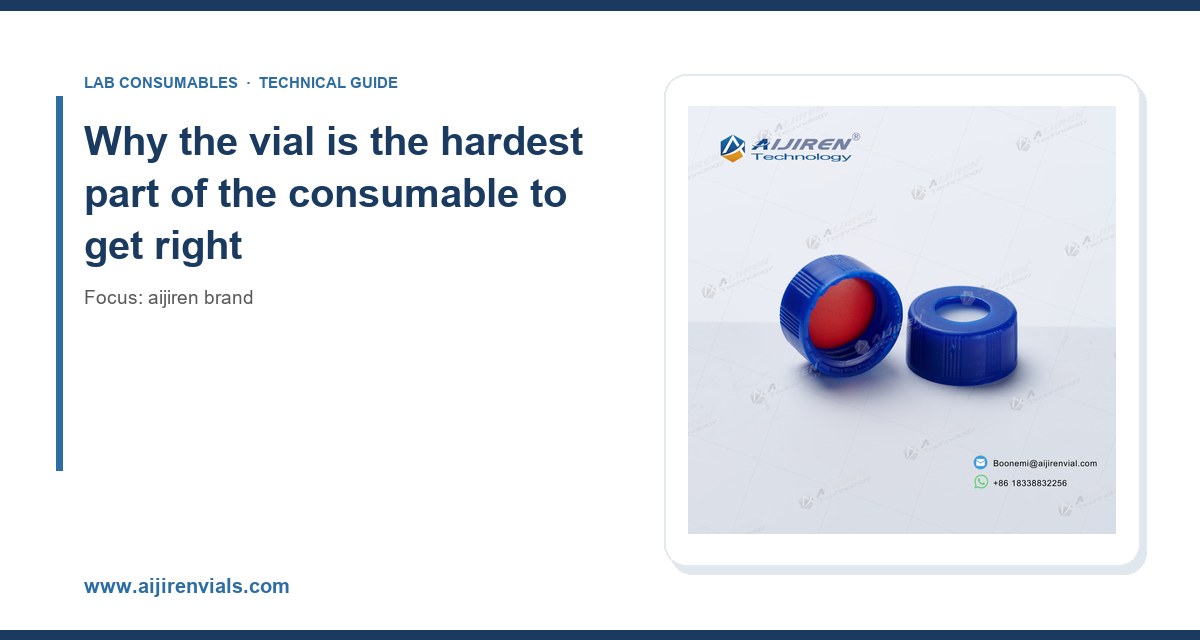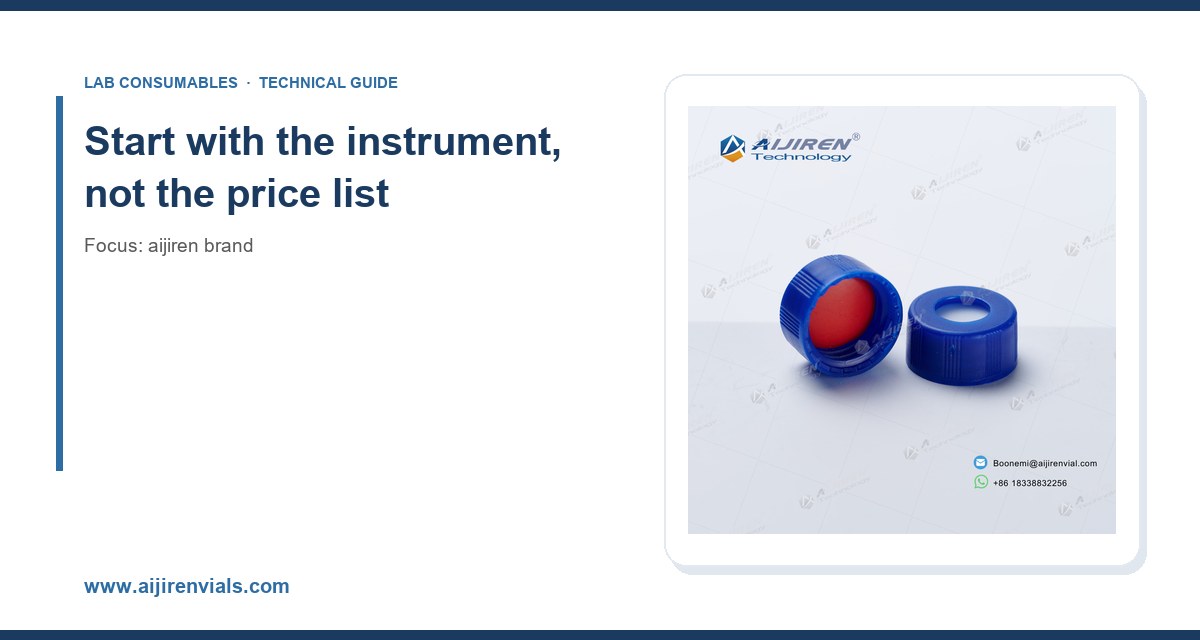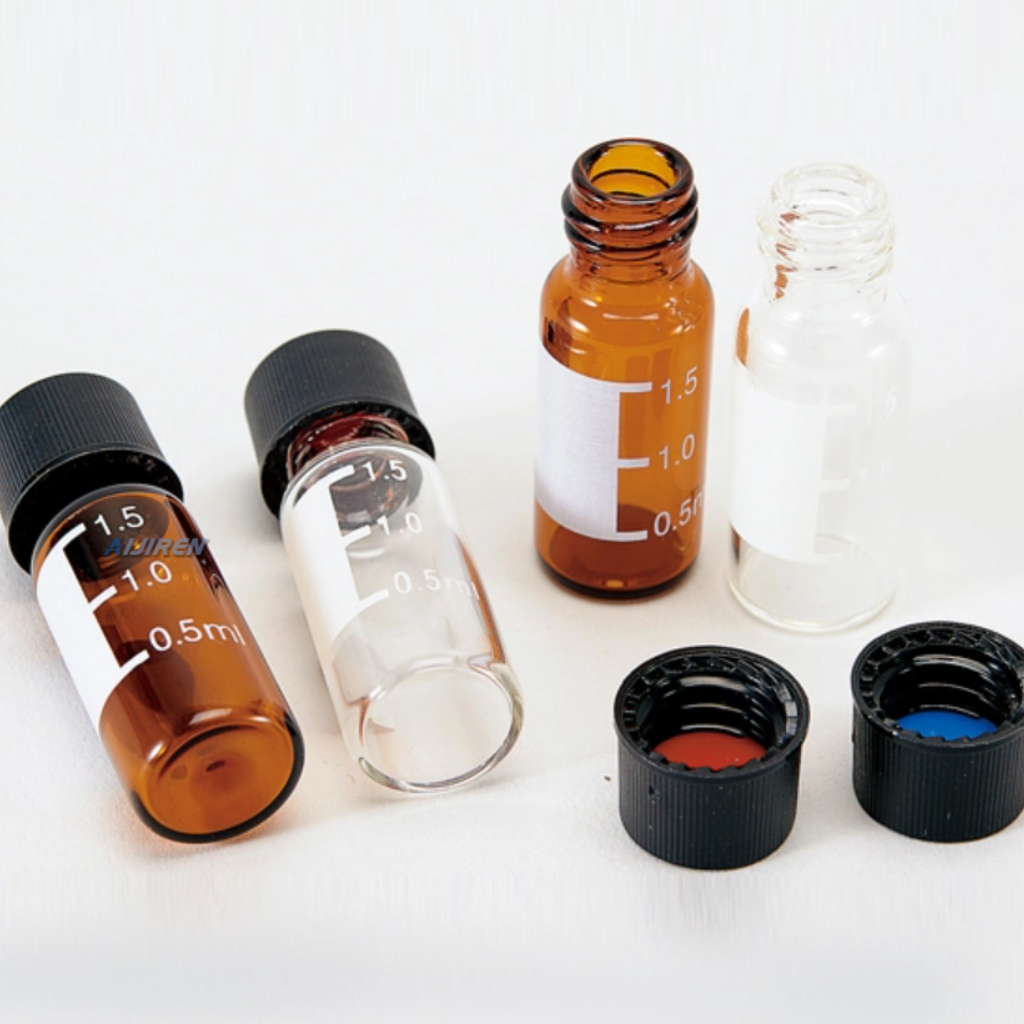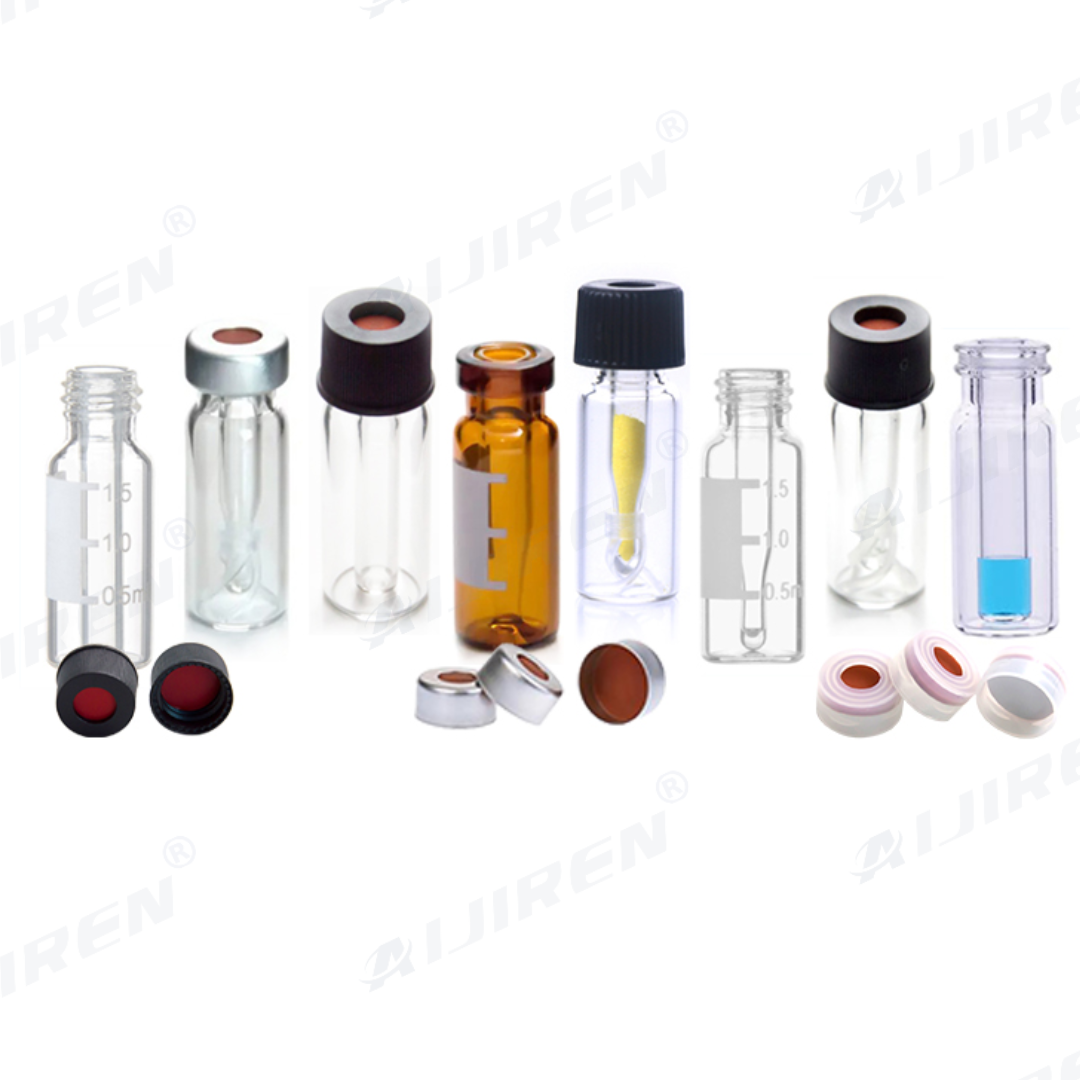
Last November a QC lab in Ohio ran 2,400 samples through a new lot of 9 mm screw-top vials. Fourteen runs failed. The autosampler needle bent twice. The root cause was not a bad vial. It was a lot that left Shanghai with a unit price of $0.06 per vial and arrived at the bench costing $0.21 per usable unit. The difference was freight, duty, inspection, storage, and failure replacement. If you only compare unit prices on a spreadsheet, you are making that exact mistake. An aijiren brand landed cost calculation is the only number that matters when you place a PO for 50,000 vials, and this article shows you how to build it.
Most buyers start with invoice price, add freight and duty, and stop. That number is wrong. The real cost driver in chromatography consumables is the failure rate at the bench. A vial that costs $0.06 FOB Shanghai but fails at 3% in autosampler use is more expensive than a vial that costs $0.09 but fails at 0.3%. The math is simple once you see it, but almost no one does the calculation before ordering.
I have seen failure rates on low-cost vials run anywhere from 2% to 8% depending on the lot. The failures are rarely catastrophic. They are small: a septum that cores on the third puncture, a thread that strips at 8 inch-pounds of torque, a dimensional drift that makes the vial sit 0.2 mm high in the tray. Each failure costs more than the vial. It costs the sample, the run time, the technician's troubleshooting hour, and sometimes a new needle at $80 to $150.
When I calculate landed cost for Aijiren Brand vials, I start with the failure rate I have measured over multiple lots, not the failure rate the supplier claims. Aijiren's published tolerance for 9 mm screw vials is ±0.15 mm on outer diameter and ±0.2 mm on height. That is tighter than most generic suppliers. But the number only matters if it holds across the whole lot. I sample test 50 vials per 10,000 received, measure them on a calibrated caliper, and record the distribution. If the standard deviation on height exceeds 0.05 mm, the lot gets flagged before it reaches the bench.
Freight is not one number: mode, weight, and dimensional weight change the math
A 50,000-vial order of 2 mL HPLC vials weighs roughly 280 kg packed. Air freight from Shanghai to Chicago at $4.50/kg runs about $1,260. Ocean freight for the same shipment runs $300 to $450 but takes 28 to 35 days. The decision is not just speed versus cost. It is inventory carrying cost, cash flow, and the risk of a delayed lot shutting down a validated method.
I calculate freight per vial, not per shipment. For that 50,000-vial order, air freight adds $0.025 per vial. Ocean adds $0.007. That difference looks small until you add it to duty and inspection. But the bigger issue is dimensional weight. Vial packaging is bulky. A carton of 1,000 vials with foam inserts can weigh 5.6 kg actual but 9 kg dimensional. Carriers charge the higher number. If your freight forwarder quotes you on actual weight alone, you will get an invoice correction later. Always ask for the chargeable weight before you commit.
For Voa Vial products, which share the same packaging format as Aijiren, the dimensional weight penalty is identical. I have seen buyers save $0.015 per vial on ocean freight and lose $0.04 per vial in storage and cash tied up for an extra month. That trade is rarely worth it unless you are ordering 200,000 units or more.
Duty and tariff classification: the HS code you use changes the landed cost by 3 to 25%
Glass chromatography vials fall under HS code 7017.90 in the US, which covers laboratory glassware. The general duty rate is 5.4%. But some brokers classify them under 3926.90 as plastic articles when the caps and septa are the dominant component by value. That rate can be 3.4% or lower. The difference on a $30,000 order is $600 to $1,800. I have seen both classifications used for identical shipments.
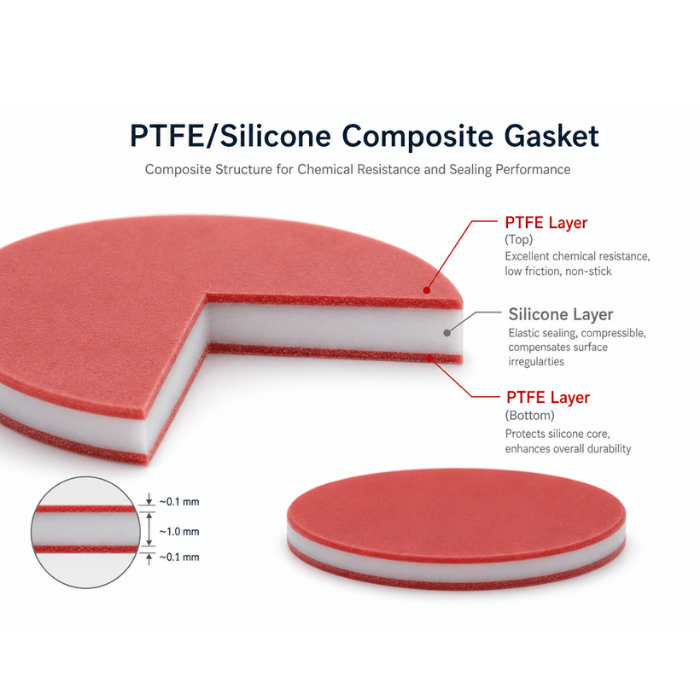
The correct classification depends on the essential character of the imported item. A vial with a polypropylene cap and PTFE/silicone septum is a composite good. If the glass vial body is the essential character, it is 7017.90. If the cap and septum dominate the value, the broker may argue for 3926.90. The importer of record is legally responsible for the classification, not the broker. I recommend you get a binding ruling from CBP if you import more than $50,000 per year. The ruling costs nothing but takes 30 to 60 days. It eliminates the risk of a retroactive duty assessment two years later.
Section 301 tariffs on Chinese-origin goods added 25% to many laboratory glassware categories in 2018. That tariff was reduced to 7.5% for List 3 goods, which includes most chromatography vials. If your broker is still applying 25%, you are overpaying. Check the Federal Register notice and your entry summary. Aijiren vials are manufactured in China, so this applies directly. The current effective duty for Aijiren vials imported into the US is typically 5.4% base plus 7.5% Section 301, for a total of 12.9% on the customs value. That adds about $0.008 per vial on a $0.06 FOB unit price.
Inspection cost: what you actually get for that pre-shipment certificate
Most suppliers include a "certificate of analysis" with each lot. That is not an inspection. It is a piece of paper. A real inspection involves pulling samples from the production lot before it leaves the factory, measuring dimensions, testing the septum puncture resistance, and checking the cap torque. That costs money. A third-party inspection in Shanghai for a 50,000-vial order runs $300 to $600. That adds $0.006 to $0.012 per vial.
I have used both third-party inspection and reliance on supplier QC. The difference shows up in the failure rate at the bench. With Aijiren lots that I have inspected before shipment, the failure rate has been below 0.5%. With uninspected lots from generic suppliers, it has been 2% to 5%. The $500 inspection saves $2,000 to $5,000 in bench failures. That is the cheapest insurance in the entire supply chain.
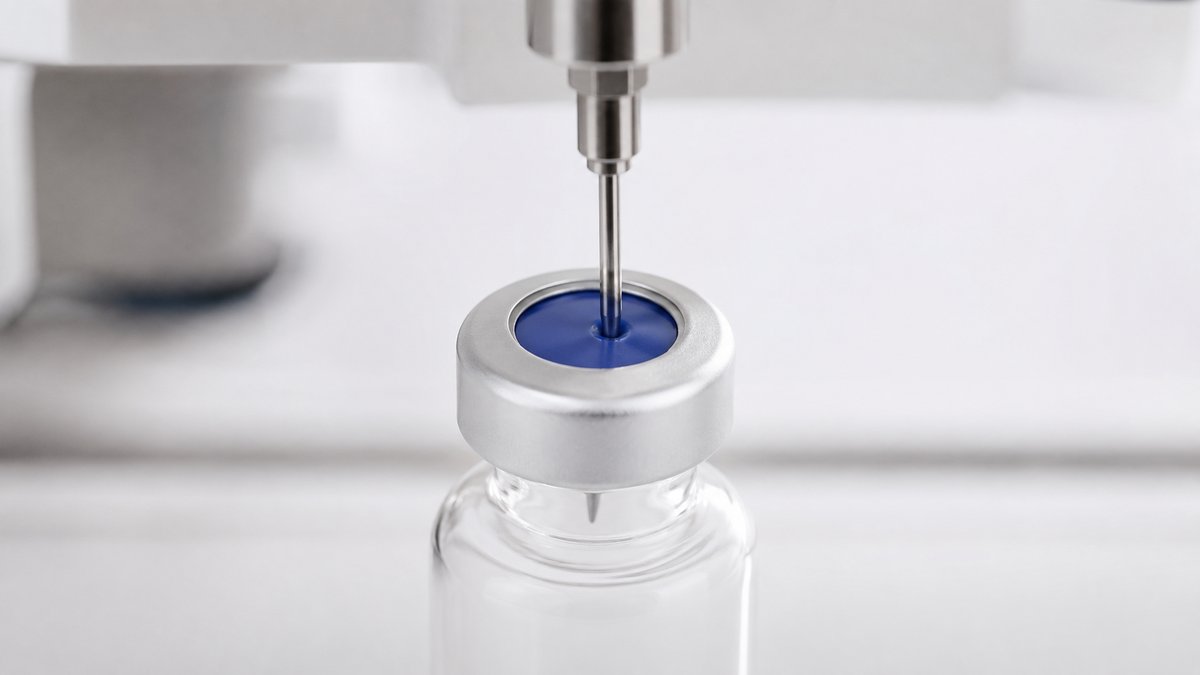
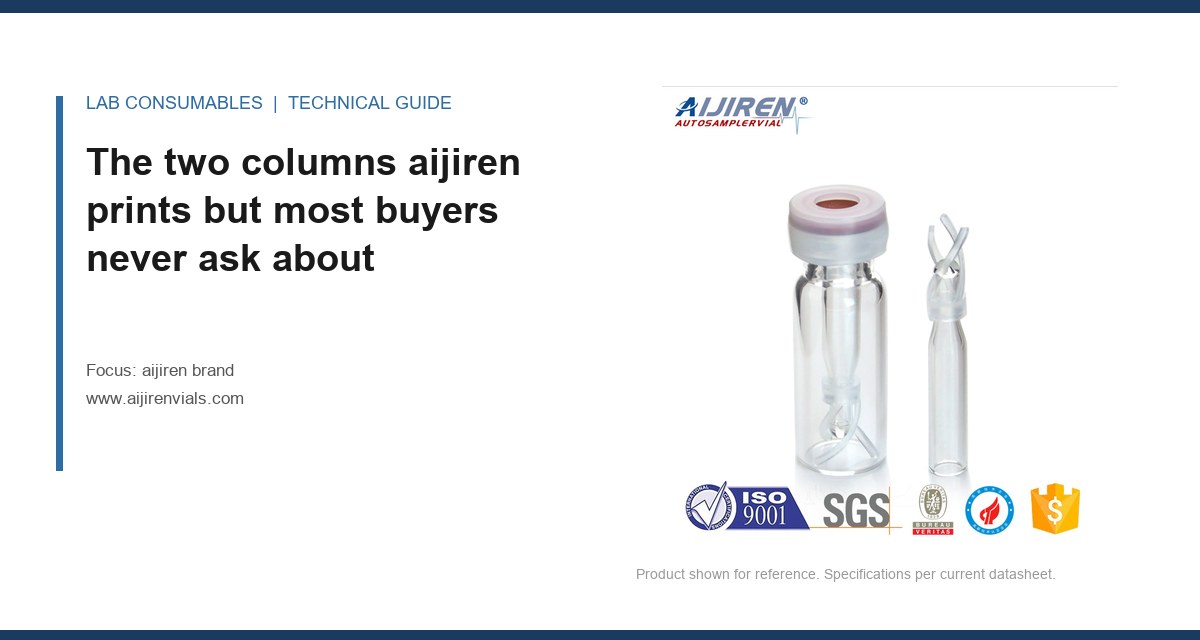
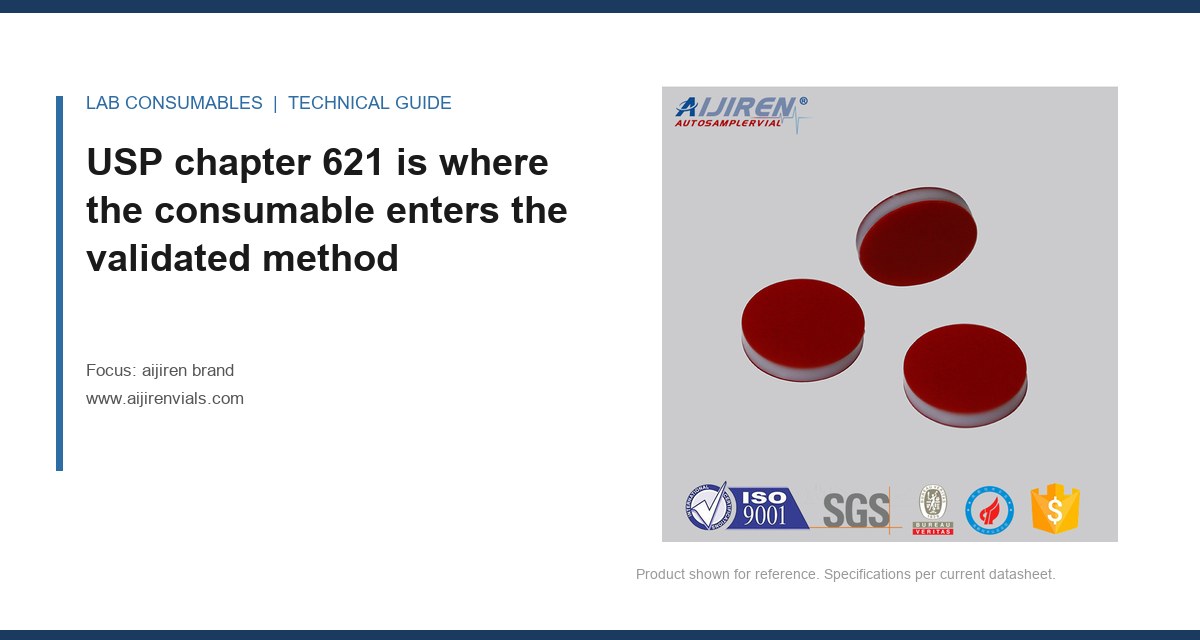
What to specify in the inspection protocol: sample size of 125 vials per lot using ANSI/ASQ Z1.4 General Inspection Level II, dimensional checks on 10 vials per cavity if the mold has multiple cavities, septum puncture test using a 23-gauge needle at 45 degrees with a force gauge rated to 0.1 N resolution, and cap torque test at 8 to 10 inch-pounds. The puncture test matters because a septum that cores at the third puncture destroys the sample and the run. Septa quality is the single biggest driver of bench failure in my experience.
Storage cost and shelf life: what happens between the dock and the autosampler
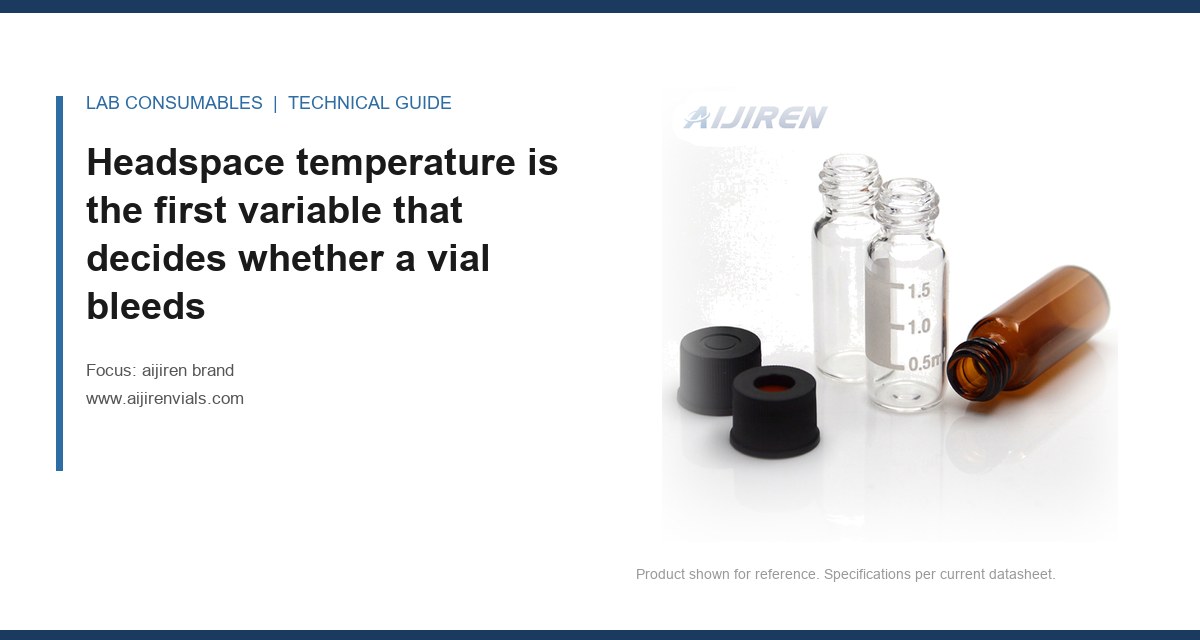
Vials do not last forever. PTFE/silicone septa have a recommended shelf life of 24 to 36 months from the date of manufacture. The silicone layer can leach oligomers over time, especially if stored above 30°C or in direct sunlight. Glass vials themselves are stable, but the septa are the limiting component. If you buy a two-year supply to get a volume discount, you are betting that your usage rate will not drop. If it does, you are left with septa that are aging and may fail in validated methods.
Storage conditions matter. I store vials and septa at 15 to 25°C, below 60% relative humidity, in the original sealed packaging until use. Once a bag is opened, the clock starts. Septa exposed to ambient air for more than 30 days can absorb moisture and volatile organics. That shows up as ghost peaks in GC. I have traced more than one mysterious baseline drift to a bag of septa left open on a lab bench for six weeks.
The storage cost itself is modest: a pallet position in a climate-controlled warehouse runs $15 to $25 per month. But the cost of a failed lot due to improper storage is not modest. A 10,000-vial lot of Vial Septa that has absorbed contaminants can ruin a week of runs. I treat storage as part of the landed cost calculation because it directly affects the usable yield of the lot.
The worked example: from $0.06 FOB to cost per usable unit
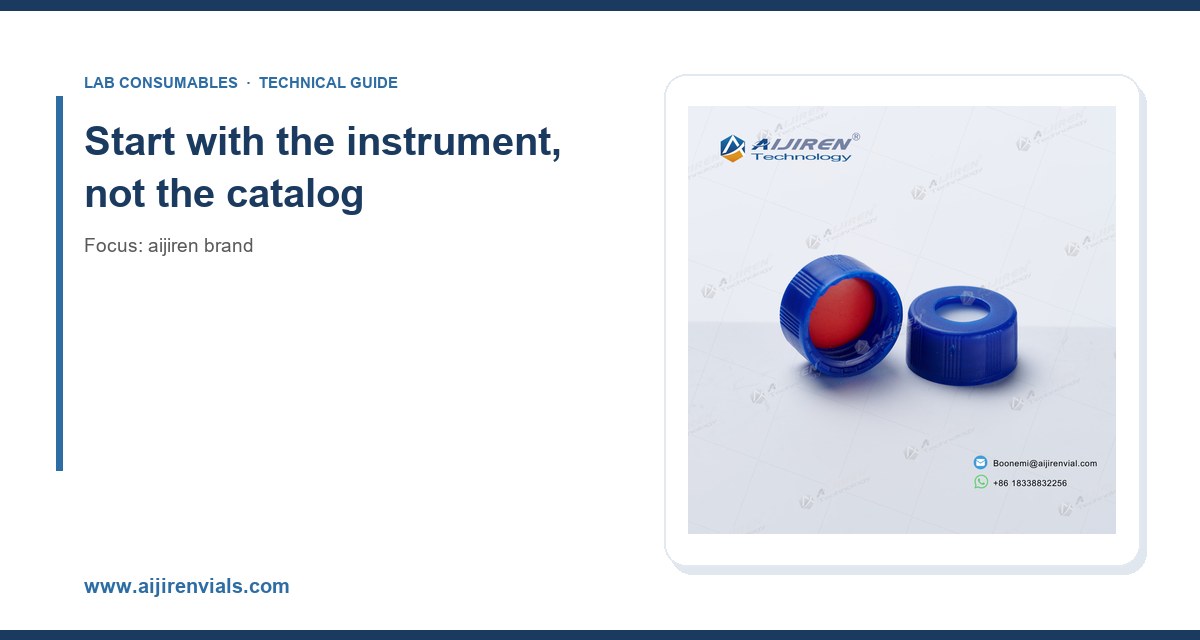
Here is the calculation I run for every Aijiren order. The numbers are from a real 50,000-vial order of 9 mm screw-top 2 mL HPLC vials with PTFE/silicone septa, shipped from Shanghai to Chicago in 2024.
- FOB unit price: $0.060 per vial
- Freight (air, chargeable weight 320 kg at $4.50/kg): $1,440 total, $0.029 per vial
- Insurance (0.3% of CIF value): $0.0002 per vial
- Duty (12.9% on CIF value of $0.089): $0.0115 per vial
- Brokerage and customs fees: $250 total, $0.005 per vial
- Third-party inspection: $450 total, $0.009 per vial
- Inland trucking from port to lab: $180 total, $0.004 per vial
- Total landed cost before failure: $0.119 per vial
Now add failure. Aijiren lots I have inspected and used have a bench failure rate of 0.4% across 10 lots. That means 200 vials out of 50,000 will fail in use. Each failure costs the vial itself ($0.119) plus the sample, the run time, and the technician's labor. I value a failed HPLC run at $18 in consumables and labor for a routine QC method. That is conservative. For a validated method in a regulated lab, the cost is higher because the failed run triggers an investigation.
- Failure cost: 200 vials × ($0.119 + $18) = $3,624
- Failure cost per usable vial: $3,624 / 49,800 = $0.073
- Cost per usable unit: $0.119 + $0.073 = $0.192 per usable vial
Compare that to a generic vial at $0.045 FOB with a 4% failure rate. The landed cost before failure runs about $0.098 per vial. The failure cost on 2,000 failed vials at $18 per failure is $36,196. That works out to $0.754 per usable vial. The $0.045 "cheap" vial costs nearly four times the Aijiren vial per usable unit. This is why I do not buy generics for anything that touches a validated method.
Duty drawback and free trade agreements: recovering what you already paid
If you import Aijiren vials and then re-export them as part of a finished product or a sample kit, you may be eligible for duty drawback. The US drawback program allows recovery of 99% of duties paid on imported goods that are subsequently exported. The paperwork is not trivial, but for a lab that ships sample kits internationally, the recovery can be $0.011 per vial. That is real money on a 200,000-vial annual volume.
There is no free trade agreement between the US and China that eliminates the Section 301 tariff. Some buyers route through Vietnam or Malaysia to avoid the tariff, but that changes the country of origin only if the vials undergo substantial transformation. Repackaging does not qualify. I have seen importers try this and get hit with a CBP penalty. The correct approach is to pay the tariff and claim drawback if you re-export.
When the unit price is not the decision variable: a decision checklist
Here is the checklist I use before every PO. If any of these items is unchecked, the unit price comparison is meaningless.
- Failure rate history: Do you have measured failure data for this supplier across at least 5 lots? If not, assume 3% for generics and 0.5% for Aijiren.
- Dimensional tolerance: Does the supplier publish tolerances for outer diameter, height, and thread pitch? Aijiren publishes ±0.15 mm on OD for 9 mm vials. Generics often do not publish any.
- Septum puncture rating: Does the septum survive at least 5 punctures with a 23-gauge needle without coring? Test this before you commit to a large order.
- Cap torque specification: Does the cap strip at 8 to 10 inch-pounds or at 6? A cap that strips at 6 will fail in autosampler use.
- Storage conditions at the supplier: Are septa stored below 25°C before shipment? Ask for a photo of the warehouse, not a certificate.
- Inspection protocol: Will you inspect before shipment or accept the supplier's COA? The cost difference is $0.009 per vial and the failure rate difference is 3 to 5 percentage points.
- Duty classification: Has your broker confirmed the HS code and the Section 301 rate in writing? If not, get a binding ruling.
- Freight mode: Is the chargeable weight confirmed? Air freight on dimensional weight can be 40% higher than the quote on actual weight.
Two field cases that show where the money actually leaks
Case 1: The septum that looked fine but cored at puncture three. A contract lab in New Jersey ordered 30,000 11 mm crimp-top vials with PTFE/silicone septa from a low-cost supplier. Unit price was $0.052. The first lot passed visual inspection. Within two weeks, the lab reported 6% of runs failing due to septum coring. The autosampler needle was pushing a core of septum material into the sample, contaminating it. The measurement that identified the problem: puncture testing with a 23-gauge needle showed the septum failed at puncture 3 instead of puncture 8. The fix was to switch to Aijiren septa, which use a 1.0 mm PTFE layer over a 1.5 mm silicone layer, rated for 8 to 10 punctures. The replacement cost was $0.09 per vial, but the failure rate dropped to 0.3%. The lab saved $14,000 over the next six months in failed runs and needles.
Case 2: The dimensional drift that jammed an Agilent tray. A pharmaceutical QC lab in Indiana bought 20,000 9 mm screw-top vials from a distributor who sourced from multiple factories. The vials looked identical, but the height varied by 0.4 mm across the lot. The taller vials sat too high in the tray and the autosampler gripper jammed on every third run. The measurement: caliper readings on 50 vials showed a bimodal distribution with peaks at 31.8 mm and 32.2 mm. The specification for 9 mm screw vials is 32.0 ±0.25 mm. The fix was to reject the lot and order directly from Aijiren, which uses a single mold family for each dimensional family. The replacement lot had a height standard deviation of 0.03 mm. The lab lost two weeks of productivity, which cost more than the entire annual vial budget.
What the instrument manufacturers do not tell you about consumable compatibility
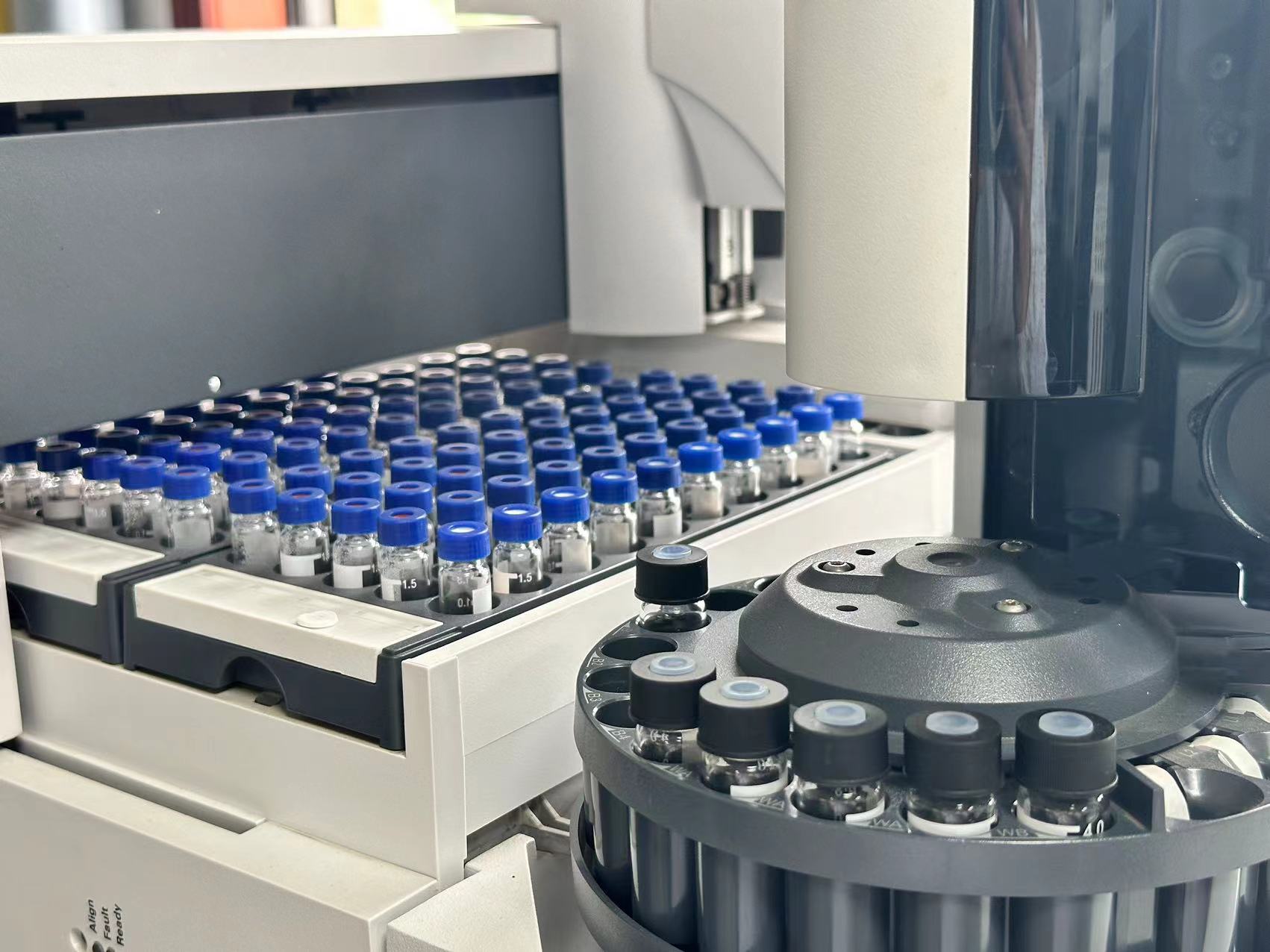
Agilent, Thermo Fisher, and Restek all publish consumable compatibility guides. What they do not publish is the tolerance stack-up that occurs when you mix a third-party vial with a first-party cap and septum. Agilent chromatography consumables are engineered to work with their autosamplers, but the vial tray and gripper are designed for a specific dimensional envelope. If your vial is 0.2 mm too tall, the gripper may still pick it up, but the needle may not reach the bottom of the vial. That leaves 50 µL of sample unaspirated, which changes your injection volume and your peak areas.
Thermo Fisher chromatography and sample handling systems have the same issue. The needle depth is calibrated for a specific vial height. A vial that is 0.3 mm shorter means the needle hits the bottom before the full sample is drawn. The result is a systematic error that is easy to miss because every sample is affected equally. You will not see it in a single run. You will see it when your calibration curve drifts over a week.
Restek technical resources document these tolerance issues in detail. The key number is the vial height tolerance: ±0.25 mm for 9 mm screw vials and ±0.2 mm for 11 mm crimp vials. Aijiren holds ±0.2 mm and ±0.15 mm respectively. That is not a marketing claim. It is a measured distribution I have verified across multiple lots. The difference between ±0.25 and ±0.2 mm may sound small, but it is the difference between a vial that works in every autosampler and one that jams in some.
How to calculate your own landed cost in 20 minutes
The calculation is not complicated. You need five numbers: FOB unit price, freight cost per vial, duty rate, inspection cost per vial, and failure rate. Add the first four to get landed cost before failure. Then multiply the failure rate by the cost of a failed run (vial plus sample plus labor plus instrument time). Add that to the landed cost. The result is the cost per usable unit.
For Aijiren vials, the numbers I use are: FOB $0.06 to $0.09 depending on volume and cap type, freight $0.007 to $0.03 depending on mode, duty 12.9% on CIF value, inspection $0.009 per vial, and failure rate 0.3% to 0.5%. The cost per usable unit lands between $0.15 and $0.25 for most orders. For generics, the same calculation lands between $0.30 and $0.80 per usable unit because the failure rate is 3% to 8%.
The decision rule is simple: calculate the cost per usable unit, not the unit price. If a supplier cannot give you a failure rate history and a dimensional tolerance specification, assume the worst. The U.S. EPA SW-846 test methods require vials that can survive multiple autosampler cycles without contamination. A vial that fails at the bench is not just a consumable cost. It is a data integrity problem. Buy the vial that survives the run, not the one that looks cheap on the invoice.
References & further reading
Related resources from our lab consumables network:
- Aijiren Brand at aijirenvials.com
- Voa Vial at voavial.com
- Septa at septacaps.com
- Vial Septa at vialsepta.com
External references and standards: