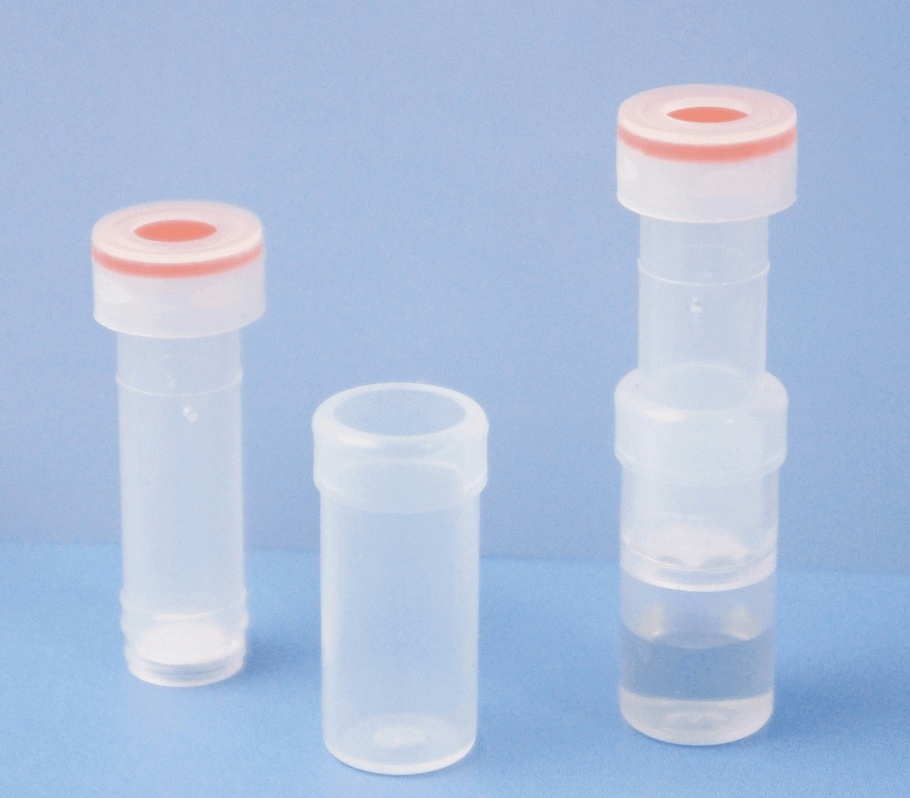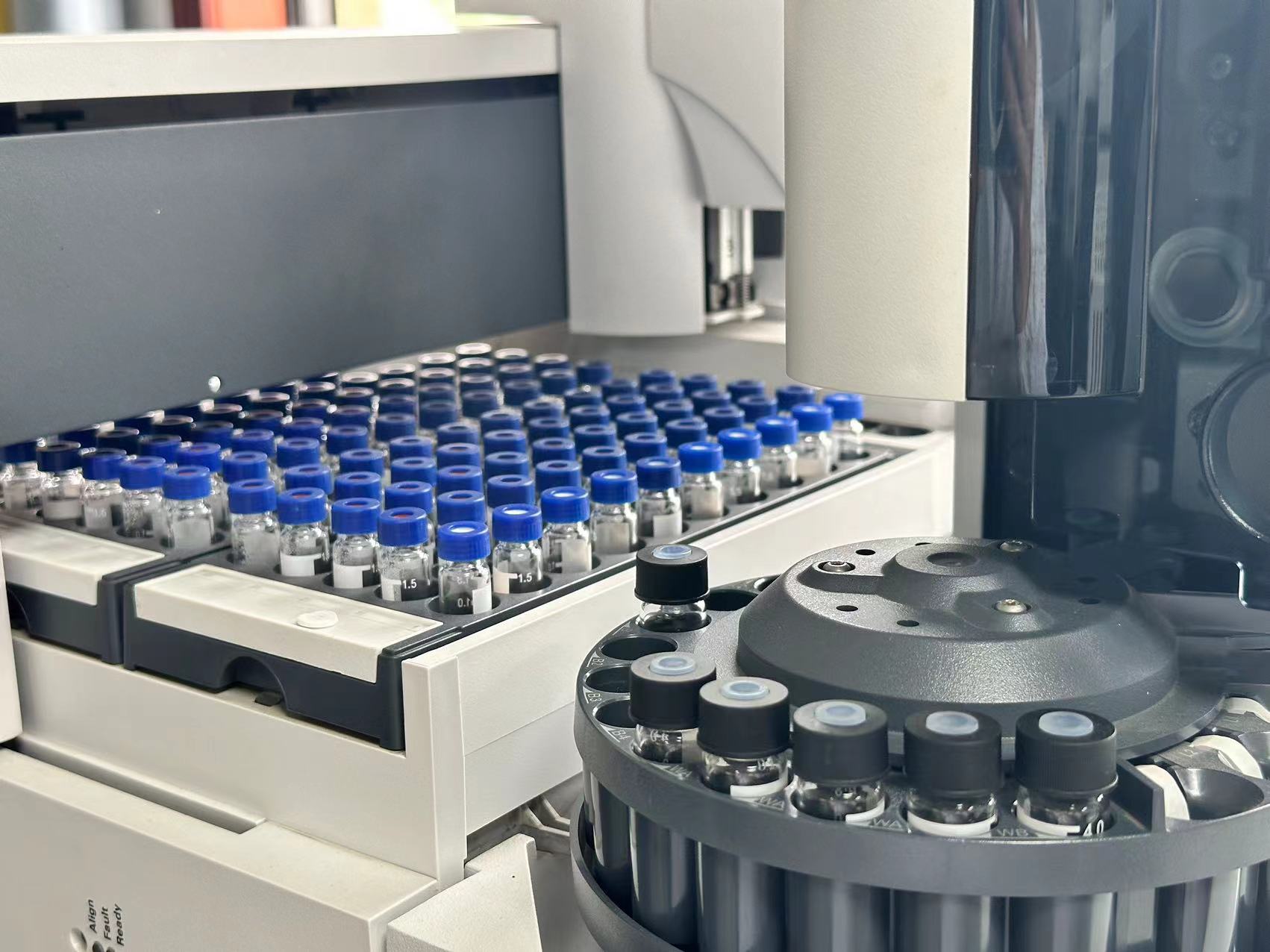
A 60-vial sequence on a 1260 Infinity II stopped at position 37 with "No or improper vial" on the front panel, and the operator sent me a photo of the autosampler tray with the lid off. Vial 37 was sitting 1.8 mm high in its well, cocked about four degrees off vertical, because the cap had been seated with a 0.6 mm gap on one side. The instrument read that as a pickup failure. It was not a vial defect. It was a seating and alignment problem, and the aijiren brand autosampler pickup error and misalignment class of faults almost always is. If you run aijiren vials and you are chasing intermittent pickup errors, tray crashes, or gripper faults, the cause is more likely in the geometry between the tray, the cap, and the gripper than in the moulded body of the vial itself. This article is about that geometry: tray height, gripper tolerance, cap seating, and the exact error codes each misalignment throws on the instruments I see most often.
Autosamplers do not grip a vial by feel. They grip it by position. The gripper jaws close to a fixed travel, the tray presents the vial at a nominal Z height, and the instrument trusts that the top of the cap is where the calibration says it should be. When the tray sits high or low, everything downstream shifts.
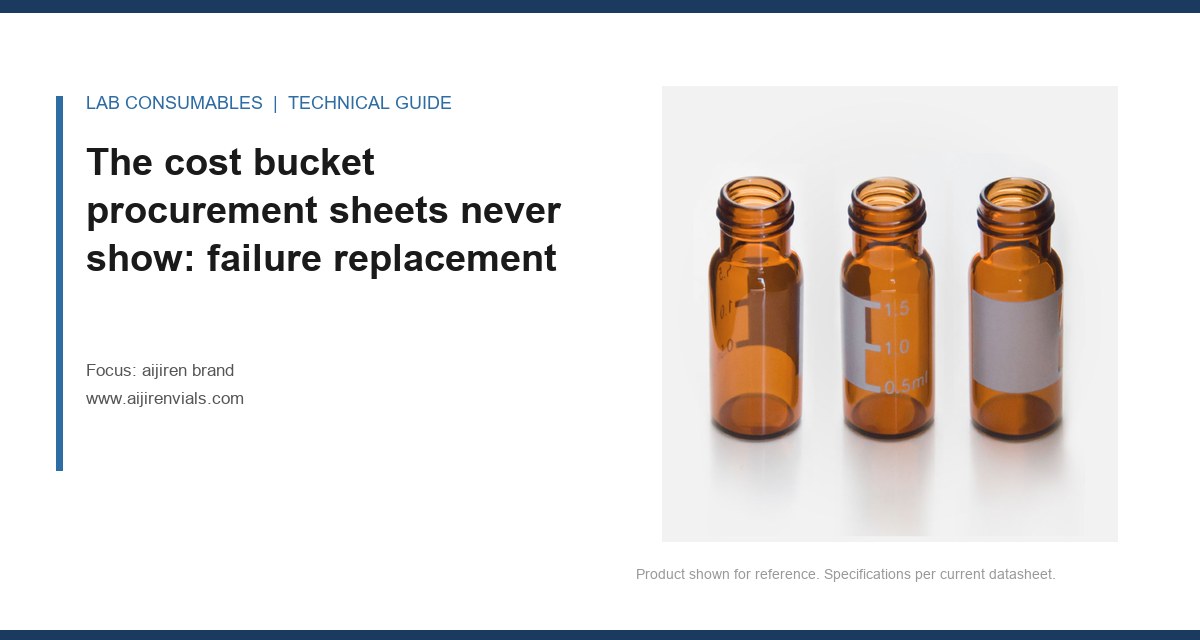
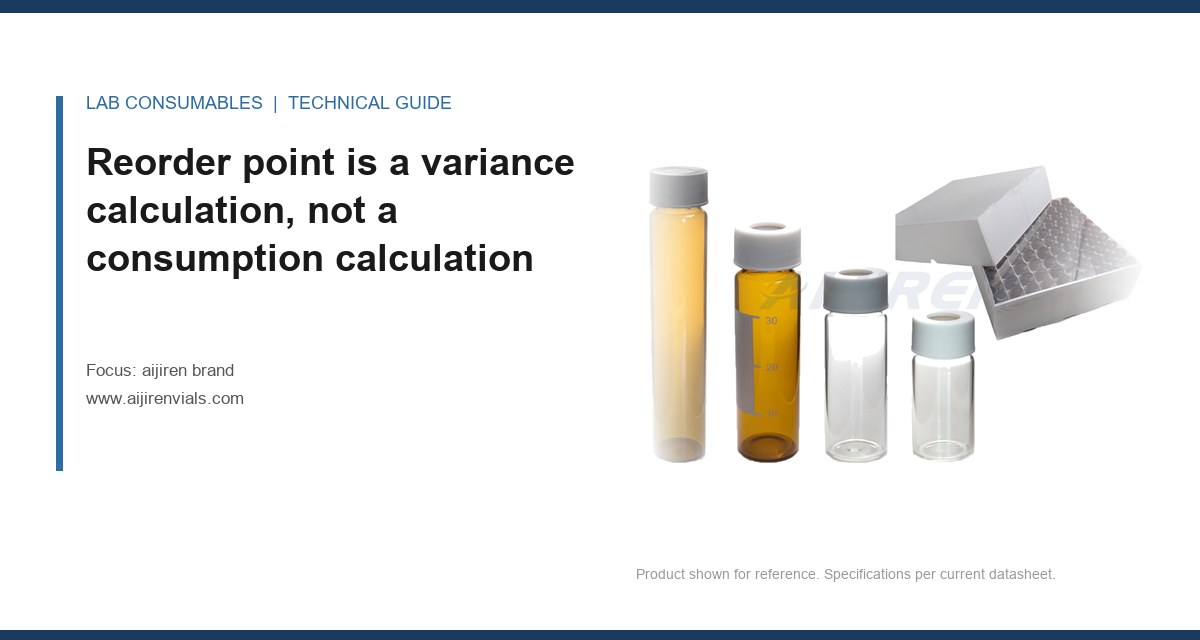
On a standard 2 mL autosampler vial, the body is 32 mm tall, or 32.2 mm on the crimp-neck version, and the capped assembly tops out at roughly 38.5 to 39 mm depending on the seal. That top surface is what the gripper and the needle guide reference. A tray that is out of level by 0.5 mm across its width is enough to push the cap top outside the gripper's vertical window on the far side of the tray. You will not see it on the near side. You will see it at position 30-something, every time, and conclude the vial is bad.
How I check it: a flat granite plate or a machinist's straightedge across the tray surface, a 0.05 mm feeler gauge, and a dial indicator on a magnetic base run across four corners. Level tolerance I accept is ±0.2 mm corner to corner. Anything more and I re-shim the tray feet before I touch a single vial. On the Agilent 1260 and 1290 trays, the tray feet are adjustable and the service manual gives a nominal tray-to-needle-guide height; measure to that number, not to what "looks right." Thermo TriPlus and CTC PAL trays use a different reference, but the principle is identical: the top of the cap, not the bottom of the vial, is the datum.
What a high tray actually does to the run
A tray running 0.5 to 1 mm high forces the gripper to close on the shoulder of the cap rather than the cap body. The jaws grip, the vial lifts, and the cap tilts. On the next pickup the gripper over-closes and the vial drops back into the well at an angle. That is the "vial present but not seated" fault, and on Agilent instruments it logs as Error 8, "Vial gripper error" or "No or improper vial" depending on firmware. On a CTC PAL it shows as a vial pickup timeout. A tray running low does the opposite: the gripper closes on air, the vial is never lifted, and you get a "vial not found" fault at the same positions every cycle.
Gripper tolerance: the number that decides whether a 0.3 mm cap run passes or fails
The gripper is a fixed-travel mechanism. On most autosamplers the jaw opening is set so the closed jaws clear a nominal cap diameter by 0.2 to 0.4 mm total. That is the entire tolerance budget. If your cap diameter drifts by more than that, the gripper either cannot close (cap too large) or closes past the cap and grips the neck (cap too small, or seated crooked).
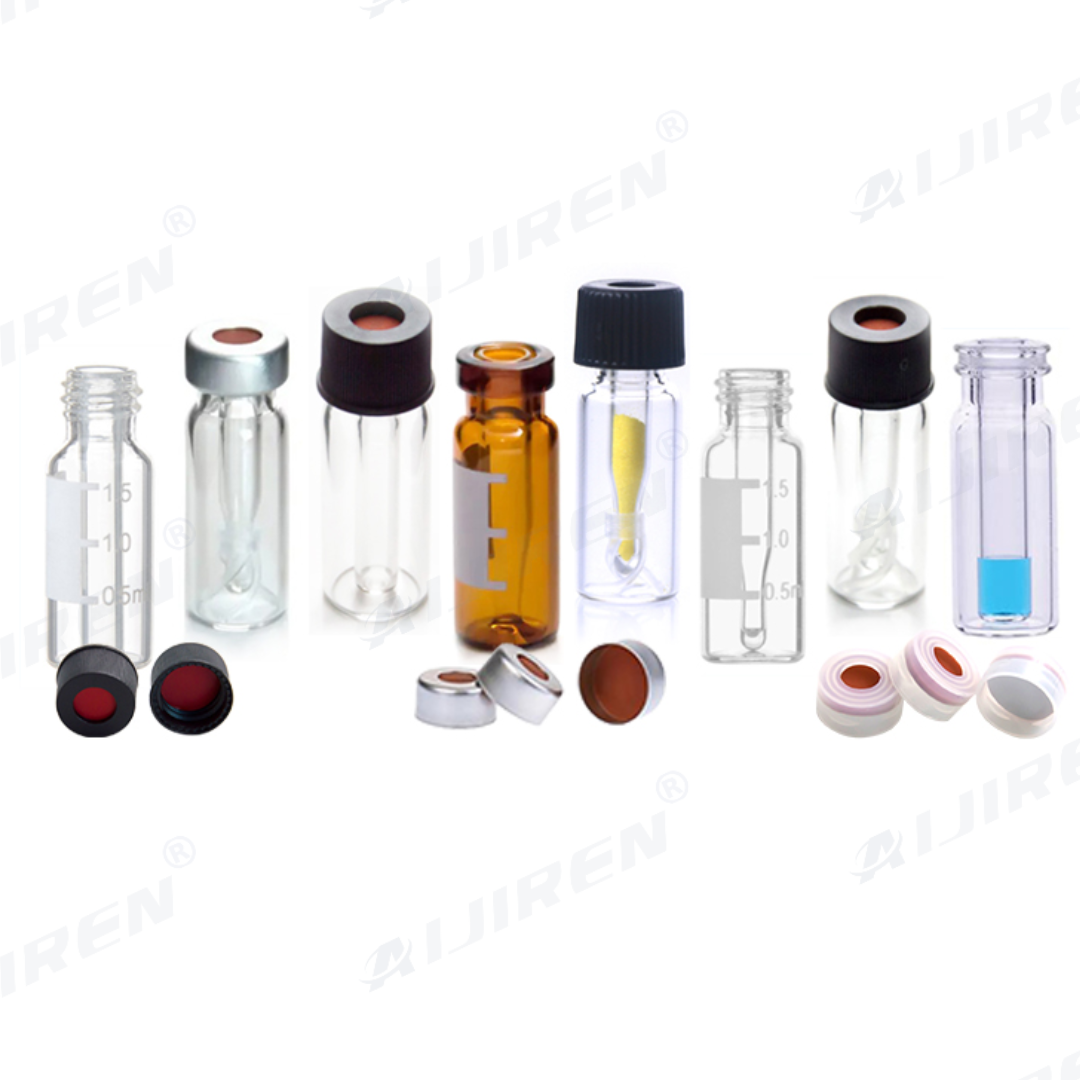
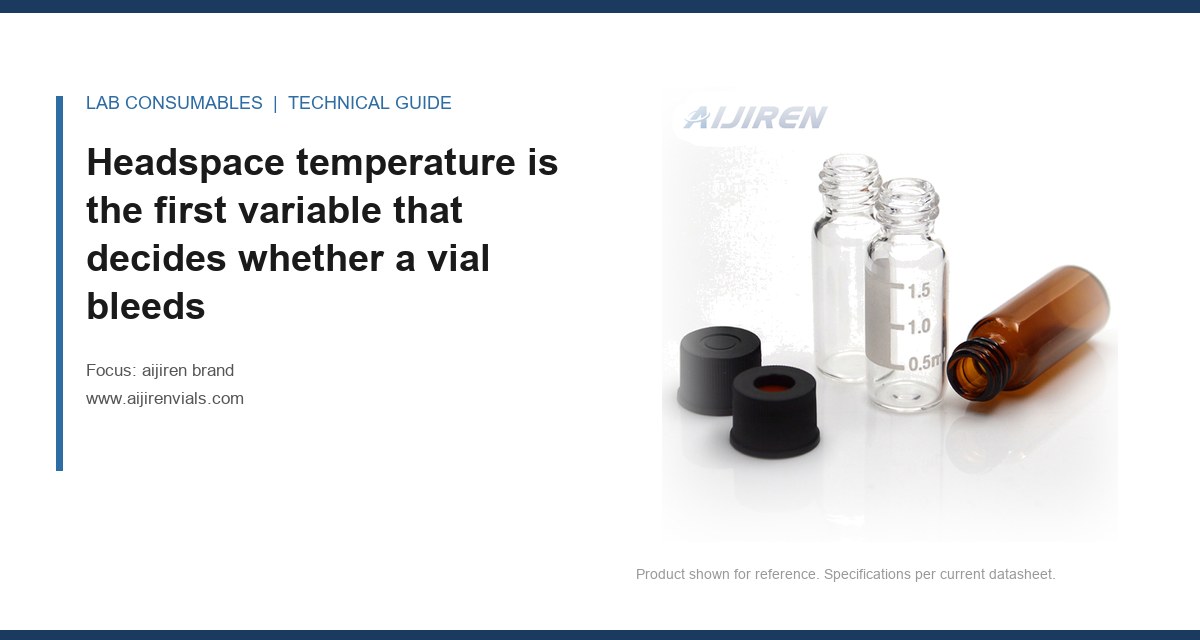
A standard 11 mm crimp or snap cap has a nominal diameter of 11.0 mm with a moulded tolerance of ±0.1 mm. A screw-thread 9 mm cap is 9.0 mm ±0.1 mm. Those are the numbers the gripper was designed around. When I audit a lot that is throwing pickup errors, I measure 30 caps across the tray with a digital micrometer at the cap skirt, not the top. If I see a spread of more than 0.25 mm across the lot, the gripper is working against the cap, and no amount of tray adjustment will fix it.
The crooked-cap case that reads as a gripper fault
Field case: a lab running aijiren 9 mm screw-thread vials on a Thermo TriPlus RSH was getting intermittent "vial not found" faults at random positions, roughly one in 40. The tray was level to 0.1 mm. Cap diameters measured within spec. What I found was cap seating: the operator was hand-tightening caps and about one in 40 was cross-threaded by a half turn. The cap sat at a slight angle, the top of the cap was 0.8 mm higher on one side, and the gripper grabbed the high side and twisted the vial. The fix was not the instrument. It was a cap torque check: on 9 mm screw caps I want 0.6 to 0.9 N·m, hand-tight but not white-knuckle, and a capping tool or a torque-limited driver if the lab is doing more than a few dozen a day. After that, the fault rate went to zero over 2,000 injections.
Cap seating is a dimensional problem, not a technique problem
Every misalignment fault I have traced on aijiren vials has come back to the cap sitting wrong on the neck. There are three ways it goes wrong, and each has a measurement.
- Gap under the skirt. A correctly seated crimp cap has the skirt rolled under the neck bead with no visible gap. A snap cap seats fully when the retention ring is below the neck bead. If you can slide a 0.2 mm feeler under the skirt at any point, the cap is not seated. That gap translates to a tilted cap top of 0.3 to 0.6 mm across an 11 mm cap, which is outside the gripper window.
- Cross-threading on screw caps. The cap starts on the thread at an angle. The first half turn feels tight but the cap is not square. Measure the cap top height at four points with a caliper: any spread over 0.3 mm means it is cross-threaded. Back it off and start again.
- Over-crimping. A crimper set too deep flattens the seal and pulls the cap skirt up, lifting the cap top 0.4 to 0.8 mm. The vial seals, the run works, and then the gripper cannot grab it on the next cycle. The crimper needs a depth stop set to the cap's nominal crimp height, and I check it with a go/no-go gauge every shift.
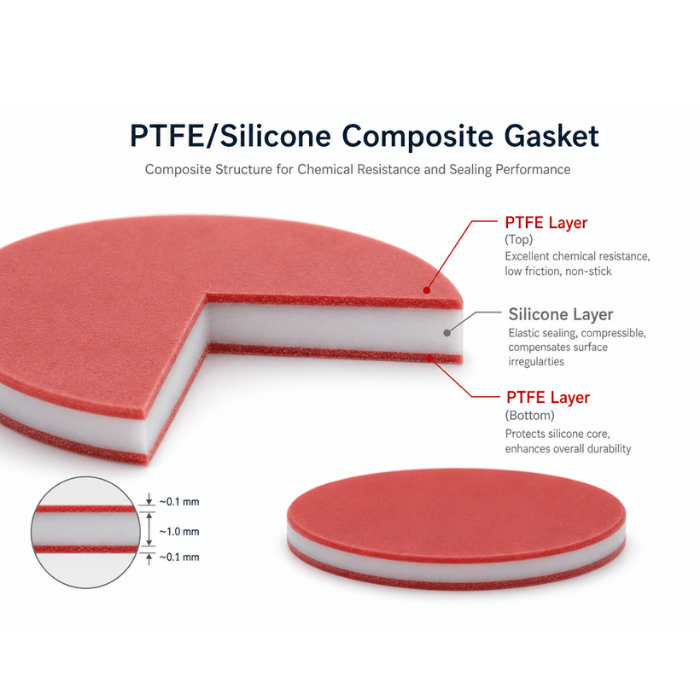
This is where the choice of cap and septum matters for alignment as much as for sealing. A septum that is too thick or sits proud of the cap changes the top-of-cap datum. If you are running a thick PTFE-faced silicone septum, the cap top is higher than the gripper expects. The septa and vial septa we stock are dimensioned to the cap's nominal top height for exactly this reason: the septum is part of the alignment stack, not just the seal. If you mix septa from a different source into aijiren caps, measure the assembled cap top height before you run.
The error codes each misalignment produces, by instrument
This is the part that saves the most time. The instrument tells you what it thinks went wrong, and the message usually points at the vial when the real fault is upstream. Here is what I see in the field, mapped to the geometry that causes it.
| Instrument family | Error message / code | Geometry that causes it | First check |
|---|---|---|---|
| Agilent 1260 / 1290 ALS | Error 8, vial gripper error | Cap top outside gripper window, tray high | Tray level to ±0.2 mm; cap top height |
| Agilent 1260 / 1290 ALS | No or improper vial | Crooked cap, gripper closed on shoulder | Cap seating gap; cap diameter spread |
| Thermo TriPlus RSH | Vial not found | Tray low, gripper closed on air | Tray-to-guide height; vial present sensor |
| Thermo TriPlus RSH | Vial pickup timeout | Cross-threaded cap, vial twisted in well | Cap torque; cap top height spread |
| CTC PAL / PAL3 | Gripper error / vial jam | Cap diameter over gripper travel | Cap diameter at skirt, 30-cap sample |
| Shimadzu AOC-20i | Vial detection error | Tray height drift, well not aligned | Tray level; well alignment to needle |
| Waters 2707 / FTN | Sample not detected | Cap top low, septum compressed | Cap top height; septum thickness |
Two things to notice. First, the same physical fault produces different messages on different instruments, so a knowledge base search for one code will not find the others. Second, the fix is almost never "replace the vial." It is a tray, cap, or gripper adjustment. The instrument vendors document the nominal values in their service manuals; Agilent's chromatography consumables and accessories documentation and Thermo's chromatography and sample handling pages both publish tray and gripper specifications worth keeping on the bench.
The 96-well and 384-well plate version of the same fault
Everything above applies to plate-based autosamplers, with one twist: the plate itself is the tray. A 96-well plate that is warped by 0.5 mm across the footprint will present wells at different heights, and the gripper will fail at the high corner. I have measured plates out of the box at 0.7 mm corner-to-corner warp on a warm day. The fix is a plate nest that holds the plate flat, not a different vial. If you are running aijiren vials in a plate format, check the plate flatness on a surface plate before you blame the gripper. The aijiren brand plate dimensions are held to the SBS footprint, but warp is a shipping and storage problem, not a moulding one.
Field case: the lot that drifted 0.4 mm and the run that failed at position 61
A pharmaceutical QC lab running aijiren 2 mL crimp vials on a Shimadzu AOC-20i reported "vial detection error" at position 61 on three consecutive runs, always the same position. The tray was level. The instrument had been serviced two weeks earlier. I measured the vials: body height 32.0 mm on the good ones, 32.4 mm on the ones at position 61. The lot had a height spread of 0.4 mm, which is outside the ±0.1 mm the gripper expects on the cap top datum. The taller vials at that position pushed the cap top above the gripper's vertical window. The fix was a lot segregation: the lab now measures 10 vials per lot for body height and cap top height on receipt, and rejects lots with more than 0.2 mm spread. The instrument was never the problem.
That case is also where the standards come in. If the lab is running EPA methods, the container geometry is part of the method's sample handling, and the SW-846 test methods define what the container must do. A vial that will not present to the gripper is a container that fails the method's handling requirement, regardless of what it does chemically. Restek's technical resources have a useful set of notes on autosampler vial dimensions that I hand to new lab techs.
The alignment checklist I run before I touch the instrument
When a lab calls me about pickup errors on aijiren vials, I run this in order. It takes about 20 minutes and it finds the fault nine times out of ten.
- Tray level: dial indicator on four corners, accept ±0.2 mm. Re-shim if not.
- Tray-to-guide height: measure to the service manual nominal, not to "looks right."
- Cap top height: caliper 10 assembled vials, accept ±0.2 mm spread. Reject the lot if not.
- Cap diameter: micrometer at the skirt on 30 caps, accept ±0.1 mm. Reject the lot if the spread is over 0.25 mm.
- Cap seating gap: 0.2 mm feeler under the skirt, no gap allowed.
- Screw cap torque: 0.6 to 0.9 N·m on 9 mm caps; use a driver if the lab caps more than 50 a day.
- Crimper depth: go/no-go gauge every shift; a crimp that pulls the cap top up 0.4 mm will cause a gripper fault.
- Plate flatness: 0.5 mm max warp on a surface plate for plate-based systems.
- Vial body height: 10 per lot, accept ±0.1 mm.
The decision rule for aijiren brand pickup errors and misalignment
If the fault is at the same position every run, it is the tray or the instrument. If it is random, it is the cap or the lot. Measure the tray level and the cap top height before you replace a single vial, and reject any lot with more than 0.2 mm spread on cap top height or 0.25 mm on cap diameter. The aijiren brand autosampler pickup error and misalignment faults I see in the field are alignment faults, and the instrument is usually telling you the truth about a vial that is sitting 0.5 mm too high. Fix the datum, not the vial, and the error codes go away. If you are cross-referencing vial families across instruments, the VOA vial dimensional notes are a useful reference for the standard 32 mm body and the cap top datum that the gripper actually sees.
References & further reading
Related resources from our lab consumables network:
- Aijiren Brand at aijirenvials.com
- Voa Vial at voavial.com
- Septa at septacaps.com
- Vial Septa at vialsepta.com
External references and standards: