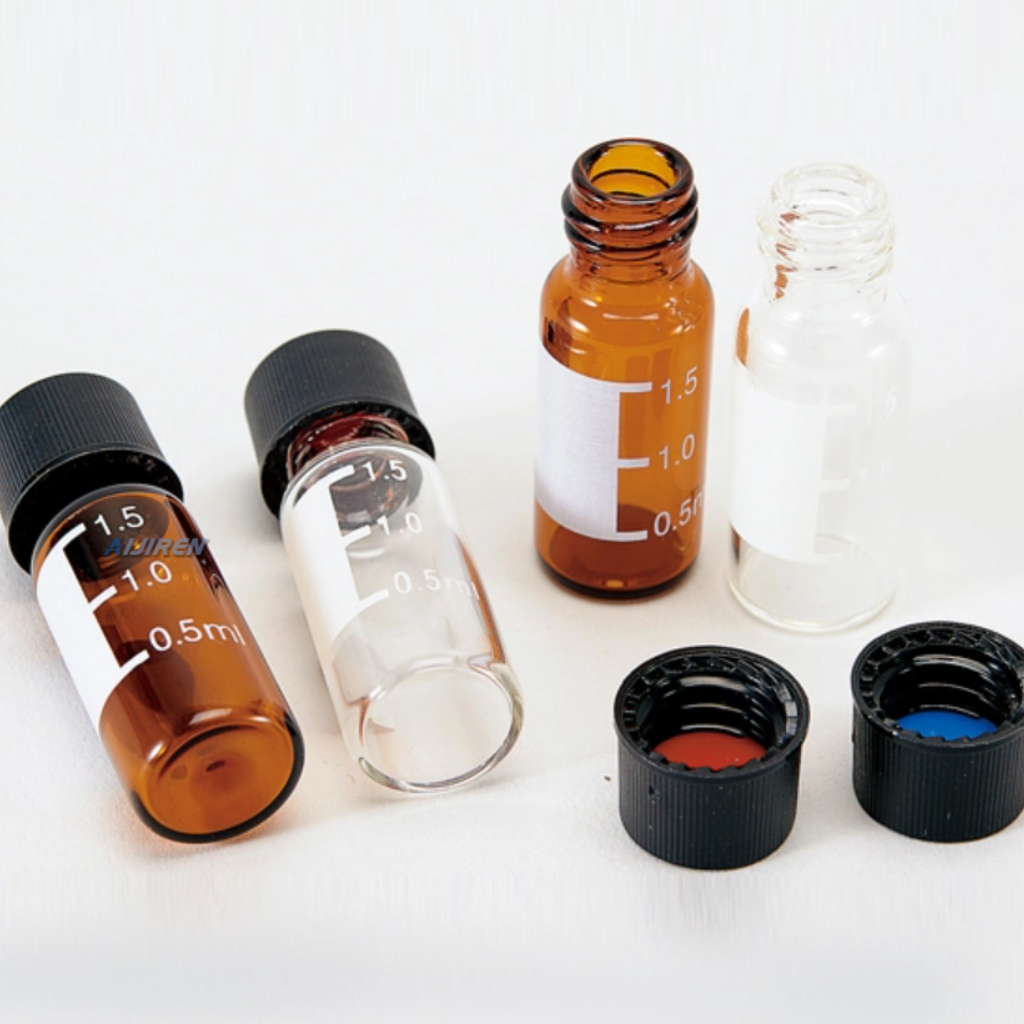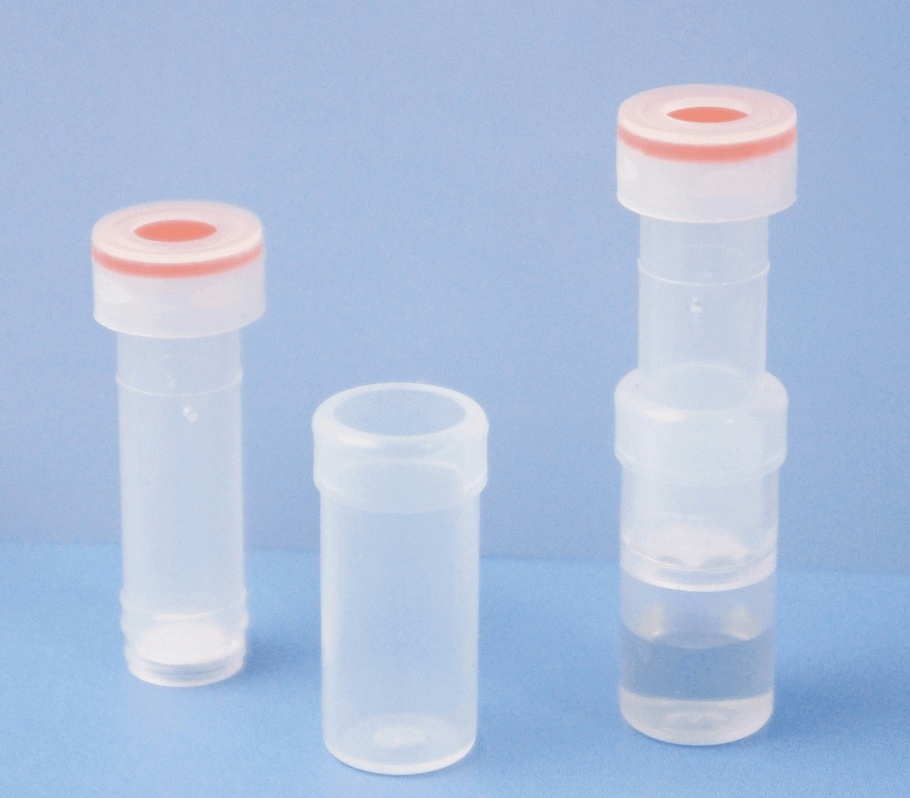
A buyer sent me two 2 mL clear glass vials last March, one in an aijiren carton and one in a distributor's house brand. Same 11.6 mm outside diameter, same 32 mm height, same 8.2 mm neck, same 9 mm screw finish. Both fit the autosampler tray. Both passed the same dimensional gauge. Then we pulled the drawings, and only one of them had a drawing at all. That gap, between an OEM part with a controlled print and a private-label part with a controlled label, is the whole subject of this piece. The OEM versus private label aijiren brand difference is not a marketing distinction. It is a question of who owns the tooling, who holds the recipe, and who carries the liability when a lot drifts at 40 °C.
Tooling ownership is the first thing that changes, and it is the thing buyers never ask about
When aijiren runs a part as OEM, the mold or the forming tool is built to a drawing that we control and that the customer has signed off on. The tooling number, the cavity layout, the gate location, the cooling circuit, all of it lives in our tooling register. A private-label part is different. The brand owner may commission the tool, or we may run the part on an existing aijiren tool and apply their label. Those are two very different arrangements, and the label on the box looks identical in both cases.
I have watched this bite a procurement team. They assumed that because they paid for "their own" vial, they owned the mold. They did not. The contract specified a private-label supply agreement, not a tooling transfer. When they wanted to move the part to a second source eighteen months later, they had nothing to move. No tool drawing, no cavity map, no dimensional print beyond the catalog page. The second source quoted from a photograph.
Here is the practical test. Ask three questions before you sign anything:
- Who holds title to the tool, and is the tool serial number written into the agreement?
- Is there a controlled dimensional drawing with a revision letter, and does the brand owner hold a copy?
- If the relationship ends, does the tool ship, or does the part ship on someone else's tool?
If the answer to the first question is "aijiren," you are buying a private-label product. That is a legitimate purchase. It is not the same purchase as OEM, and the difference shows up the first time you need to qualify a second source or defend a deviation to an auditor.
The recipe is the part of the vial you cannot see, and private label does not always transfer it
Glass is not a single material. A 2 mL autosampler vial is a borosilicate formulation with a specified coefficient of expansion (Type I is around 3.3 × 10⁻⁶ /K), a specified hydrolytic resistance per USP <660>, and a specified annealing profile. The annealing step is where most of the invisible quality lives. A vial that is formed and cooled too fast carries residual stress. It will pass a dimensional check and fail in the field.
Under OEM, the recipe is on the print. We hold the glass batch records, the annealing lehr curve, the forming temperature window. Under private label, the brand owner is buying a part to a specification, and the specification may say "Type I borosilicate, 2 mL, 9 mm screw" and nothing else. That is a category, not a recipe. Two suppliers can both meet it and produce vials that behave differently at 260 °C in a GC inlet.
I have a case that makes this concrete. A contract lab running EPA method 8260 on a headspace autosampler started seeing a creeping increase in siloxane background on their blank runs. Not a spike. A slow drift, maybe 15% over a shift. The instrument was serviced twice. The column was replaced. The drift persisted. We pulled the septum lot and the vial lot. The septa were fine. The vials were a private-label part sourced from a second plant, and the annealing curve at that plant had been shortened to increase throughput. The vials were not outgassing siloxane. They were releasing adsorbed volatiles from a surface that had not been properly annealed and cleaned. The fix was a change of supplier and a re-qualification of the blank. The lesson is that the recipe, not the label, decides what comes off the glass.
This is why I tell buyers to ask for the batch record, not the certificate of analysis. A CoA tells you what was tested. The batch record tells you what was made. For a look at how we think about the manufacturing side of this, the aijiren brand page lays out the line map, but the point here is narrower: under OEM, you can audit the recipe. Under private label, you are auditing a specification.
What actually changes when the brand changes but the factory does not
This is the scenario that confuses people most. Same plant. Same machines. Same operators. Different label. Does anything real change? Yes, and it changes in four places.
1. The inspection plan
An OEM part runs to a documented inspection plan tied to the drawing. Critical dimensions at AQL 1.0, cosmetic at AQL 2.5, with the sample size and the acceptance number written down. A private-label part runs to whatever the supply agreement says. If the agreement is thin, the inspection plan is thin. I have seen private-label agreements that specify only a visual check and a dimensional spot check on the first article. That is not the same product, even if it comes off the same cavity.
2. The change-control trigger
Under OEM, a change to the glass batch, the annealing curve, the mold, or the cleaning line triggers a notification and usually a re-qualification. Under private label, the trigger is whatever the contract says it is. If the contract is silent, the supplier can change a sub-supplier without telling you. The label does not change. The part does.
3. The traceability chain
An OEM lot traces back to a batch record, a cavity number, a lehr run, and a cleaning cycle. A private-label lot traces back to whatever the brand owner required. If they required a lot number on the carton and nothing else, that is the end of the chain. When an auditor asks you to demonstrate that the vial in your validated method is the vial you are using, that chain matters. The traceability question is covered in more depth elsewhere on this site, but the OEM/private-label split is where it starts.
4. The liability line
If an OEM part fails a specification, the failure is ours to explain and ours to correct. If a private-label part fails, the first question is whether the failure is a manufacturing defect or a specification gap. That question has a way of consuming a quarter. I have sat in that meeting. It is not a good use of anyone's time.
The comparison, in numbers you can put in a qualification file
Here is how the two arrangements differ on the things that show up in an audit. The numbers are the ones I would want to see on a print or in a supply agreement.
| Attribute | OEM (aijiren-controlled tooling and recipe) | Private label (brand owner's label, aijiren or third-party tooling) |
|---|---|---|
| Tooling title | aijiren, with tool serial on the drawing | Varies; often aijiren, sometimes brand owner |
| Controlled drawing | Yes, revision-controlled, customer sign-off | May be a catalog page only |
| Glass batch record | Held, auditable | Held only if the agreement requires it |
| Annealing curve | On the print, monitored per lehr run | Supplier's standard, not disclosed unless asked |
| Critical dimension AQL | 1.0 on bore, neck, and height | Per agreement; often 2.5 or unspecified |
| Cosmetic AQL | 2.5 | Per agreement |
| Change notification | Triggered by material, tool, or process change | Only if the contract says so |
| Lot traceability | Batch, cavity, lehr run, cleaning cycle | Carton lot number at minimum |
| Deviation handling | aijiren-owned, with corrective action | Shared, and often contested |
Read that table and the OEM versus private label aijiren brand difference stops being abstract. It is a list of documents. If you cannot produce the document, you do not have the control.
The septum is where the recipe question gets expensive
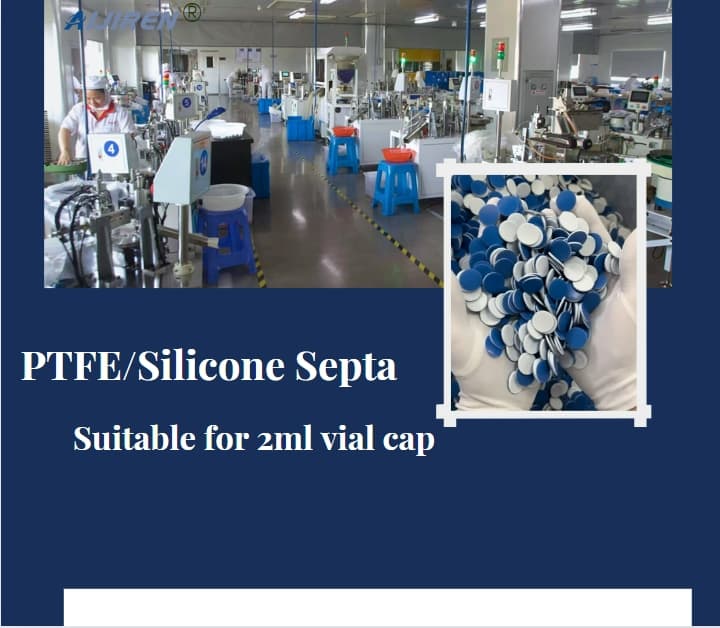
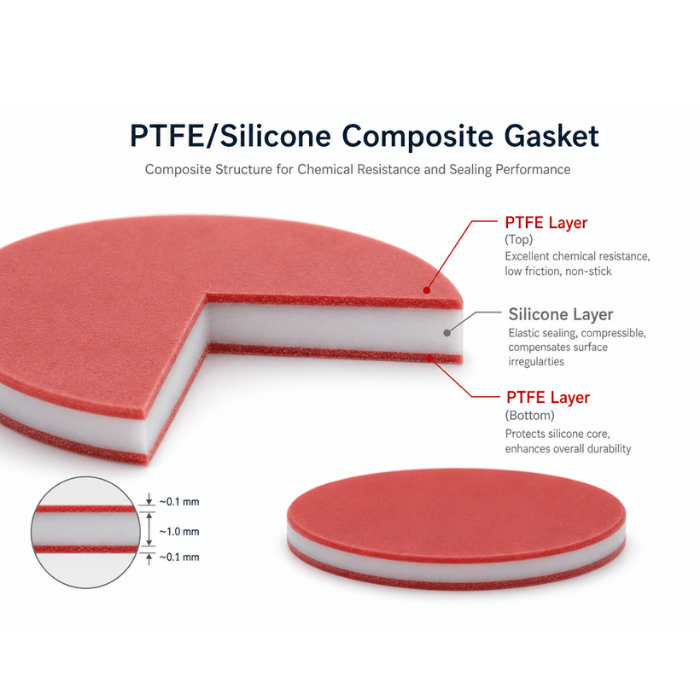
Vials get the attention. Septa cause the failures. A 9 mm silicone/PTFE septum is a laminated part, and the laminate is a recipe. The silicone formulation, the PTFE facing thickness (typically 0.05 mm to 0.13 mm), the cure profile, and the post-cure all affect what comes off the septum at inlet temperature. Under OEM, those are on the print. Under private label, they are whatever the supplier runs.
I have a second case that fits here. A pharmaceutical QC lab running residual solvents by headspace was seeing an unknown peak at 1.9 minutes on the FID. It appeared only on the second injection from each vial. The first injection was clean. That pattern points at the septum, not the sample. The needle was coring the septum and the second puncture was pulling material into the headspace. We measured the puncture count on the lot: the septum was rated for two punctures at the specified needle gauge, and the lab was injecting twice. The private-label septum had been bought on the catalog description "9 mm silicone/PTFE," with no cure specification and no puncture rating. The OEM equivalent carried a cure profile and a rated puncture count. The fix was a change of septum and a rewrite of the method to single-injection. If you want the deeper treatment of septum selection, septacaps.com covers the material side, and vialsepta.com covers the compatibility matrix.
Where the brand change hides a dimensional change
The most dangerous private-label scenario is the one where the label changes and the drawing does not, but the tool does. It happens when a brand owner moves supply from one plant to another to hit a cost target. The catalog page stays the same. The part does not.
The dimensions that matter most are the ones the autosampler touches. The 11.6 mm ± 0.2 mm outside diameter, the 32 mm ± 0.5 mm height, the 6.0 mm bore, and the 8.2 mm neck. A shift of 0.3 mm in the neck diameter is enough to change how the crimp or the screw cap seats, and that changes the seal. The seal is where leaks start. The leak paths are covered in detail in another piece on this site, but the OEM/private-label angle is this: under OEM, the neck dimension is on the print and inspected at AQL 1.0. Under private label, it is on the catalog page and inspected at whatever the agreement says.
I have seen a private-label lot run 0.4 mm over on height. It still fit the tray. It still fit the autosampler. It did not fit the crimper, and the lab spent a week chasing a "capping problem" that was a glass problem. The measurement that identified it was a go/no-go check on the height gauge, run on twenty vials from the lot. Nineteen passed. One was at the upper limit. That one was enough to jam the crimper once per tray. The fix was a lot rejection and a supply agreement amendment that put height on the print at AQL 1.0.
A decision checklist for buyers who cannot tell which one they are buying
Most buyers do not know which arrangement they are in until something goes wrong. Here is the checklist I use to find out before that happens. It takes about twenty minutes with the supplier and the paperwork.
- Ask for the drawing. Not the catalog page. A drawing with a revision letter, a title block, and a tolerance block. If it does not exist, you are buying private label.
- Ask for the tool serial number. If the supplier cannot tell you which tool made your part, you do not have tooling control.
- Ask for the inspection plan. Sample size, AQL, acceptance number. If it says "visual" and nothing else, the plan is thin.
- Ask what triggers a change notification. Glass batch, tool, lehr, cleaning line, sub-supplier. If the answer is "we will let you know," that is not a trigger.
- Ask for a lot traceability sample. Pick a lot number from your shelf and ask them to trace it back to a batch record. Time the response.
- Ask who owns the deviation. If a lot fails a dimension, who writes the corrective action? If the answer is "we will discuss," you are in a private-label arrangement.
If you get clean answers to all six, you are in an OEM arrangement or something close to it. If you get clean answers to three, you are in a private-label arrangement with a good supplier. If you get clean answers to none, you are buying a label.
What to do when you are already in a private-label arrangement
Most labs are. Private label is not a defect. It is a purchasing choice, and it is often the right one for a consumable that does not enter a validated method. The problem is when a private-label part enters a validated method without anyone noticing.
The fix is a specification upgrade, not a supplier change. Take the catalog description and turn it into a print. Add the dimensions that matter to your instrument: outside diameter, height, neck, bore. Add the glass type and the annealing requirement. Add the septum cure and the puncture rating. Add the AQL. Add the change notification clause. Then ask the supplier to run to it. Most will. The ones that will not are telling you something.
For the parts that do enter a validated method, the standard is higher. USP <621> and the method validation guidance in EPA SW-846 both assume the container is part of the method. If the container is a private-label part with no drawing, the method has a gap. That gap is what an auditor finds.
The instrument makers have already picked a side, and it is worth knowing which
Agilent, Thermo Fisher, and Restek all publish dimensional specifications for the vials and septa their instruments are qualified against. Those specifications are not marketing. They are the dimensions the autosampler was designed around. If your private-label vial is 0.3 mm off on the neck, it is off the specification the instrument was qualified against. The instrument does not know the label. It knows the dimension.
This is why I tell buyers to start with the instrument maker's specification and work backward. The Agilent consumables specification pages and the Thermo Fisher chromatography sample handling pages give you the numbers. The Restek technical resources give you the failure modes. If your private-label part meets those numbers, the label does not matter. If it does not, the label is the least of your problems.
For aijiren specifically, the OEM parts are built to those instrument specifications and the private-label parts are built to the brand owner's specification. The difference is the print. If you want the aijiren part, ask for the print. If you want a private-label part, ask for the print anyway. The supplier who can produce it is the supplier you want, regardless of which arrangement you are in. The voavial.com pages show how the dimensional families map to instruments, which is useful when you are writing the print.
The decision rule
If the part enters a validated method, a regulatory submission, or a stability study, buy OEM and hold the drawing. If the part is a general-purpose consumable that never touches a validated method, private label is fine, provided you have upgraded the catalog description to a specification with dimensions, AQL, and a change notification clause. The label on the carton tells you who is selling. The drawing tells you who is responsible. Buy the drawing.
References & further reading
Related resources from our lab consumables network:
- Aijiren Brand at aijirenvials.com
- Voa Vial at voavial.com
- Septa at septacaps.com
- Vial Septa at vialsepta.com
External references and standards: