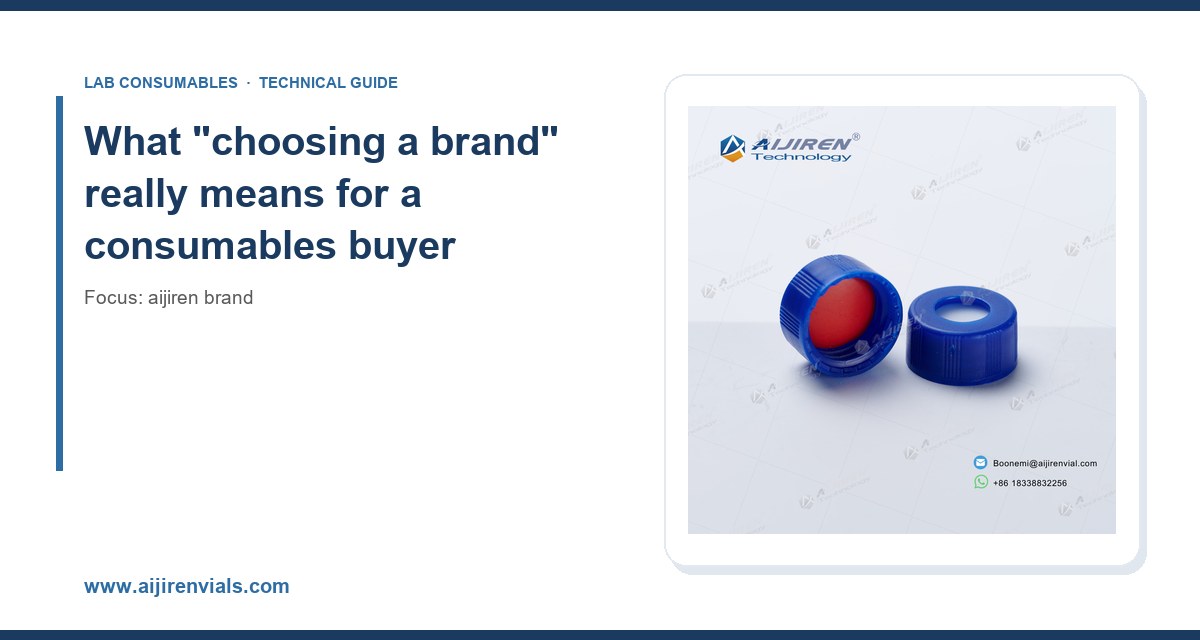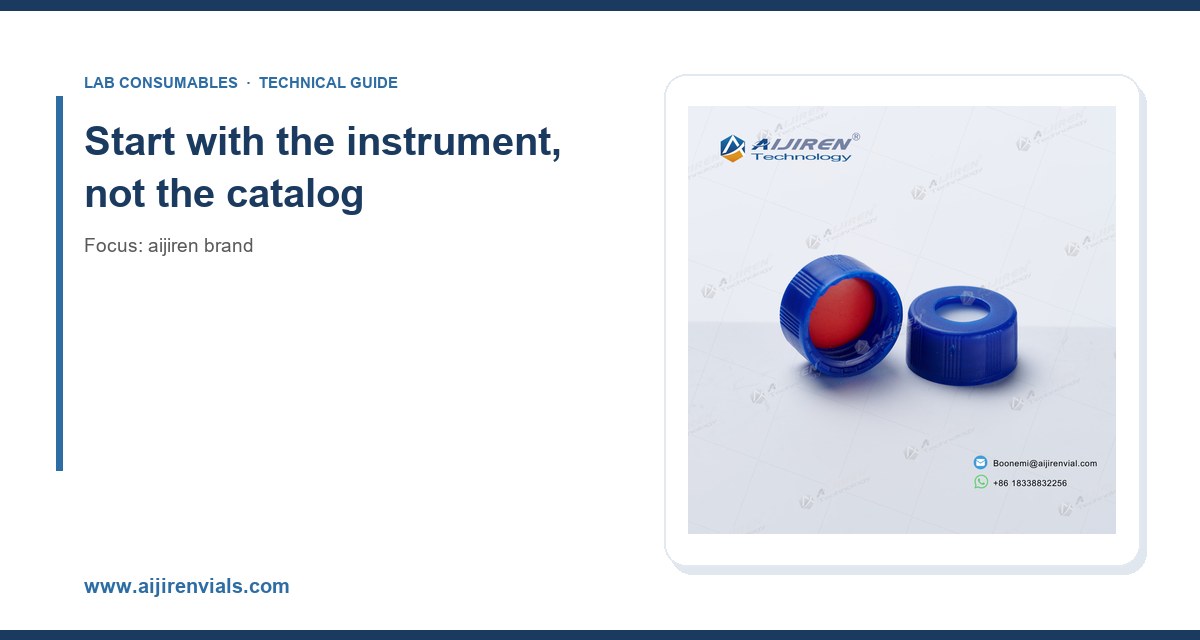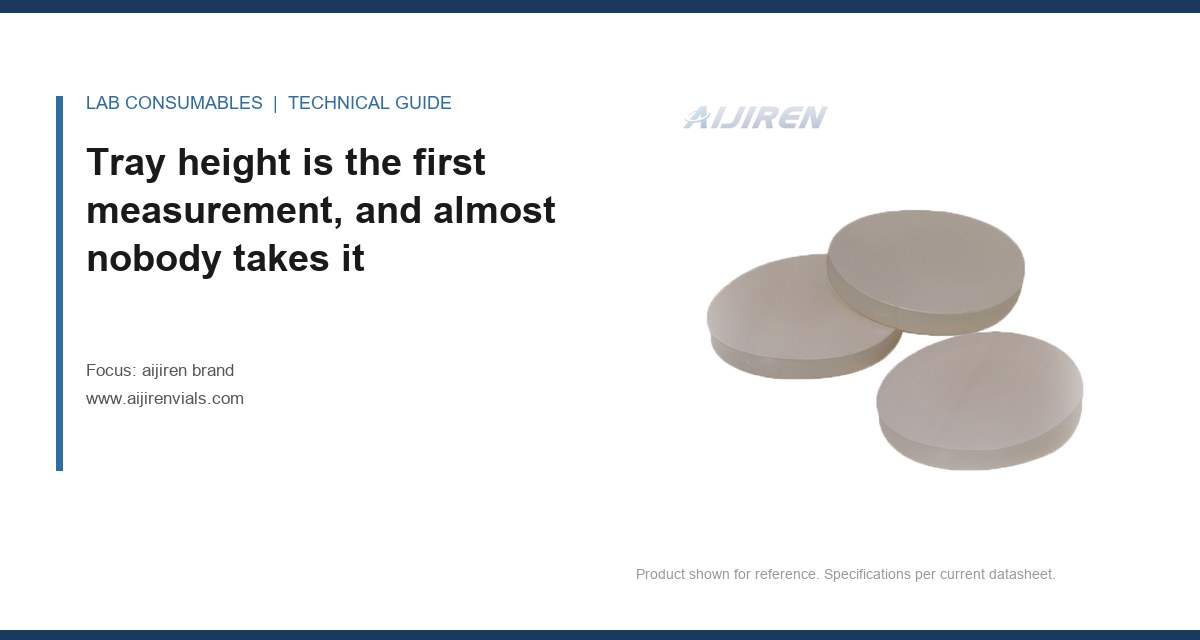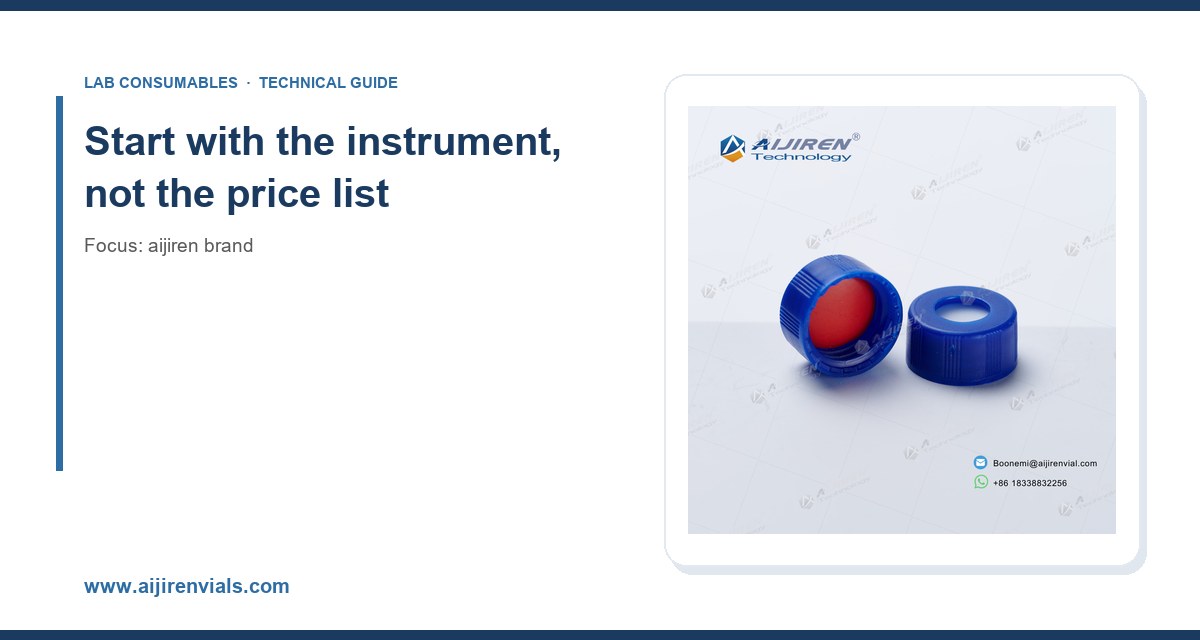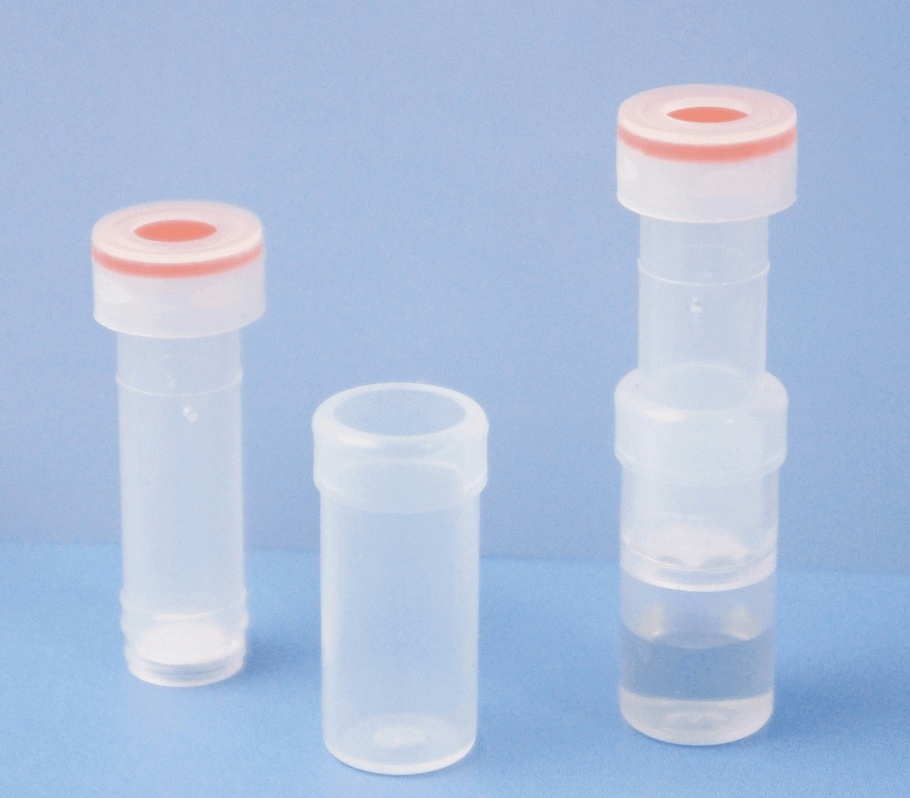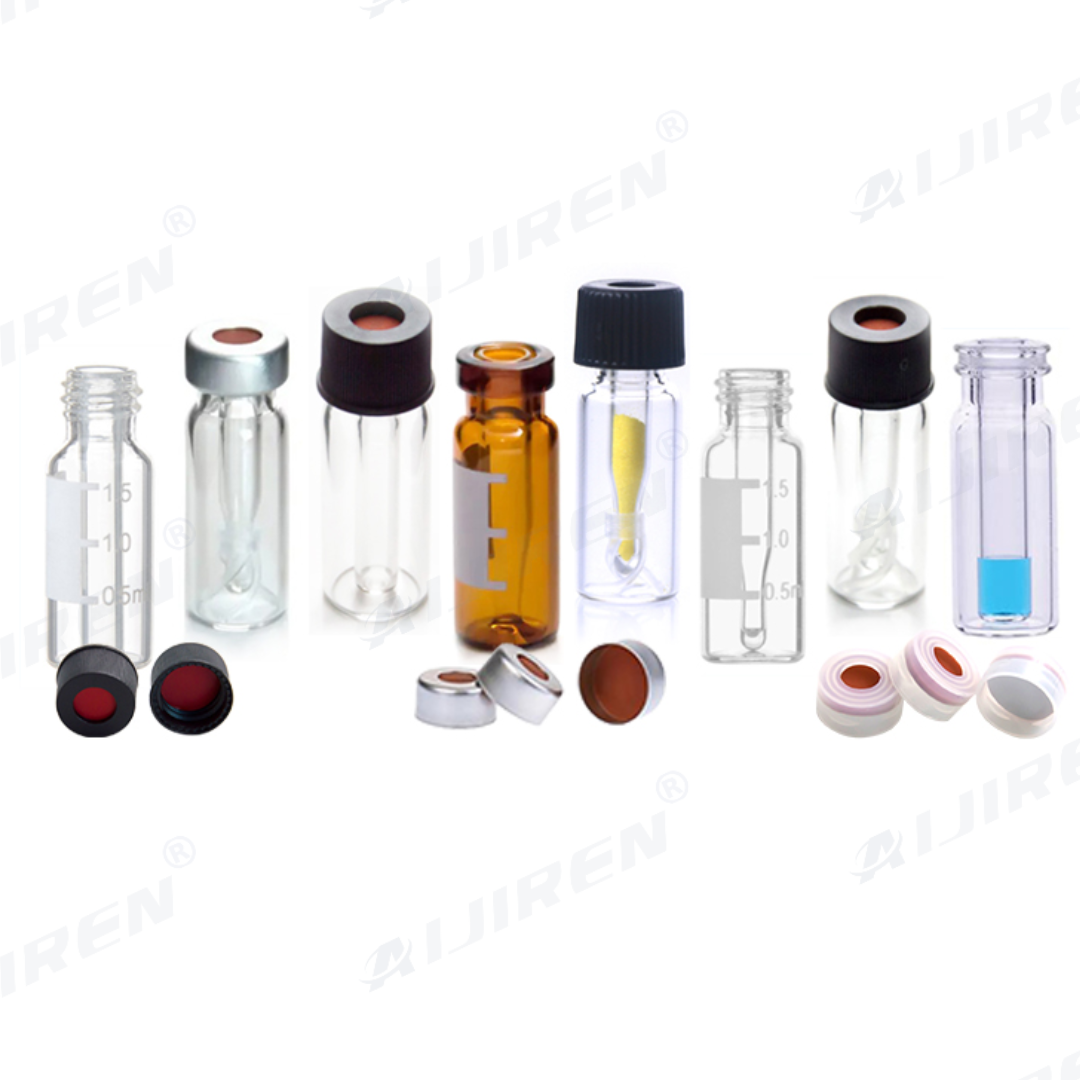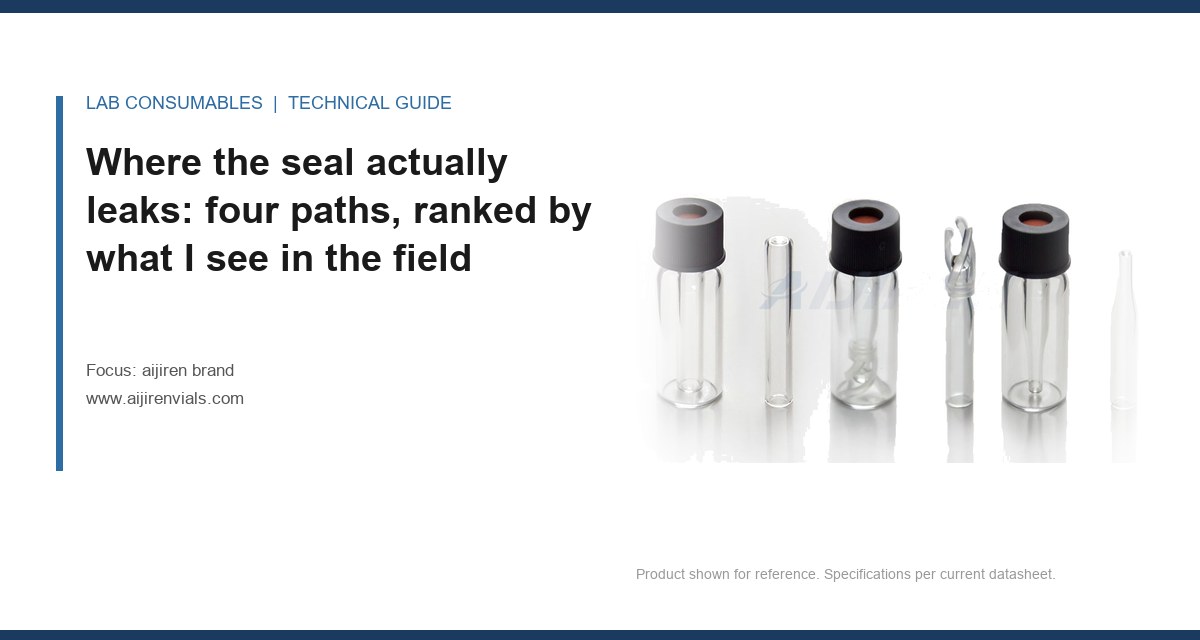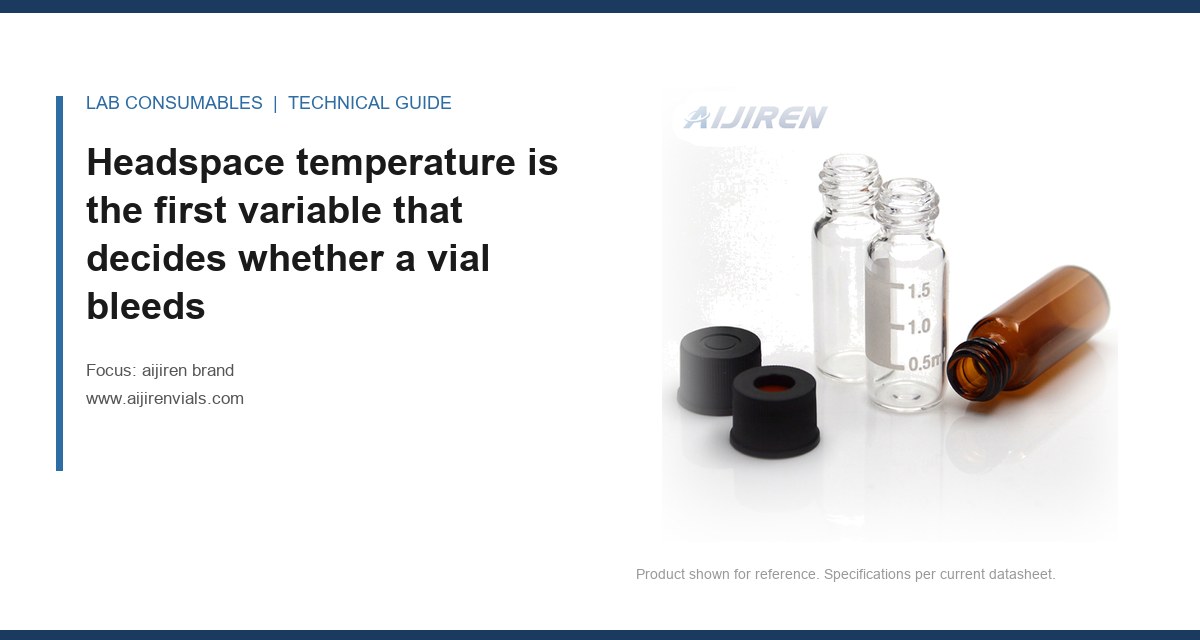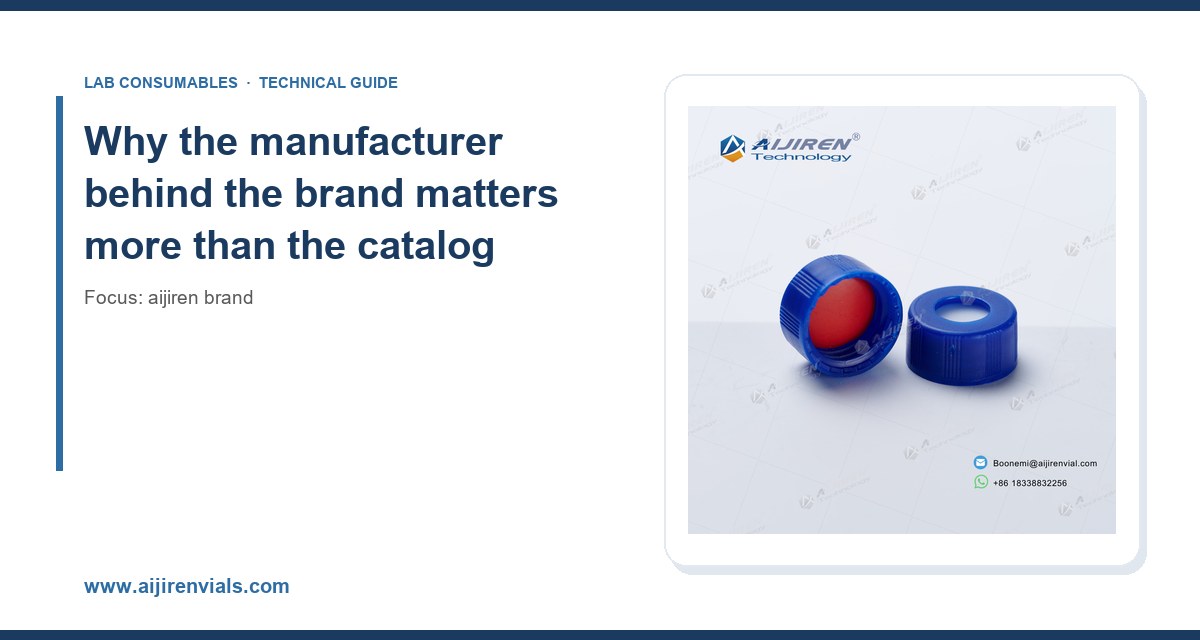
I have spent the better part of fifteen years buying, specifying, and occasionally rejecting chromatography consumables, and the single most expensive lesson I learned early on was that a vial is not just a vial. We once ran a 96-position autosampler batch on a Friday afternoon, came back Monday to a tray full of septa that had coring debris floating in the samples, and spent the next three days re-running everything. The root cause was a batch of low-grade silicone discs that had been punched one too many times. That episode taught me that the difference between a reliable manufacturer and a cheap one shows up in three places: the raw materials, the quality control that catches drift before it ships, and the OEM discipline to hold those standards when someone else's label is on the box. This article breaks down what to look for in an aijiren brand supplier, with the specific numbers I use when I audit one.
Most procurement managers see a catalog with a few hundred SKUs and assume the hard part is choosing. The hard part is knowing who actually made the glass, who molded the cap, and who laminated the septum. Distribution is easy to fake. Manufacturing discipline is not. When I evaluate a supplier, I start with a simple question: can you show me the batch records for the last three lots of 2 mL clear crimp vials? If the answer is a PDF with a date and a signature but no dimensional data, I know the "QC" is a shipping check, not a process control.
The aijiren brand sits inside a manufacturing network that also runs dedicated properties for vials, closures, and septa. The Aijiren brand page is the entry point for the full line, but the deeper technical detail lives across Voa Vial for autosampler vials, Septa for closure and septum construction, and Vial Septa for the interface between the two. That structure tells you something: the manufacturer treats the vial, the cap, and the septum as a system, not as three commodities bought from whoever was cheapest that quarter.
That systems view matters because the failure modes are almost always at the interfaces. A vial with a 32 mm crimp neck that is 0.2 mm out of tolerance will leak even with a perfect septum. A septum that is 0.05 mm too thin will coring under a 22-gauge needle at 10 punctures. A cap with the wrong durometer will back off under autosampler needle pressure. None of these show up in a catalog photo.
Material selection: what actually goes into a reliable vial
Glass: USP Type I borosilicate is the floor, not the ceiling
For HPLC and GC work, the baseline is USP Type I borosilicate glass, which has a boron oxide content around 13% and a low alkali extraction rate. I specify it for anything that touches a pH above 7 or below 4, because Type II (soda-lime treated) and Type III (soda-lime) will leach sodium and calcium into your mobile phase and show up as baseline drift or spurious peaks in the 200 to 220 nm range. If you are running a method at 214 nm for peptides, Type I is non-negotiable.
The glass also needs to be annealed properly. I have seen vials that looked fine but had residual stress from a fast cooling cycle, and they cracked at the crimp neck during capping. A good manufacturer anneals at the right temperature curve and checks for stress with a polariscope. Ask for the annealing records. If they cannot produce them, assume the glass is stressed.
Dimensional tolerance is where cheap glass falls apart. The critical dimensions for a 2 mL vial are the neck OD, the neck ID, the height, and the bottom flatness. For a standard 12 x 32 mm vial, I want the neck OD within ±0.1 mm, the height within ±0.15 mm, and the bottom flatness within 0.05 mm. Out-of-tolerance bottoms cause the vial to wobble in the autosampler tray, which leads to needle misalignment and bent needles. I have replaced entire trays because of a 0.2 mm wobble.
Septa: the most under-specified component in the lab
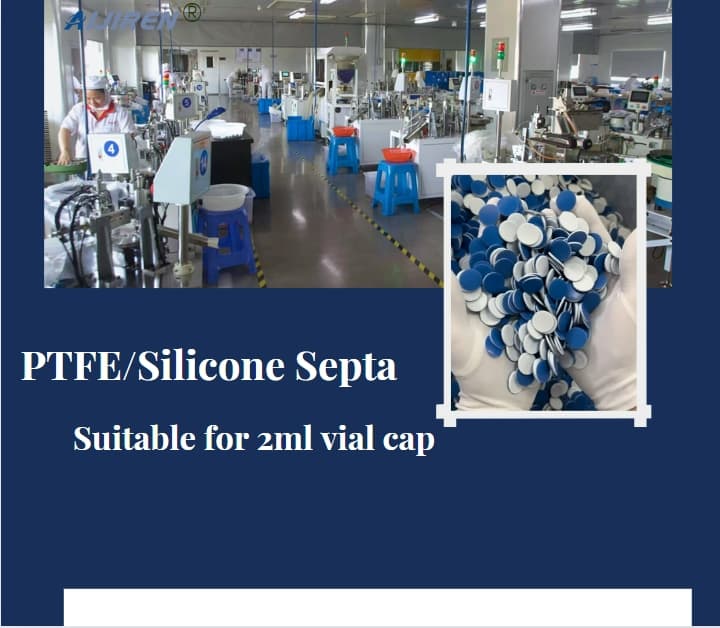
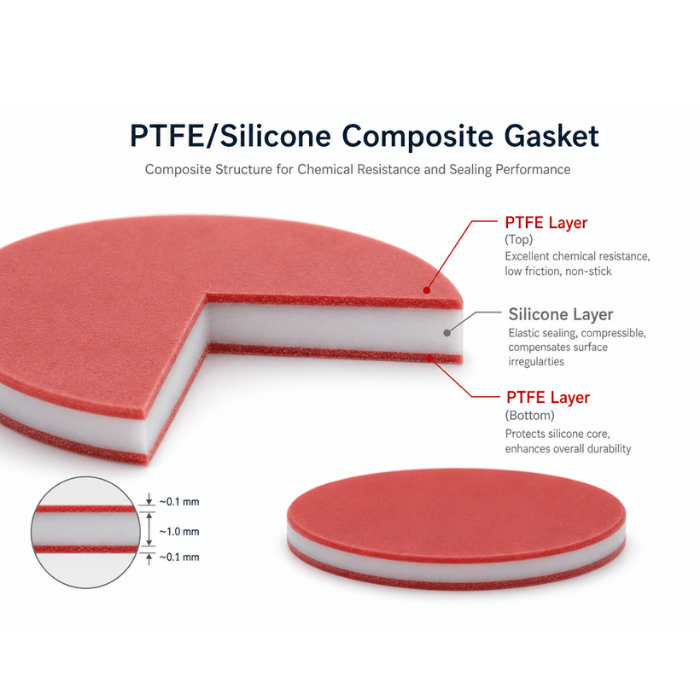
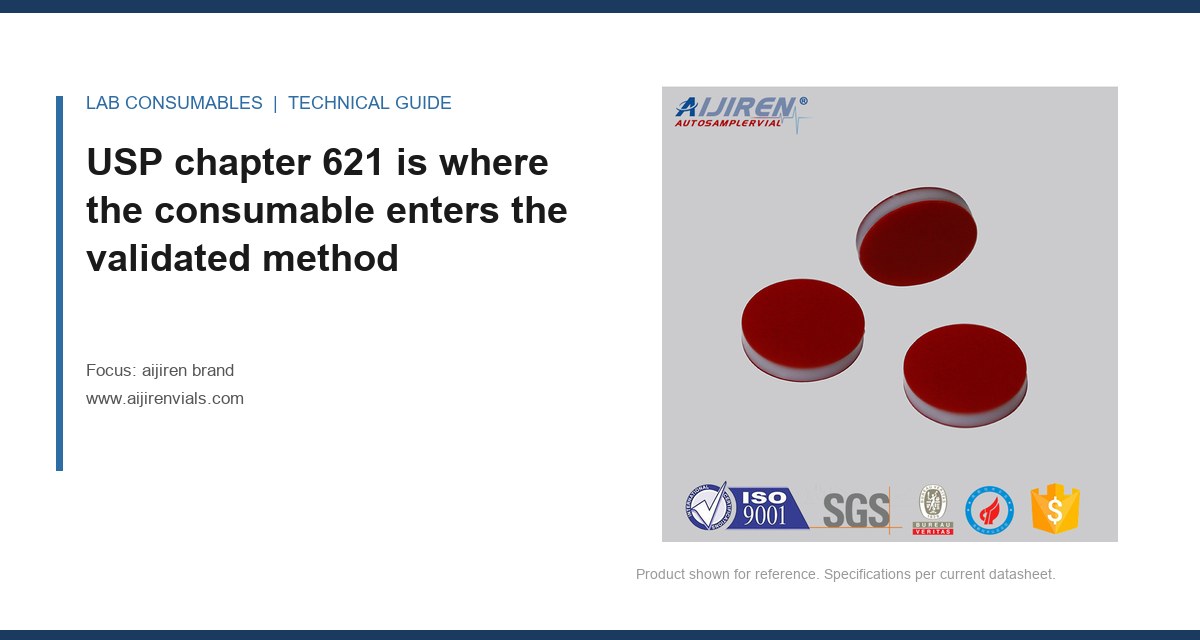
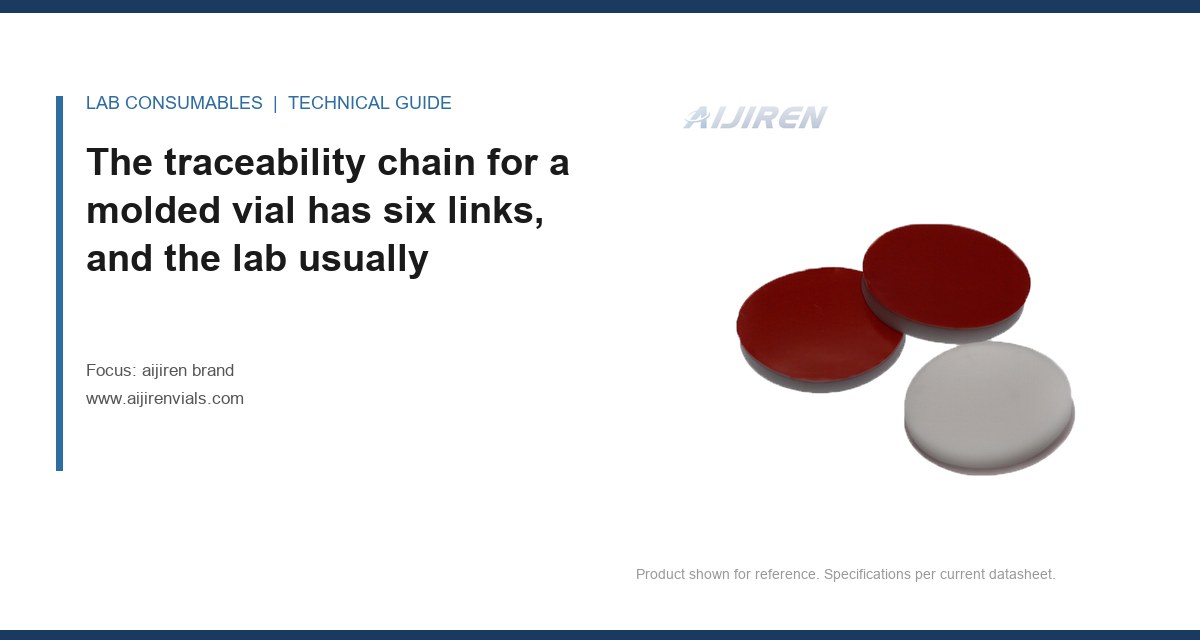
Septa are where I see the most corner-cutting. A septum is a laminate: a silicone layer for resealability, a PTFE layer for chemical inertness, and sometimes a third layer for mechanical support. The silicone durometer, the PTFE thickness, and the bond quality all matter.
For a standard 11 mm crimp septum, I look for a silicone layer of 1.0 mm ±0.05 mm and a PTFE layer of 0.05 mm to 0.13 mm depending on the application. The PTFE side faces the sample. If the PTFE is too thin, the silicone can leach into the sample; if it is too thick, the needle has trouble penetrating and you get coring. The bond between layers is critical. A poor bond will delaminate after a few punctures, and you get a flap of PTFE floating in the vial.
Puncture count is the spec most vendors quote and most buyers ignore. A good 11 mm silicone/PTFE septum should survive at least 10 punctures with a 22-gauge needle without coring. For high-throughput labs running 96-well plates, I specify septa rated for 20 punctures. If a supplier cannot give you a puncture test data sheet, they have not tested it. The Septa range from aijiren includes the puncture and reseal data, which is more than most catalogs offer.
Temperature rating is the other spec that matters. Standard silicone/PTFE septa are rated to about 200 °C for short excursions. If you are running GC inlet temperatures above that, you need a high-temperature septum, often a molded silicone or a graphite composite. I have seen standard septa bleed at 250 °C and produce a forest of siloxane peaks in the chromatogram. The fix is a septum rated for the temperature, not a longer bake-out.
Caps and closures: durometer and thread tolerance
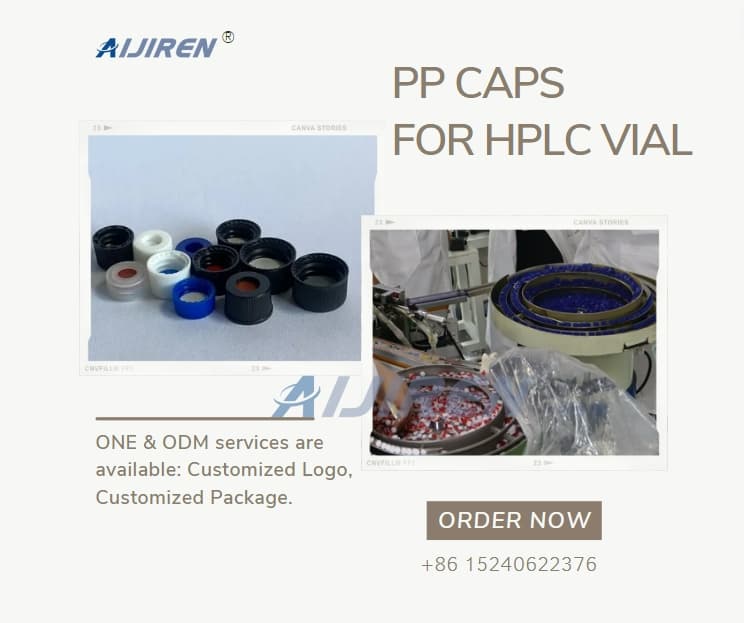
Caps are molded from polypropylene or, for some applications, from a higher-durometer resin. The durometer matters because the cap has to hold the septum in compression against the vial neck. For a screw-thread cap, I want a durometer in the Shore D 60 to 70 range. Too soft and the cap backs off; too hard and it cracks at the thread.
The thread itself has to match the vial. The two common standards are the GPI 13-425 thread for 13 mm caps and the GPI 18-400 thread for 18 mm caps. A cap that is nominally 13-425 but molded to the wrong pitch will cross-thread or leak. I check thread engagement by torqueing a cap to 0.6 to 0.8 N·m and looking for a uniform compression ring on the septum. If the ring is uneven, the mold is worn or the thread is out of tolerance.
For crimp caps, the aluminum shell has to be soft enough to crimp without cracking but hard enough to hold. The standard is a 11 mm aluminum crimp cap with a wall thickness of about 0.25 mm. Crimp it with a proper crimper set to the right jaw gap, usually around 0.1 mm clearance, and you get a seal that holds vacuum. Crimp it too hard and you cut the septum; too light and it leaks. I have a crimper in my drawer that has a go/no-go gauge on it, and I check it every month.
Quality control: the tests that separate a manufacturer from a reseller
I do not trust a certificate of analysis that only lists "pass." I want to see the actual test methods and the actual numbers. A reliable manufacturer runs dimensional, chemical, and functional tests on every lot, and keeps the records for at least three years.
Dimensional QC
The minimum dimensional checks for a 2 mL vial are neck OD, neck ID, height, and bottom flatness. These should be measured with a calibrated optical comparator or a vision system, not a caliper, because a caliper cannot resolve 0.05 mm reliably on a curved surface. The acceptance criteria should be the tolerances I listed above, and the sample size should be statistically valid, typically 30 pieces per lot for a 10,000-piece run.
For septa, the critical dimensions are thickness, diameter, and concentricity. A septum that is off-center by 0.2 mm will not seat properly in the cap. I have seen this cause needle coring because the needle hits the edge of the septum instead of the center.
Chemical QC
The chemical test that matters most is extractables. A good manufacturer runs a USP <661> or equivalent extraction test on the glass and a solvent extraction test on the septum. For the septum, I want to see the extractables profile in a relevant solvent, typically methanol or acetonitrile, at a defined temperature and time. If the extractables are above a few parts per million for a given compound, it will show up in a sensitive LC-MS method.
The glass should also be tested for hydrolytic resistance per USP <660> or ISO 719. Type I glass should pass at the highest hydrolytic class. If a supplier cannot provide this, they are probably using Type II or Type III glass and calling it Type I.
Functional QC
The functional tests are the ones that predict field failures. For vials, that means a leak test and a crimp integrity test. For septa, it means a puncture and reseal test. For caps, it means a torque and a thread engagement test.
I ask for a dye penetration test on a sample of crimped vials: fill with a dye solution, crimp, invert, and look for leakage after 24 hours. I also ask for a vacuum leak test on a sample of screw-thread vials. A good manufacturer runs these on every lot, not just on the first article.
The puncture test is the one most suppliers skip. A proper test uses a 22-gauge needle, punctures the septum 10 or 20 times at the same point, and checks for coring and reseal. The acceptance criterion is no visible coring and a reseal that holds pressure for at least 30 seconds. If a supplier cannot show you this data, assume the septum is not tested.
OEM capability: what it takes to put your name on the box
OEM is where a lot of "manufacturers" turn out to be repackagers. True OEM capability means the manufacturer can mold, assemble, and package to your specification, with your label, and hold the same QC standards they hold for their own brand. That requires three things: tooling ownership, process control, and documentation.
Tooling and process control
If you are buying an OEM vial, you need to know who owns the mold. A manufacturer that owns its molds can control the cavity dimensions and the cycle time. A manufacturer that rents time on someone else's press cannot. I ask for the mold maintenance records and the cycle time data. If the cycle time varies by more than 5% across a run, the process is not in control, and the dimensions will drift.
For septa, the OEM capability means the manufacturer can laminate to your specified layer thicknesses and durometer. That requires a calender or a press with closed-loop thickness control. I have seen OEM septa that were supposed to be 1.0 mm silicone come in at 0.8 mm because the press was not controlled. That 0.2 mm difference changes the puncture count from 10 to 6.
Documentation and traceability
OEM buyers need a certificate of conformance that ties the lot to the batch records. That means a lot number on the box that maps to a manufacturing date, a machine, a shift, and a QC record. If the lot number is just a date code, you cannot trace a failure back to the process.
I also want a change control process. If the manufacturer changes a resin supplier or a glass source, they should notify you before the change ships. A supplier that changes materials without notice is not an OEM partner; they are a risk.
The aijiren network handles OEM work across vials, caps, and septa, and the documentation package includes the dimensional data, the extractables data, and the functional test results. That is the minimum I would accept from any OEM supplier, and it is more than most offer.
Comparison checklist: what to ask before you approve a supplier
Here is the checklist I use when I audit a new supplier. I score each item as pass, fail, or needs data, and I do not approve a supplier with more than two "needs data" items.
- Glass type: USP Type I borosilicate, with a hydrolytic resistance test per USP <660> or ISO 719. Pass if the data is provided.
- Dimensional tolerance: Neck OD ±0.1 mm, height ±0.15 mm, bottom flatness 0.05 mm. Pass if measured with a vision system, not a caliper.
- Annealing records: Polariscope stress test on every lot. Pass if records are available.
- Septa laminate: Silicone 1.0 mm ±0.05 mm, PTFE 0.05 to 0.13 mm, bond tested. Pass if layer thickness is measured.
- Puncture count: 10 punctures with 22-gauge needle, no coring. Pass if a test data sheet is provided.
- Temperature rating: 200 °C for standard septa, higher for high-temp grades. Pass if the rating is on the certificate.
- Cap durometer: Shore D 60 to 70 for screw caps. Pass if the durometer is specified.
- Thread standard: GPI 13-425 or GPI 18-400, with thread engagement tested. Pass if the standard is cited.
- Crimp torque: 0.6 to 0.8 N·m for screw caps, crimp jaw gap around 0.1 mm. Pass if the torque is specified.
- Leak test: Dye penetration or vacuum leak test on every lot. Pass if the method is described.
- Extractables: USP <661> or equivalent, with the solvent and temperature specified. Pass if the data is provided.
- Traceability: Lot number maps to batch records, machine, shift, and QC. Pass if the mapping is documented.
- Change control: Notification before any material or process change. Pass if there is a written procedure.
- OEM tooling: Manufacturer owns the mold or has closed-loop process control. Pass if mold records are available.
If a supplier passes 12 of 14, they are worth a trial order. If they pass fewer than 10, walk away. I have seen suppliers fail on the puncture test and the traceability item and still win business on price. Those are the suppliers that cost you a re-run at 2 a.m.
Operational precautions: how to keep a good vial good
Even a perfect vial fails if you handle it wrong. Here are the precautions I enforce in my lab.
Storage and handling
Store vials and septa in the original packaging, in a clean, dry area away from solvent vapors. Septa absorb volatiles from the air, and a septum that has been sitting open in a lab with a solvent cabinet will show those volatiles as peaks in a sensitive method. I keep septa in a sealed bag with a desiccant pack and use them within 30 days of opening.
Do not touch the PTFE face of a septum with bare hands. Skin oils will show up in an LC-MS chromatogram. Use powder-free gloves and forceps.
Capping and crimping
For screw caps, torque to 0.6 to 0.8 N·m. A torque wrench is cheap; a re-run is not. For crimp caps, use a crimper with a go/no-go gauge and check the jaw gap monthly. A crimper that is out of adjustment will either cut the septum or leave a leak.
Do not re-crimp a vial. The aluminum work-hardens, and a second crimp will not seal properly. If you need to re-cap, use a new cap and septum.
Autosampler compatibility
Check the vial dimensions against the autosampler tray. A 12 x 32 mm vial that is 0.2 mm too tall will not seat in some trays, and the needle will hit the septum off-center. I keep a go/no-go gauge for the tray and check a sample of vials from every lot.
For high-throughput work, use a vial and septum rated for the puncture count. A 96-well plate run with 20 punctures per well needs a septum rated for 20 punctures, not 10. The Vial Septa range includes high-puncture grades for this exact use case.
Troubleshooting checklist: when a batch goes wrong
When a batch fails, I work through this checklist in order. It usually finds the cause in under an hour.
- Peaks in the chromatogram: Check the septum first. A siloxane peak at m/z 73, 147, or 207 is a septum bleed. Replace with a high-temperature septum and bake out the inlet.
- Baseline drift: Check the glass. A rising baseline at low wavelength is often sodium leaching from Type II or Type III glass. Switch to Type I and re-run.
- Needle coring: Check the puncture count and the needle gauge. A 22-gauge needle needs a septum rated for 10 punctures; a 26-gauge needle needs a softer septum. Also check the septum concentricity.
- Leaks: Check the crimp or torque. A dye penetration test will show the leak path. Re-crimp with a calibrated crimper or re-torque to 0.6 to 0.8 N·m.
- Vial wobble: Check the bottom flatness. A 0.05 mm wobble is enough to misalign the needle. Measure with a vision system and reject the lot.
- Cracked necks: Check the annealing records. Residual stress from a fast cooling cycle will crack at the crimp neck. Reject the lot and ask for the polariscope data.
- Cross-threading: Check the thread standard. A GPI 13-425 cap on a non-standard vial will cross-thread. Verify the thread with a go/no-go gauge.
- Sample evaporation: Check the septum reseal. A septum that does not reseal after puncture will lose volatiles. Use a septum rated for the puncture count and check the reseal test data.
I keep a log of every failure and the fix. After a year, the log tells you which supplier is actually reliable and which one is just cheap. The pattern is almost always the same: the failures trace back to a material substitution or a skipped QC step, not to a random defect.
Recommendation: what I specify and why
For routine HPLC and GC work, I specify USP Type I borosilicate 2 mL vials with a 12 x 32 mm dimension, a neck OD tolerance of ±0.1 mm, and a bottom flatness of 0.05 mm. I pair them with 11 mm silicone/PTFE septa, 1.0 mm silicone and 0.05 to 0.13 mm PTFE, rated for 10 punctures with a 22-gauge needle and 200 °C. For high-throughput work, I move to a septum rated for 20 punctures. For caps, I specify GPI 13-425 screw caps with a Shore D 60 to 70 durometer, torqued to 0.6 to 0.8 N·m, or 11 mm aluminum crimp caps with a 0.25 mm wall, crimped with a calibrated crimper.
For the supplier, I want a manufacturer that runs dimensional, chemical, and functional QC on every lot, provides the data, and has a change control process. The aijiren network meets those criteria, and the documentation package is the reason I keep them on the approved list. If you are evaluating a new supplier, start with the checklist above and ask for the puncture test data and the traceability records. Those two items will tell you more than a catalog ever will.
Takeaway
A reliable aijiren brand manufacturer is not the one with the biggest catalog or the lowest price. It is the one that can show you the glass type, the dimensional data, the septum laminate thickness, the puncture test results, and the traceability records, and then hold those standards when your name is on the box. The specific numbers I use (USP Type I glass, ±0.1 mm neck tolerance, 1.0 mm silicone septum, 10 to 20 punctures, 200 °C rating, GPI 13-425 thread, 0.6 to 0.8 N·m torque) are the difference between a batch that runs and a batch that re-runs. If you want to see how those specs are documented across the vial, cap, and septum line, the Aijiren brand page is the place to start, and the technical detail on closures and septa is on Septa and Vial Septa. For method context, the U.S. EPA SW-846 test methods and the Restek technical resources are worth reading before you write a spec, and the Agilent chromatography consumables and Thermo Fisher chromatography and sample handling pages show how the major instrument makers specify their own consumables. Use those as a benchmark, then ask your supplier to match the numbers.
References & further reading
Related resources from our lab consumables network:
- Aijiren Brand at aijirenvials.com
- Voa Vial at voavial.com
- Septa at septacaps.com
- Vial Septa at vialsepta.com
External references and standards: