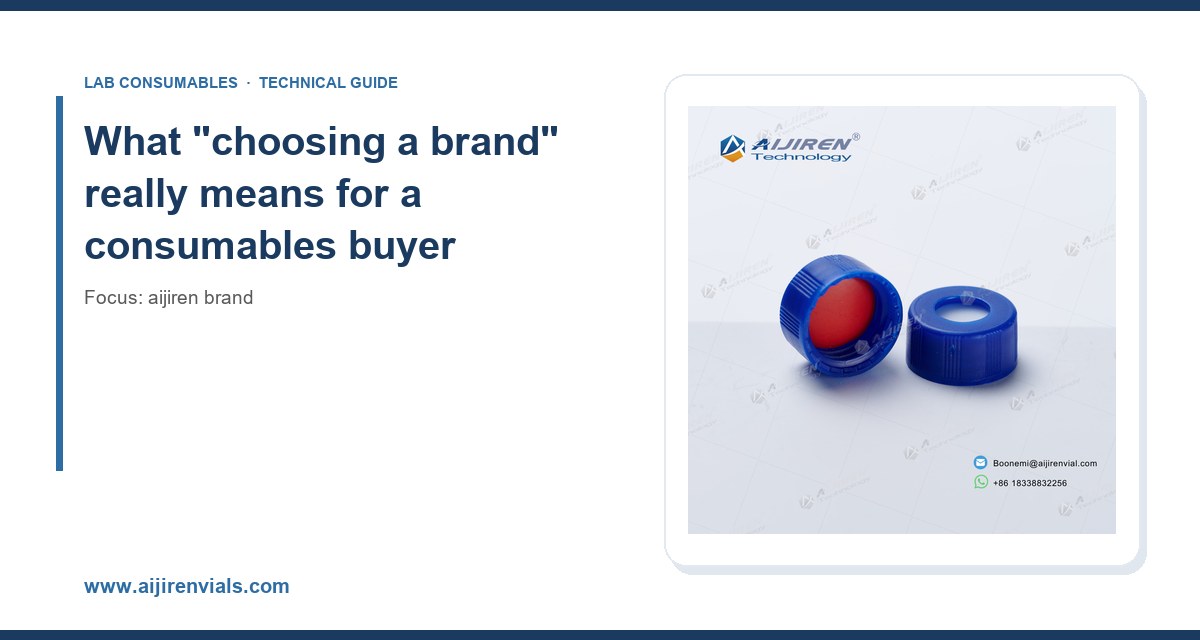
I have spent more years than I care to admit standing in front of a GC autosampler at 2 a.m. because the wrong septa were loaded, and I have signed off on purchase orders where a two-cent difference per vial turned into a month of capping failures. Choosing the right consumables for your workflow is not a branding exercise. It is a specification exercise, and the brand only matters insofar as it reliably hits the specs you wrote down. This guide is what I would hand a new lab manager on day one: how to read the aijiren catalog, what the numbers actually mean, and where the traps are.
When a procurement manager asks me to "pick a vial brand," what they are actually asking is three separate questions bundled together. First: does this supplier hold dimensional tolerances tight enough that the autosampler gripper does not miss a vial once every 300 injections? Second: is the glass chemistry inert enough for the analytes in question, at the pH and temperature the method specifies? Third: can I reorder the same part number in eighteen months and get the same product?
That third question is the one that gets ignored, and it is the one that ruins long-term data comparability. A supplier that quietly changes its septa compound or its glass annealing process between lots will show up as a slow drift in your system suitability results, and you will spend a week chasing a phantom instrument fault. So the brand decision is really a supply consistency decision.
The aijiren brand is built around exactly this problem: a catalog organized by application (HPLC, GC, headspace, storage) with dimensional and material specs published per part, rather than a generic "9 mm vial" listing that hides the tolerances. That structure is what makes it usable for a buyer who has to defend a specification to an auditor.
The four spec families that decide everything
Before you look at any catalog, write down these four numbers for your method. Every consumable decision flows from them.
- Nominal volume and fill volume. A 2 mL vial is not a 2 mL fill. Standard practice is to fill to roughly 50 to 75 percent of nominal capacity so there is headspace for the autosampler needle and for expansion. A 2 mL vial typically gets 1.0 to 1.5 mL of sample.
- Neck finish and closure geometry. Crimp, screw thread, or snap. The neck finish determines which caps and septa are even physically compatible. Get this wrong and no amount of torque discipline saves you.
- Maximum operating temperature. This is set by the septum, not the glass. Glass is good to well over 300 °C; the septum is the limiting component in almost every case.
- Chemical compatibility. pH range, solvent class, and whether the analyte adsorbs to glass or to the septum elastomer.
The aijiren product families and where each one belongs
The catalog splits into a handful of families that map cleanly onto workflows. Here is how I route them.
Standard 2 mL autosampler vials (HPLC and LC-MS)
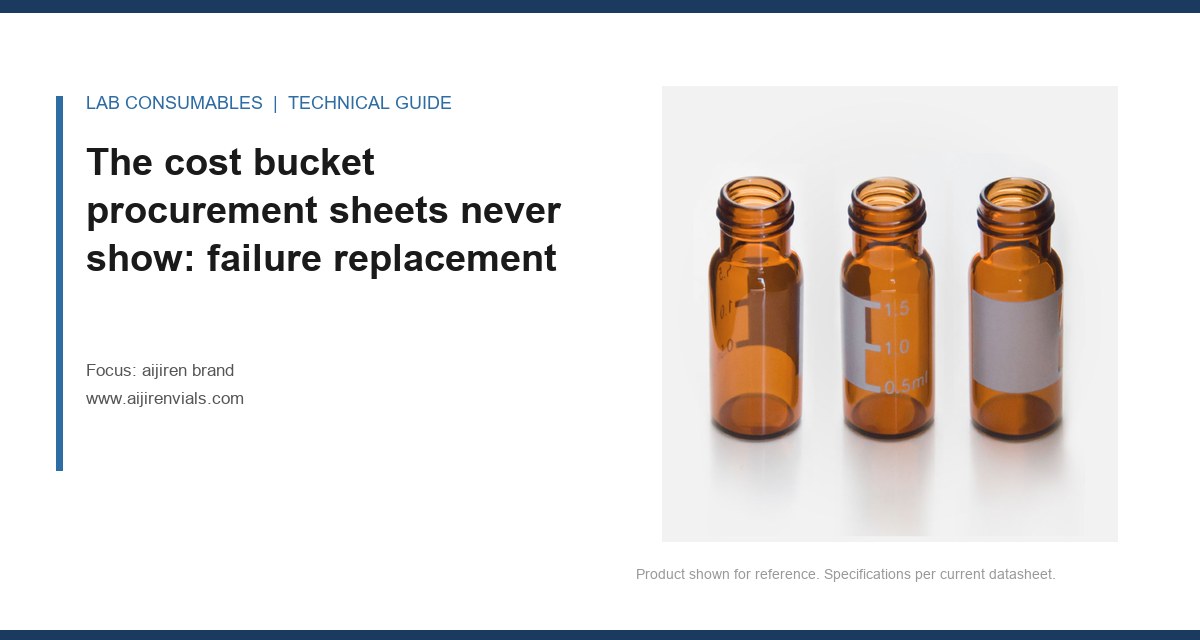
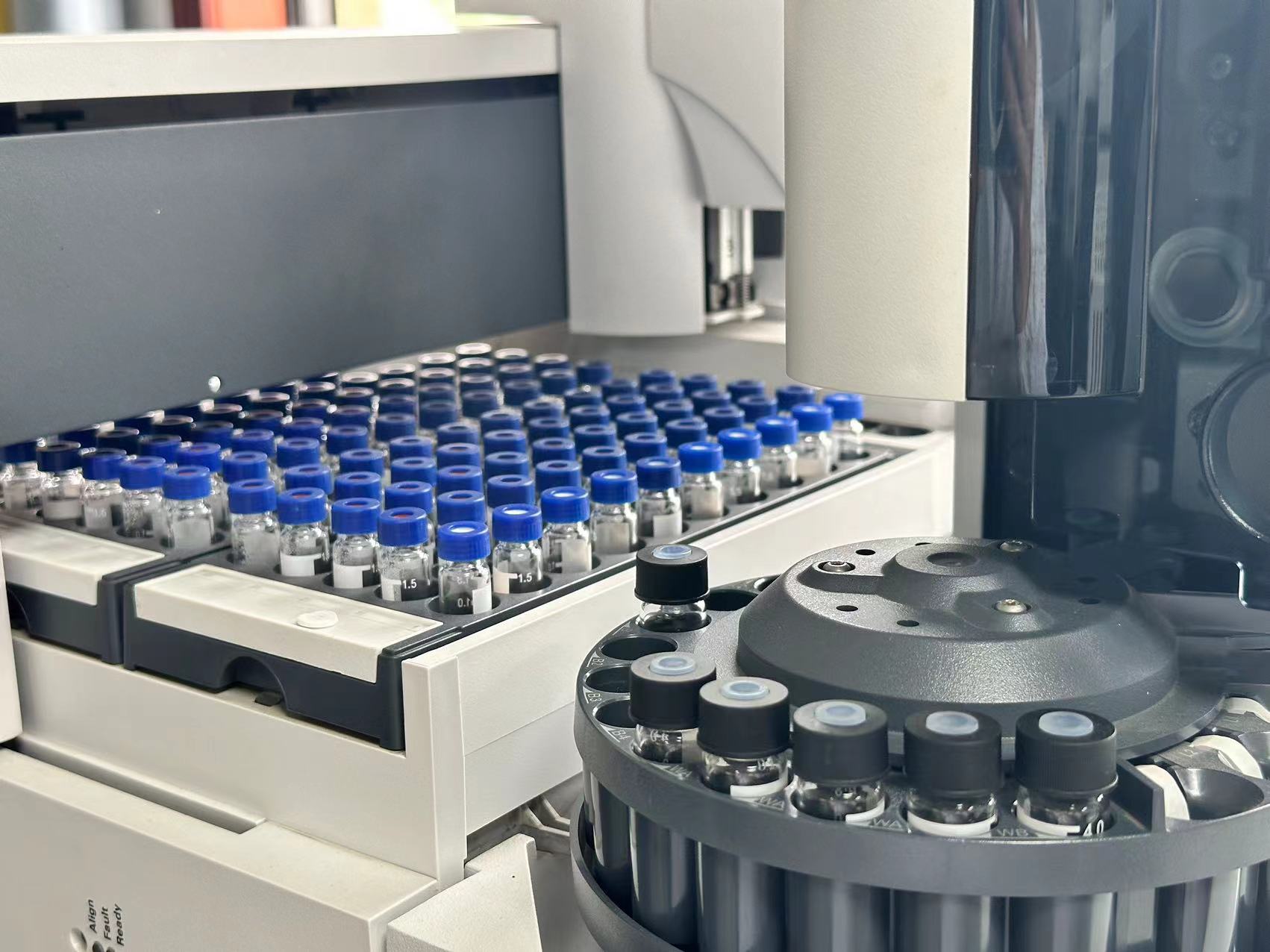
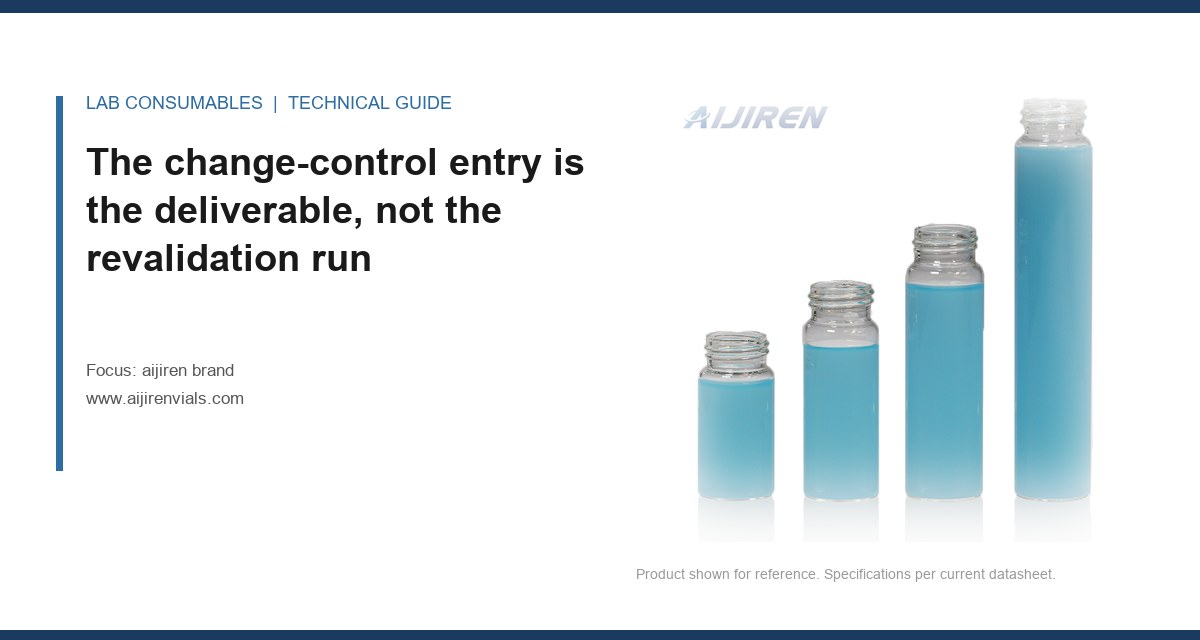
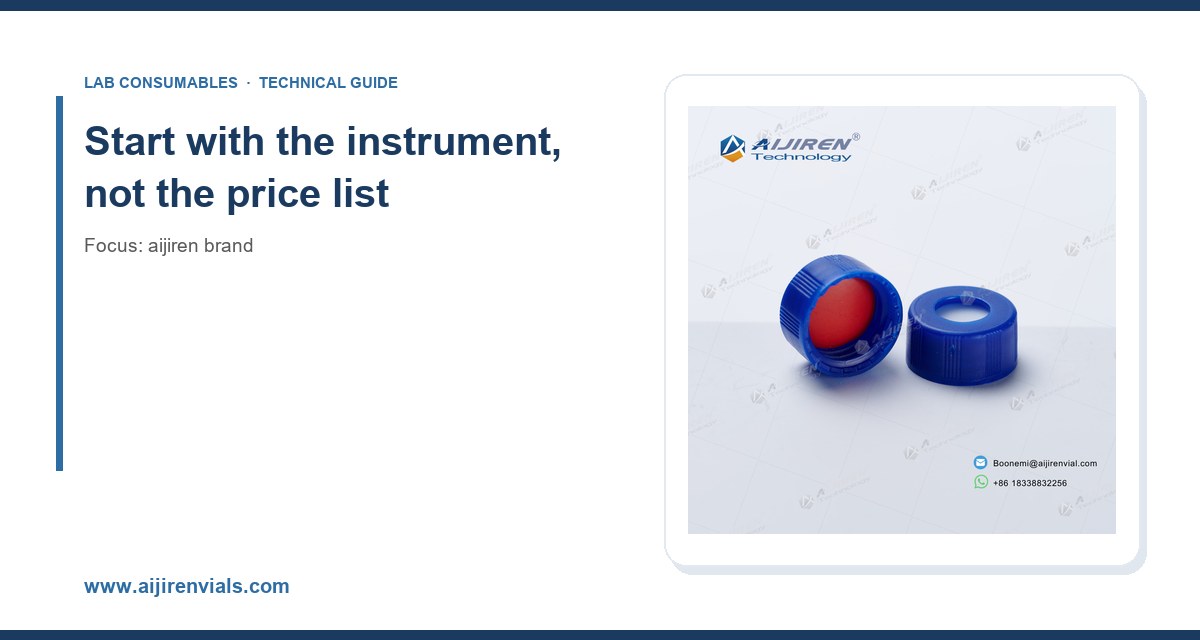
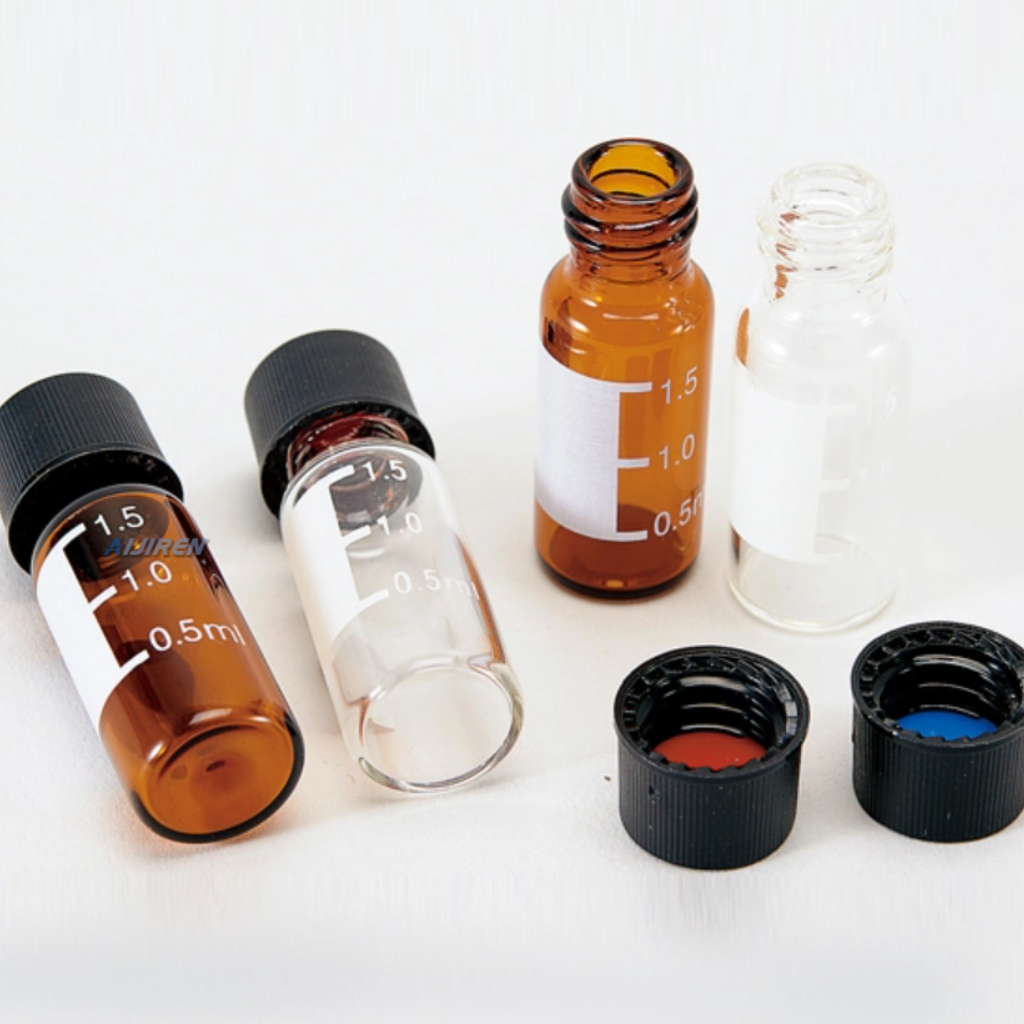
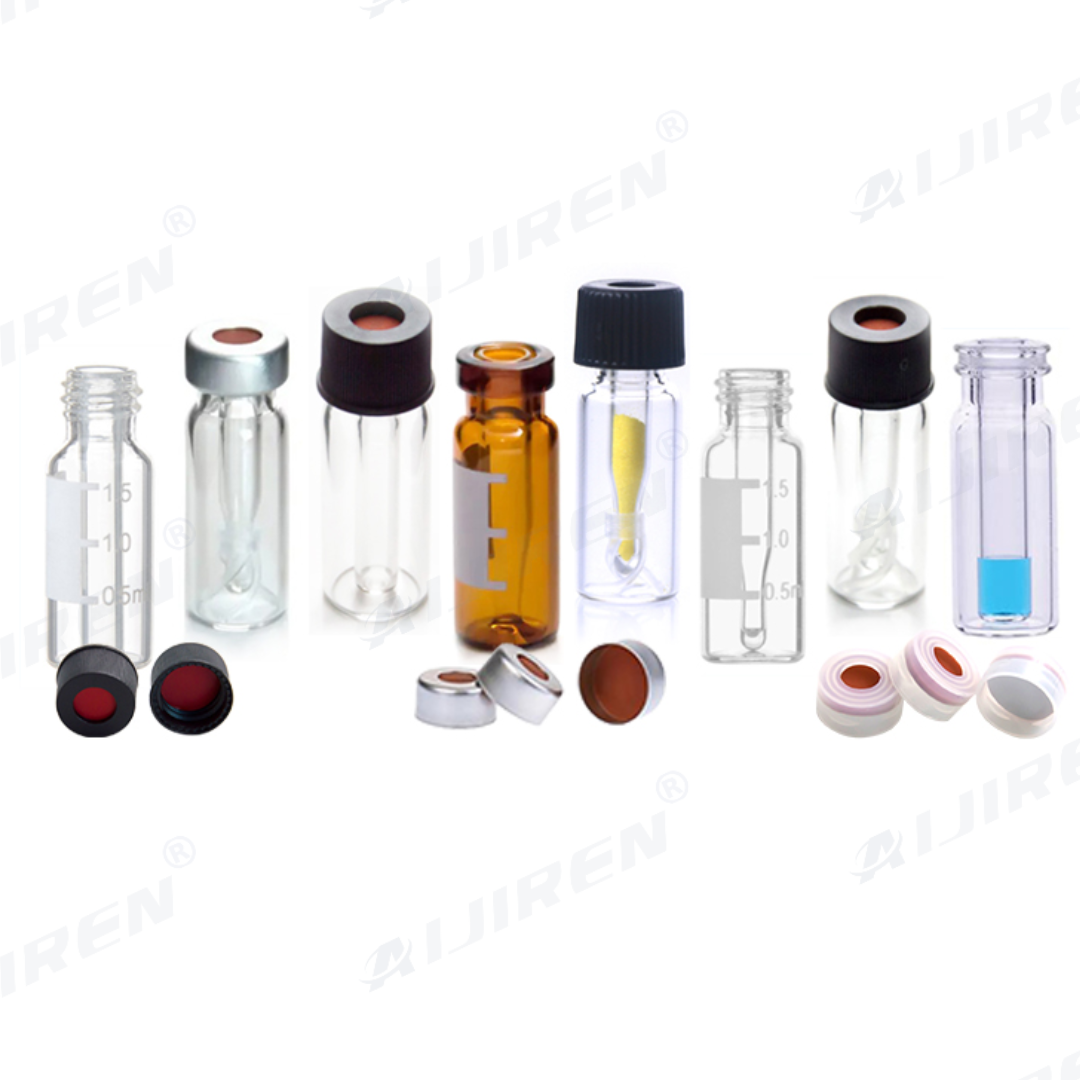
This is the workhorse. The two dominant geometries in the market are 12 x 32 mm with a 9 mm screw or crimp neck, and 11 mm crimp neck for older Agilent and Waters autosamplers. The 9 mm screw-thread format has largely displaced crimp in new installations because it eliminates the crimper, and with it a whole class of operator error. If you are specifying new instruments, specify 9 mm screw thread and do not look back.
For these, glass grade matters. Type I borosilicate (borosilicate 3.3, expansion coefficient around 3.3 x 10⁻⁶ /K) is the default for HPLC because it resists pH-driven leaching far better than soda-lime. For trace metals work at ppb levels, ask specifically about deactivation and about whether the vials are packaged with a certificate. For LC-MS at low pH (0.1 percent formic acid is common), standard borosilicate is fine. For high-pH methods (pH 10 and above), you want a deactivated or plastic option, and I would test a lot before committing a whole validation to it.
Voa vials and headspace vials
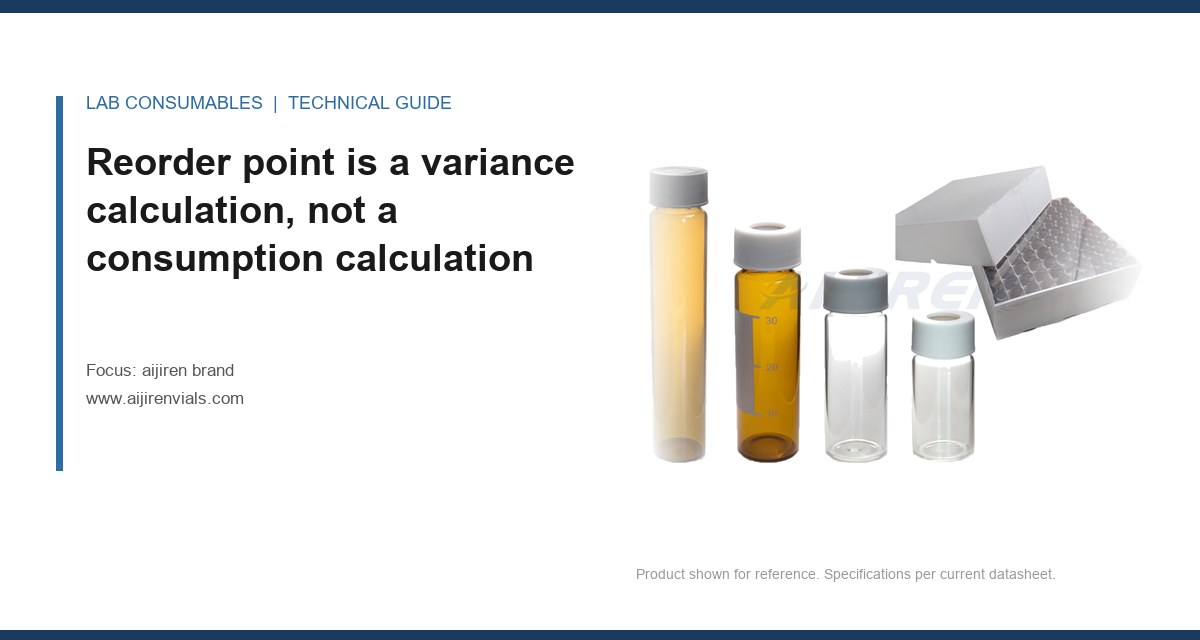
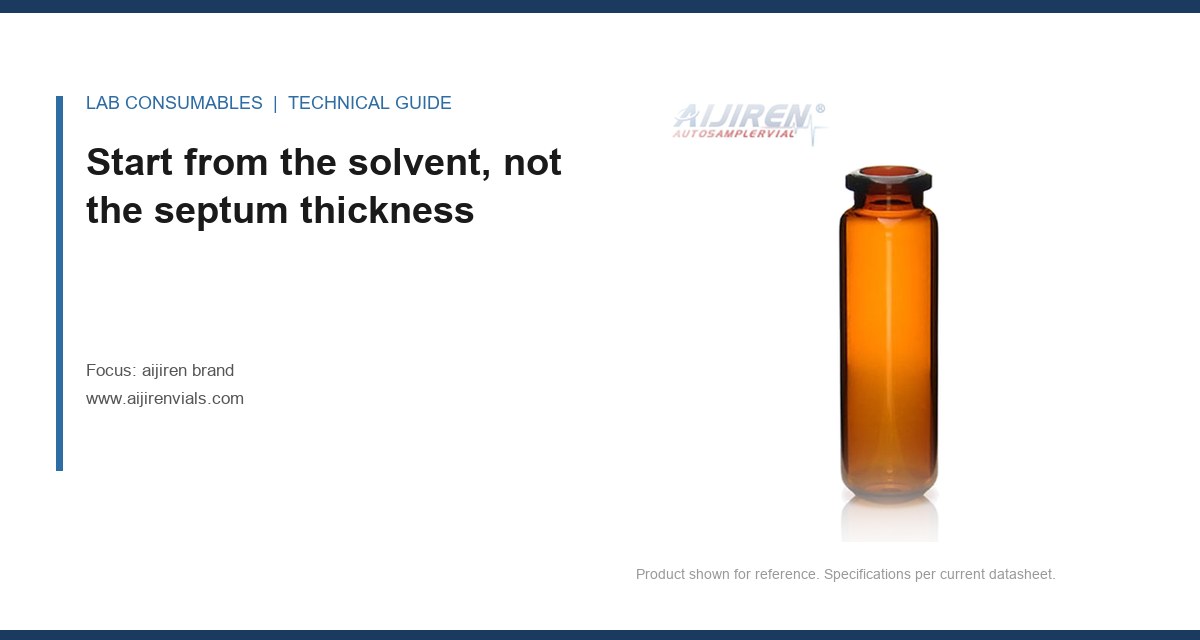
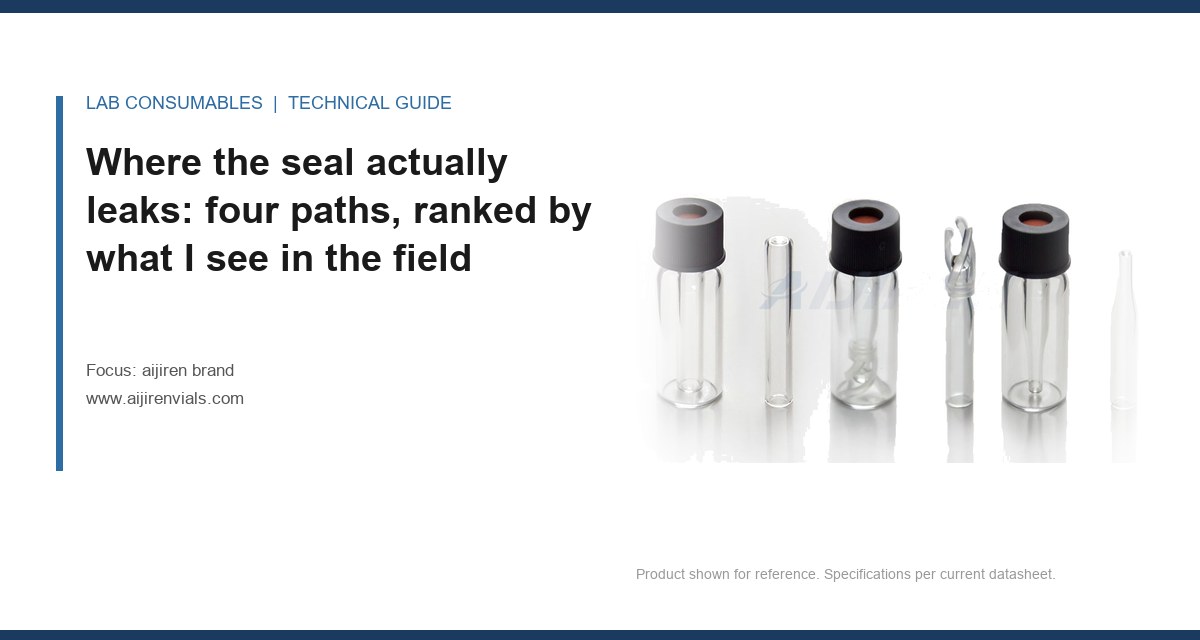
Volatile organic analysis is its own discipline. The Voa Vial line covers the 40 mL (and 20 mL headspace) formats used in EPA 500-series and 6000-series methods. Two things matter here that do not matter in HPLC:
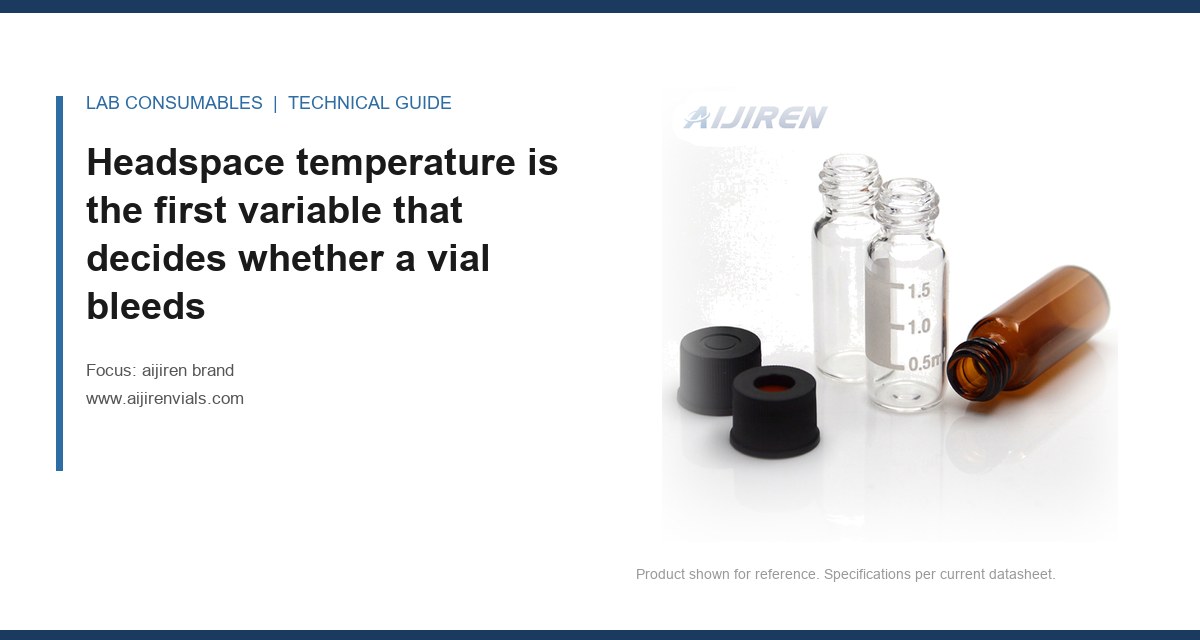
- Closure integrity at pressure. Headspace vials are pressurized to 10 to 20 psi and heated to 40 to 90 °C. A crimp that is too loose leaks; too tight and you crack the neck. The target is a crimp that seats the septum flat without deforming the cap skirt.
- Septum bleed. At 80 °C, a low-quality silicone septum will shed siloxanes that show up as a forest of peaks at m/z 73, 147, 207, 281 in your MS. This is the single most common cause of "dirty" headspace blanks I have investigated.
For VOA work, specify PTFE-faced silicone septa and a magnetic or crimp closure rated to at least 100 °C. If your method follows U.S. EPA SW-846 test methods, the closure and vial are part of the method's QA, and you should be able to produce a certificate of analysis for each lot.
Septa: the component that decides your detection limits
I will say this plainly: the septa are where most labs under-specify and over-pay. The septum is the only part of the consumable stack that touches the sample, the needle, and the headspace gas simultaneously. Its properties set your bleed background, your puncture life, and your carryover.
The main compounds and where they belong:
- Silicone (PDMS), plain. Excellent reseal, low cost, but high bleed above 200 °C. Good for room-temperature HPLC and short-run GC. Not for high-temperature GC.
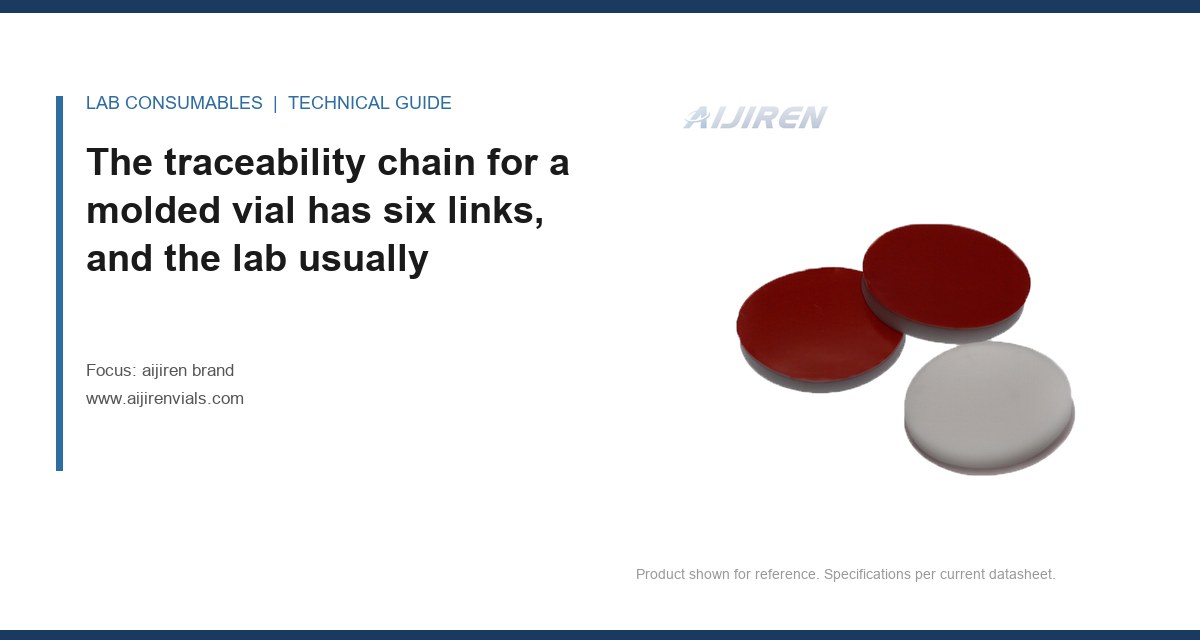
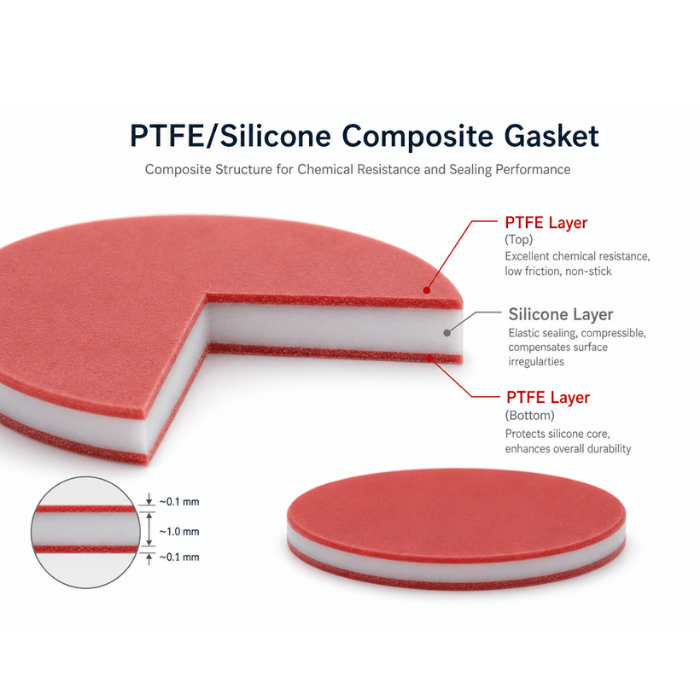
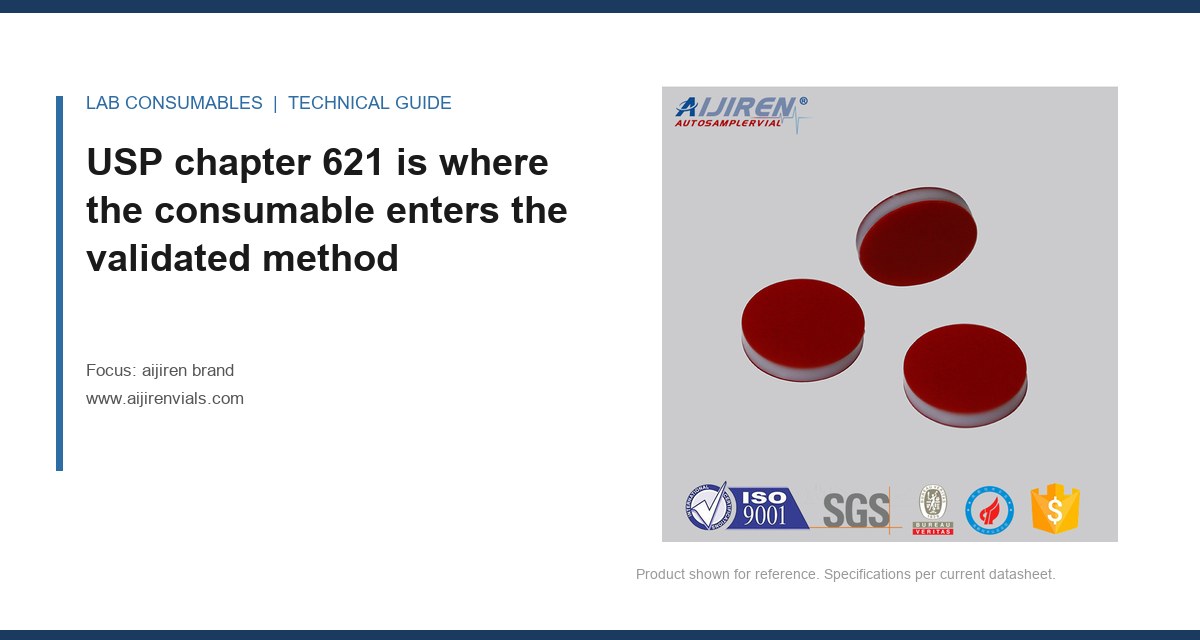
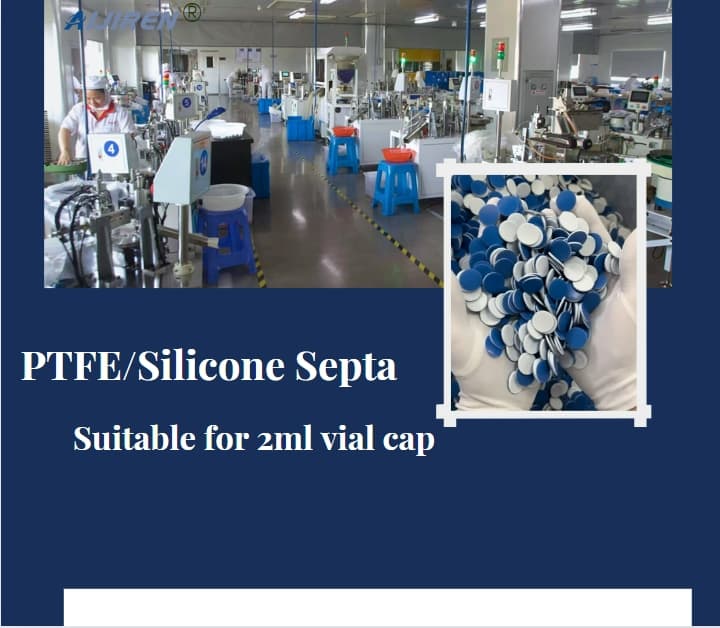
- PTFE-faced silicone. The PTFE film faces the sample and blocks bleed; the silicone behind provides reseal. Rated to roughly 200 to 250 °C. This is my default for headspace and for anything with a mass spec detector.
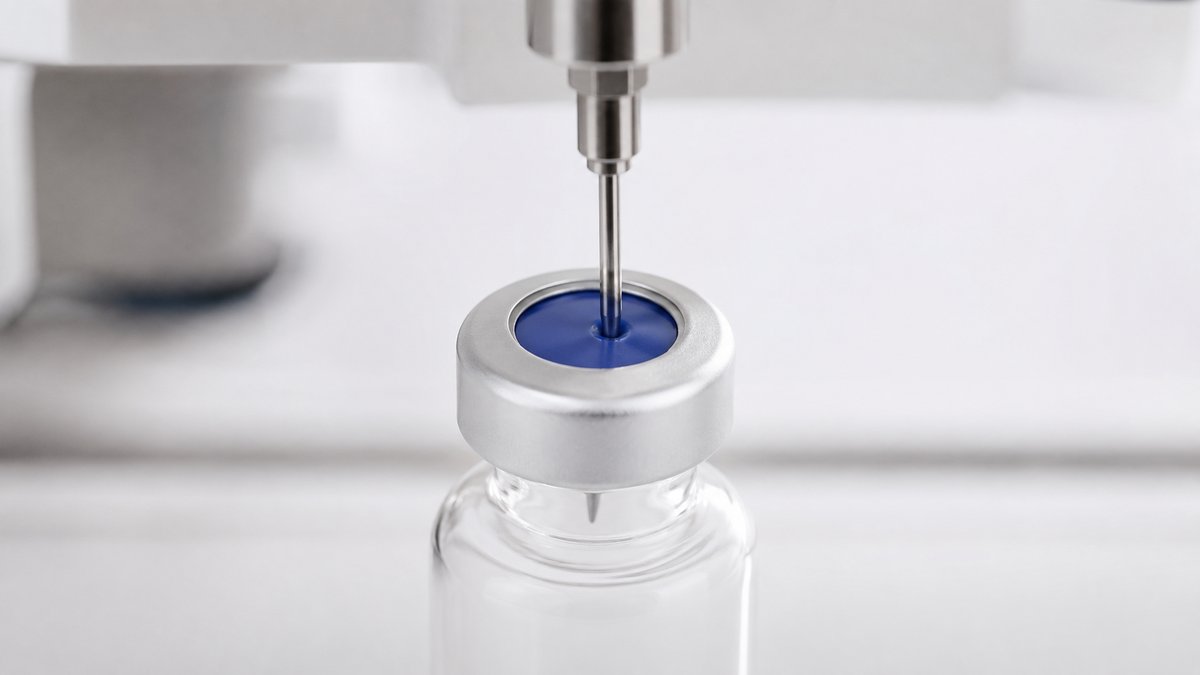
- PTFE/silicone laminated with a slit. The slit reduces coring and needle drag on autosamplers with side-port needles. Use it with 22-gauge needles; do not use it with 26-gauge or finer, because the slit will not reseal around a thin needle.
- Butyl and bromobutyl. Low gas permeability, used for pharmaceutical packaging and some headspace applications. Poor high-temperature performance.
- Natural rubber. Cheap, high bleed, high coring. I would not put it near a mass spec.
The number that matters for cost-per-injection is the puncture count. A good PTFE-faced silicone septum takes 50 to 100 punctures before coring becomes visible under a loupe; a cheap one shows a ragged hole at 20 to 30. If you run 96-well plates or a 100-vial tray, that difference is the difference between one septum per tray and three.
Vial septa and closure combinations
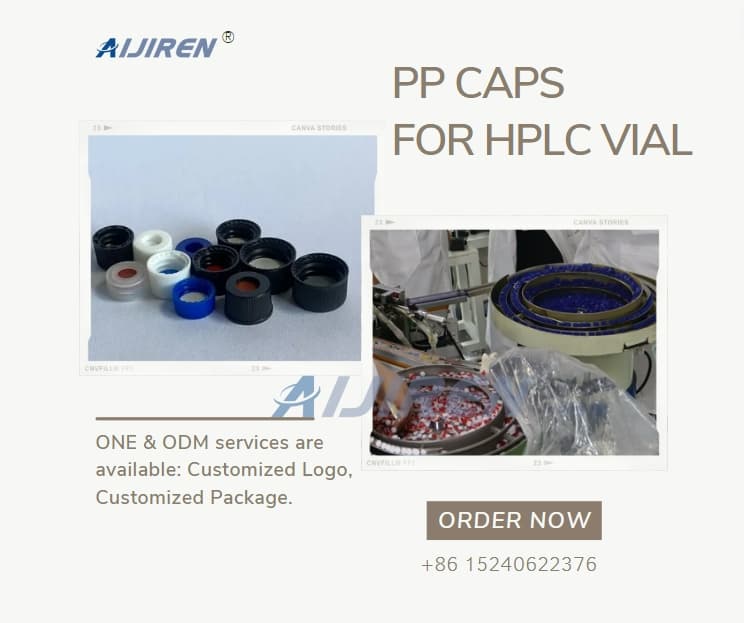
The vial septa reference is useful because it lets you cross-check the septum against the cap and the vial neck in one place. The rule I use: never mix components from different closure systems, even if they look interchangeable. A 9 mm screw cap from one supplier and a 9 mm vial from another will often work, but the thread pitch and the cap's inner shoulder height are not standardized across the industry, and a mismatch shows up as a cap that backs off under autosampler vibration.
A concrete selection matrix
Here is the decision table I actually use. The numbers are the ones I would put in a specification document.
- Routine HPLC, UV detection, pH 2 to 8, ambient to 40 °C: 2 mL clear borosilicate 3.3, 12 x 32 mm, 9 mm screw thread, PTFE/silicone septum, cap torque 0.8 to 1.2 N·m. Puncture life 50 to 100.
- LC-MS, low pH, trace level: 2 mL amber borosilicate, 9 mm screw, PTFE-faced silicone septum with slit, pre-cleaned and certified. Avoid natural rubber entirely.
- GC with FID, oven to 280 °C: 2 mL borosilicate, 11 mm crimp, high-temperature silicone or PTFE/silicone, crimp to a target that seats the septum without cracking. Expect bleed if you use plain silicone above 250 °C.
- Headspace GC-MS, 40 to 90 °C: 20 mL headspace vial, 18 mm magnetic or crimp closure, PTFE/silicone septum rated to at least 100 °C. Verify blanks at the method's incubation temperature, not at room temperature.
- VOA, EPA methods: 40 mL VOA vial, PTFE-faced silicone septum, closure leak-tested per method.
- Sample storage and archival, -20 to -80 °C: polypropylene or borosilicate with PTFE-lined cap; check that the septum does not embrittle at the storage temperature.
If your method is validated against a specific instrument platform, cross-check the consumable against the manufacturer's own recommendations. Agilent chromatography consumables and columns publishes dimensional drawings for its autosampler trays that are worth matching against your vial OD tolerance. Thermo Fisher chromatography and sample handling documentation is similarly useful for confirming needle gauge and septum compatibility. And for method-development work, the Restek technical resources for chromatography library has bleed spectra you can compare against your own blank runs.
Dimensional tolerances: the numbers nobody publishes
This is where I get opinionated. A vial that is "12 x 32 mm" can be anywhere from 11.6 to 12.2 mm in outside diameter depending on the supplier's mold and annealing. The autosampler gripper on a typical LC autosampler has a few tenths of a millimeter of compliance. If your vial OD drifts to the top of the tolerance band, you get intermittent "vial not found" errors that look like an instrument fault and cost you a service call.
The specs I ask for in writing:
- Outside diameter: 12.00 mm nominal, tolerance ±0.15 mm.
- Height: 32.00 mm nominal, tolerance ±0.20 mm.
- Neck finish: 9 mm screw thread, GPI 9 mm thread specification (the Glass Packaging Institute standard, which is what "GPI 9 mm" on a cap datasheet refers to).
- Wall thickness: uniform to within 0.1 mm, checked by a sample cross-section.
- Bottom: flat within 0.05 mm for autosamplers that reference off the bottom.
Ask for a dimensional certificate. A supplier that cannot produce one is not a supplier you want in a validated method.
Cap torque is not a suggestion
For 9 mm screw caps, the target is 0.8 to 1.2 N·m. Below 0.8, the cap backs off under autosampler vibration and you get evaporation and carryover. Above 1.2, you deform the septum, which reduces reseal and can crack the neck. A torque screwdriver costs about the same as two boxes of vials and will save you a month of troubleshooting. Calibrate it quarterly.
For crimp caps, the target is a crimp that seats the septum flat with no visible deformation of the cap skirt. Use a crimper with a depth stop; the hand crimpers that come with some starter kits are the source of more cracked necks than any other tool in the lab.
Operational precautions that prevent 90 percent of failures
- Condition new septa before use. Run a blank injection through a fresh septum at your method's maximum temperature. If you see siloxane peaks at m/z 73/147/207, the septum is the problem, not the column.
- Do not reuse septa across methods. A septum that has seen 250 °C GC is not the same septum that will seal a 4 °C LC injection.
- Store septa in the original packaging, away from solvent vapors. Silicone absorbs solvent from the air; a box left open next to an open solvent bottle will show contamination peaks.
- Check needle gauge against septum. 22-gauge is the standard for most autosamplers. A 26-gauge needle in a pre-slit septum will not reseal.
- Match vial and cap from the same closure system. Cross-supplier mixing works about 80 percent of the time, and the 20 percent will bite you during a validation run.
- Log lot numbers. When you have a bad lot, you want to be able to trace every injection made with it.
Troubleshooting checklist
When something goes wrong, work through this in order. I have never needed to go past item five.
- Ghost peaks in the blank. Run a blank with no vial in the tray, then with an empty capped vial, then with a vial containing only your diluent. If the peaks appear only with the capped vial, the septum is bleeding. Swap to PTFE-faced silicone.
- Intermittent "vial not found." Measure 20 vials with calipers. If the OD spread exceeds 0.3 mm, you have a tolerance problem, not an instrument problem.
- Carryover between injections. Check cap torque. A loose cap lets the previous sample evaporate onto the septum and re-enter the next injection.
- Low recovery in headspace. Verify the septum is rated for the incubation temperature. A 200 °C septum at 90 °C is fine; a natural rubber septum at 90 °C is not.
- Cracked vial necks. Check crimper depth stop and torque. If you are using screw caps, check that the cap and vial are from the same system.
- Drifting retention times. Check septum coring. A cored septum lets carrier gas bypass and shifts retention. Inspect under a loupe at 10x.
What I would actually buy
For a typical HPLC or LC-MS lab running 50 to 200 injections a day, I would standardize on 2 mL clear borosilicate 3.3, 12 x 32 mm, 9 mm screw thread, PTFE/silicone septum with slit, certified low-extractable, and a calibrated torque screwdriver set to 1.0 N·m. That combination covers pH 2 to 8, ambient to 40 °C, and gives 50 to 100 punctures per septum. For GC work above 250 °C, I would move to a high-temperature septum and accept the cost premium, because the alternative is bleed that shows up in every chromatogram. For headspace and VOA, I would specify PTFE-faced silicone rated to at least 100 °C and verify blanks at the method's incubation temperature before committing a lot.
Buy the aijiren line because the specifications are published and the lots are traceable, not because of the label. Then write those specifications into your SOP, calibrate your torque tool, and log your lot numbers. The brand is a starting point; the specification is what keeps your data defensible.
References & further reading
Related resources from our lab consumables network:
- Aijiren Brand at aijirenvials.com
- Voa Vial at voavial.com
- Septa at septacaps.com
- Vial Septa at vialsepta.com
External references and standards: