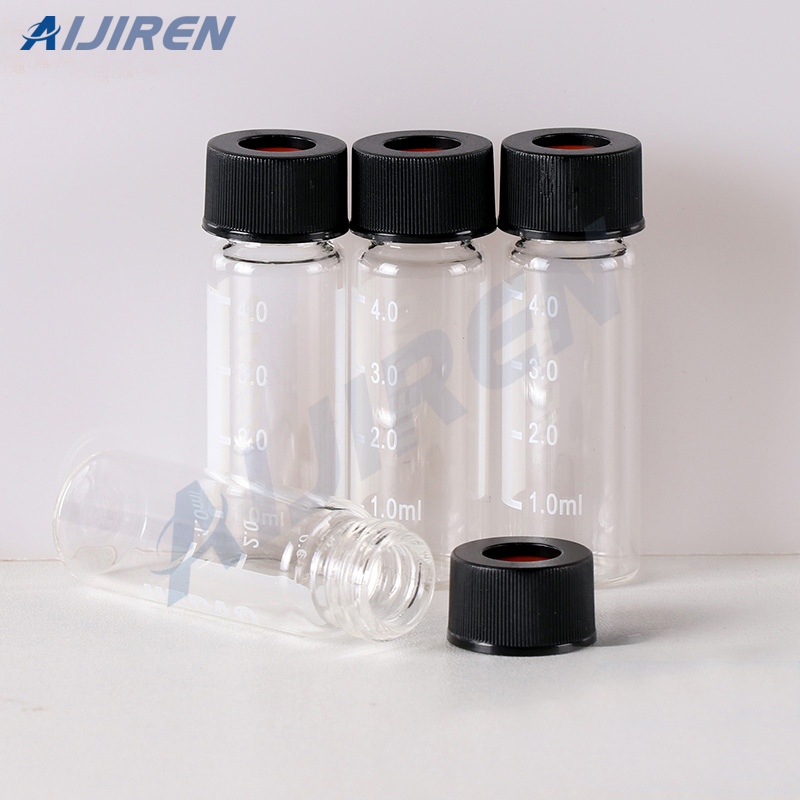
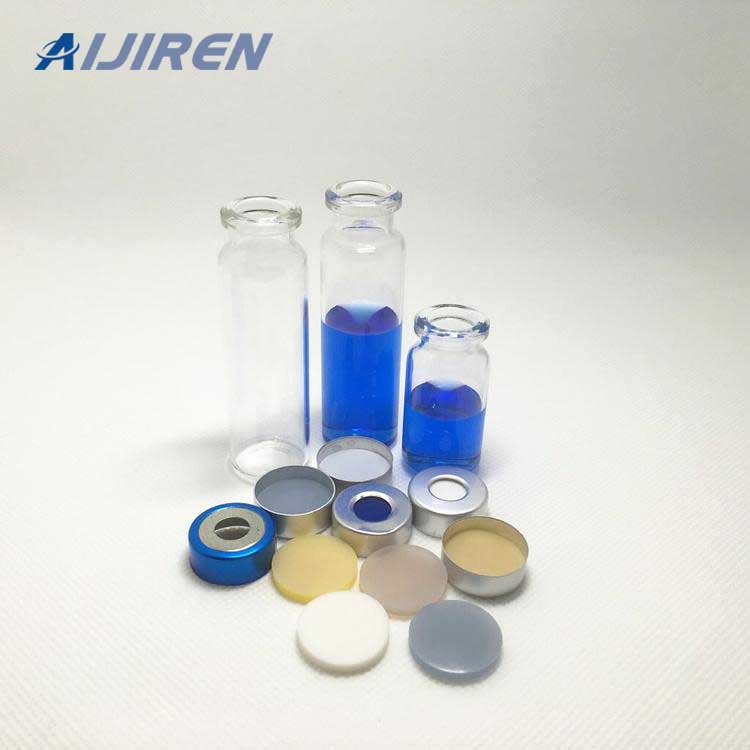
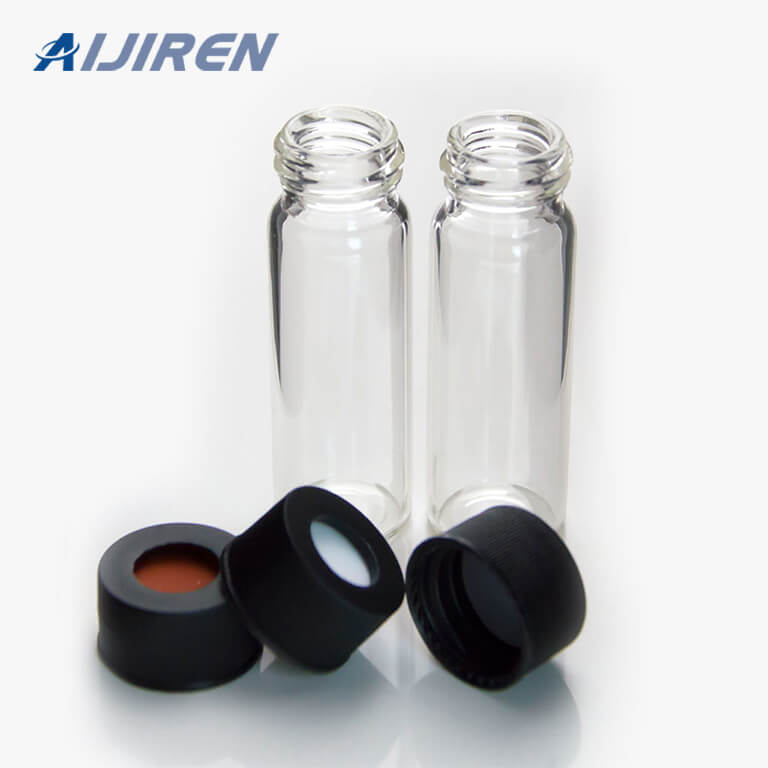
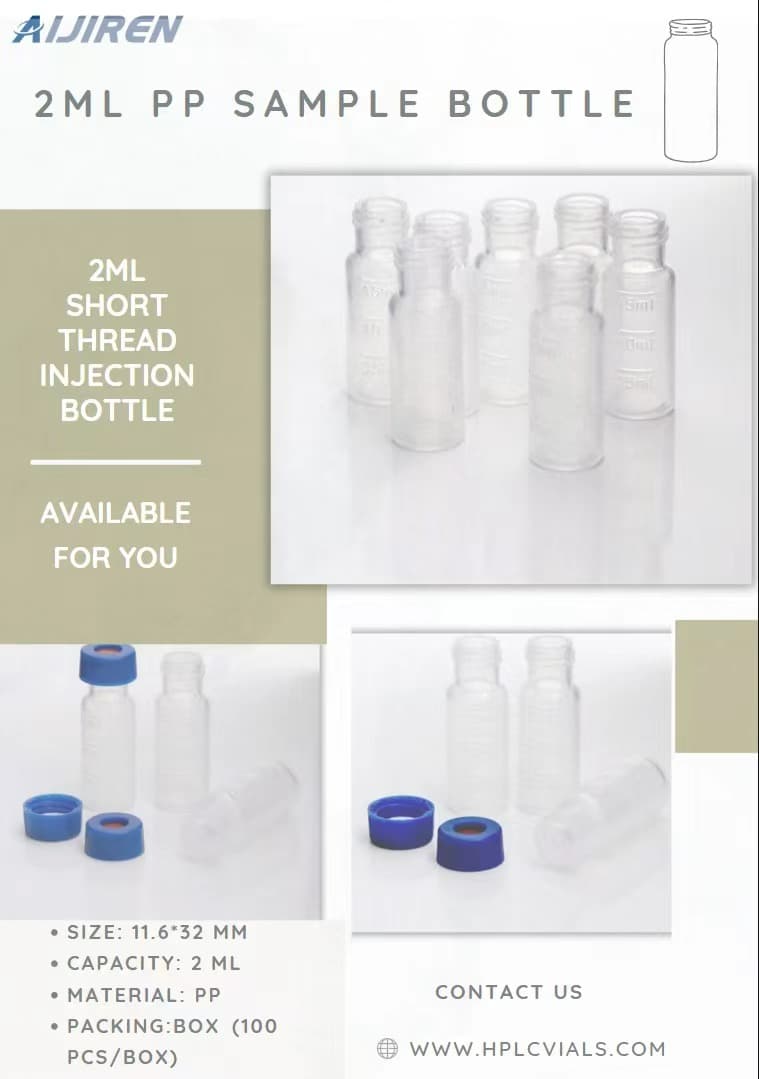
I have spent more hours than I care to admit sitting at a bench with two catalogues open, one from a primary instrument vendor and one from a distributor, trying to prove that part number A-1234 and part number B-5678 are the same molded 9 mm screw-thread vial. Sometimes they are. Sometimes they are not, and the difference shows up six weeks later as a retention time drift on a batch of samples that nobody can repeat. This article is about how to cross-reference aijiren part numbers across vendor catalogues without quietly losing a spec along the way. It is not about which brand to buy. It is about what to write down before you buy, and what to check when you do.
The core problem is that catalogues are not written to be cross-referenced. They are written to sell. A vendor that stocks aijiren product will typically list it under its own internal SKU, with a short description like "9 mm screw top vial, 2 mL, clear glass, with cap and septum." That description omits at least four things that matter: the glass type (Type I borosilicate versus Type 33 expansion), the neck finish (the actual thread geometry), the septum material and durometer, and the dimensional tolerance class on the vial OD and height. Two catalogues can describe the same product in the same words and still be describing two different parts.
I have seen this bite procurement teams in a specific way. A lab standardises on one aijiren part number. A purchasing system migrates to a new distributor. The new distributor's catalogue lists a "compatible" product with a different SKU. The lab manager approves the substitution because the description matches. Six months later, the autosampler starts throwing gripper errors on roughly 1 in 400 vials, and nobody connects it to the change because the vials look identical on the bench. The spec that got lost was the neck OD tolerance, and it was lost because nobody wrote it down in the first place.
The fix is not clever software. The fix is a cross-reference record that carries the spec, not just the part number. I will walk through what that record has to contain, how to build it, and where the common failure modes hide.
What a cross-reference record actually has to carry
A part number is a pointer. On its own it tells you nothing about whether two products are interchangeable. What you need is a record that captures the physical and chemical parameters that determine interchangeability, and then a process for verifying that the new part number still meets them. Here is the minimum set I would insist on for any aijiren vial cross-reference.
Dimensional parameters
- Nominal volume (typically 1.5 mL or 2.0 mL for standard 12 x 32 mm screw-thread vials)
- Body OD (usually 12.0 mm for the 9 mm screw-thread family, 11.6 mm for the 8-425 family)
- Height (typically 32 mm for the 12 x 32 format, 32 mm for 8-425 as well, but check)
- Neck finish (9 mm screw thread, 8-425, 10-425, 13-425, 18 mm, 20 mm crimp, 11 mm snap)
- Neck OD and ID, with tolerance class (this is where substitution failures usually originate)
- Bottom geometry (flat, rounded, conical insert, pulled point)
- Insert compatibility (does a 150 µL or 250 µL glass insert sit flush without a spring?)
Material parameters
- Glass type (Type I borosilicate 33 expansion, Type I borosilicate 51 expansion, Type 33 soda-lime for lower-cost grades)
- Glass colour (clear, amber for light-sensitive analytes at 320 to 400 nm cut-off)
- Septa material (silicone, silicone/PTFE, silicone/PTFE with slit, butyl, natural rubber, EPDM)
- Septa durometer (typically 45 to 55 Shore A for standard silicone, harder grades for high-pressure applications)
- Septa thickness (usually 1.0 mm or 1.3 mm for 9 mm screw caps)
- Cap material (polypropylene, phenolic, aluminium)
Performance parameters
- Temperature rating for the closure (silicone/PTFE typically rated to 200 °C for short excursions, polypropylene caps to about 135 °C)
- Puncture count before reseal failure (a good silicone/PTFE septum will hold 3 to 5 punctures at 22 gauge before leakage becomes measurable)
- Pressure rating (for UHPLC applications at 600 to 1000 bar, standard septa are not adequate; you need the higher-durometer grades)
- Extractable profile (silicone can shed low-molecular-weight siloxanes; relevant for GC-MS at SIM mode)
- Certification (USP <661> and <381> compliance, EPA method suitability for SW-846 applications)
If your cross-reference record does not carry all of these, it is not a cross-reference. It is a guess with a SKU attached. The aijiren brand page at aijirenvials.com carries the base spec sheet for each family, and that is where I would start building the record.
Reading a vendor catalogue without trusting the description
Distributor catalogues are a translation layer, and translation loses information. The way to defend against that is to treat the catalogue description as a search hint, not as a spec. What you want is the underlying manufacturer document, or a spec sheet the distributor has reproduced faithfully. Agilent's consumables catalogue, for example, is generally reliable on dimensions and glass type because Agilent manufactures most of what it sells, but when a third-party product appears in the catalogue, the description may be thinner. The same is true of Thermo Fisher's chromatography consumables line: strong on their own products, lighter on cross-listed items.
My working rule is simple. If the catalogue entry does not state glass type, neck finish, and septum material in the product description, I do not accept it as a cross-reference source. I go to the manufacturer's document. If the manufacturer's document is not available, I do not substitute. I order a sample and measure it.
The three questions to ask before any substitution
- Is the neck finish identical, not just nominally the same? A 9 mm screw thread from one mould and a 9 mm screw thread from another can differ in thread pitch and start position. If a cap from vendor A does not torque down cleanly on a vial from vendor B, you have a neck finish mismatch even if both say "9 mm".
- Is the glass type the same? Type I borosilicate and Type 33 soda-lime have different thermal expansion coefficients and different extractable profiles. For trace analysis at ppb levels, this matters. For buffer preparation, it rarely does.
- Is the septum the same durometer and thickness? A 1.0 mm silicone/PTFE septum and a 1.3 mm silicone/PTFE septum will both seal, but the thinner one will fail at a different puncture count and a different injection pressure. If your method involves multiple injections per vial, this is the difference between a valid run and a reseal failure.
Building the cross-reference record: a worked example
Suppose your lab standardises on an aijiren 9 mm screw-thread vial, 2 mL, clear Type I borosilicate, 12 x 32 mm, with a polypropylene screw cap and a 1.0 mm silicone/PTFE septum. You are migrating to a distributor that lists a "compatible" product under its own SKU. Here is how I would build the record.
Step 1: capture the source spec
Write down every parameter from the list above for the source part. If the source spec is incomplete, get it from the manufacturer or measure it. Do not skip this step because it feels tedious. The tediousness is the point.
Step 2: capture the target spec
Do the same for the target part. If the target catalogue does not publish the spec, request it from the distributor. A distributor that cannot supply a spec sheet for a stocked product is telling you something about how it manages its supply chain.
Step 3: compare parameter by parameter
Here is the comparison table I use. The numbers are for a typical 9 mm screw-thread family; adjust to your actual part.
| Parameter | Source spec | Target spec | Acceptable? |
|---|---|---|---|
| Nominal volume | 2.0 mL | 2.0 mL | Yes |
| Body OD | 12.0 mm ± 0.2 | 12.0 mm ± 0.3 | Check autosampler gripper tolerance |
| Height | 32.0 mm ± 0.3 | 32.0 mm ± 0.5 | Check needle depth calibration |
| Neck finish | 9 mm screw, GPI 9-425 | 9 mm screw, unspecified | No, request GPI spec |
| Glass type | Type I borosilicate, 33 expansion | Type I borosilicate, unspecified expansion | Request expansion coefficient |
| Septa material | Silicone/PTFE, 1.0 mm | Silicone/PTFE, 1.3 mm | Check puncture count and needle depth |
| Septa durometer | 50 Shore A | Not stated | Request durometer |
| Cap material | Polypropylene | Polypropylene | Yes |
| Temperature rating | 200 °C (closure) | Not stated | Request rating |
| Certification | USP <661>, <381> | Not stated | Request certificate |
Notice how many cells say "request". That is the reality of cross-referencing. The table is not a rubber stamp; it is a to-do list. Every "request" is a question you put to the distributor before you approve the substitution. If the distributor cannot answer, the substitution does not happen.
Step 4: physical verification
Even with a complete spec match, I verify physically before committing a production run. The verification protocol I use is short and specific.
- Dimensional check: measure OD and height on 20 vials from the sample lot with a calibrated micrometer. Compare to the source spec tolerance. If the target lot has a wider spread, that is a warning sign for autosampler reliability.
- Cap torque check: torque a cap to 1.5 to 2.0 in-lb (the typical range for 9 mm screw caps) and check for thread stripping or incomplete engagement. If the cap does not seat fully, the neck finish is not equivalent.
- Seal integrity check: fill 10 vials with a volatile solvent (methanol or acetonitrile), cap, and weigh. Store at room temperature for 24 hours, then reweigh. Mass loss above 0.5% indicates a septum seal problem.
- Puncture test: puncture the same septum 5 times with a 22-gauge needle at the same point, then check for leakage under light pressure. A good silicone/PTFE septum will hold; a cheap one will not.
- Autosampler trial: run 100 vials through the autosampler with the actual method. Count gripper errors, needle errors, and injection volume RSD. RSD above 0.5% on a 1 µL injection is a red flag.
This is roughly two hours of bench work. Compare that to the cost of a failed analytical run: a batch of 96 samples at 20 minutes each is 32 hours of instrument time, plus the cost of re-preparing the samples, plus the cost of the report that gets delayed. The two hours is cheap.
Where the cross-reference usually loses the spec
I have tracked down enough substitution failures to know where they cluster. These are the four failure modes I see most often.
Failure mode 1: the neck finish is "the same size" but not the same geometry
This is the single most common failure. Two vials both describe a 9 mm screw thread, but one is manufactured to the GPI 9-425 standard and the other is a proprietary variant that happens to accept a 9 mm cap. The cap threads on, but the engagement depth is different, and the seal is compromised at higher pressures. If your method runs at 400 bar or above, this matters. Ask for the GPI spec in writing.
Failure mode 2: the septum thickness changes and the needle depth does not
A 1.0 mm septum and a 1.3 mm septum differ by 0.3 mm. If your autosampler needle depth is calibrated to the thinner septum, the thicker one may cause the needle to sit slightly higher in the vial, which changes the sampling position relative to the liquid surface. For a 1.5 mL fill in a 2 mL vial, that 0.3 mm can be the difference between sampling clean liquid and sampling the meniscus. It is a small error that produces a large RSD.
Failure mode 3: the glass type changes and the extractable profile shifts
Type I borosilicate and Type 33 soda-lime both look like clear glass. They are not the same. Soda-lime glass leaches sodium and calcium ions into aqueous samples over time, and it has a higher alkaline extractable profile. For trace metals analysis by ICP-MS, this is a real problem. For a pH 7 buffer, it is not. The cross-reference record has to specify the glass type because the catalogue description usually does not.
Failure mode 4: the certification disappears
The source product carries a USP <661> certificate and a USP <381> conformity statement. The target product does not. If your lab operates under a quality system that requires these certificates for incoming consumables, the substitution fails the audit even if the physical part is identical. This is a paperwork failure, not a physical one, but it stops the line just the same.
For septum-specific failure modes, the team at septacaps.com has a good write-up on reseal behaviour that is worth reading before you approve any septum substitution. The vialsepta.com reference on durometer and puncture count is also useful when you are building the performance parameters section of your record.
A decision checklist for procurement
Here is the checklist I hand to procurement teams when they are setting up a cross-reference process. It is deliberately short. A checklist that takes an hour to work through does not get used.
- Does the target catalogue entry state glass type, neck finish, and septum material? If no, request the spec sheet before proceeding. Do not accept a verbal confirmation.
- Is the neck finish specified to a published standard (GPI 9-425, GPI 8-425, GPI 13-425)? If no, request the drawing.
- Is the septum thickness and durometer stated? If no, request both. A 0.3 mm thickness difference is enough to change puncture behaviour.
- Is the temperature rating stated for the closure, not just the vial? Polypropylene caps and silicone septa have different ratings. The lower number governs.
- Is the certification package available (USP <661>, <381>, EPA method suitability)? If no, and your quality system requires it, stop here.
- Have you run the physical verification protocol on a sample lot? If no, do not approve the substitution for production.
- Have you recorded the cross-reference in a document that survives staff turnover? If the record lives in one person's email, it does not exist.
The last item is the one that gets skipped. A cross-reference that lives in a spreadsheet on a departed lab manager's laptop is not a cross-reference. Put it in the quality system, or in a shared document with a version number, or in whatever system your lab uses for controlled documents. The point is that the next person who has to make the same decision should not have to redo the work.
Working with the manufacturer's documentation
The best defence against spec loss is a manufacturer that publishes complete specs in the first place. When I evaluate a supplier, I look for three things: a published dimensional drawing with tolerance classes, a published material specification for every component (glass, cap, septum), and a certification package that can be downloaded rather than requested. If a supplier cannot provide these, the cross-reference work gets harder and the substitution risk goes up.
For the aijiren brand, the base documentation is available through aijirenvials.com, and the VOA vial line documentation covers the volatile organic analysis family specifically. I would also point anyone building a cross-reference process toward the Restek technical resources library, which has some of the clearest published guidance on septum selection and vial compatibility in the industry. It is a competitor's material, but good technical writing is good technical writing, and I use it.
For labs operating under EPA methods, the SW-846 test methods documentation is the authoritative reference for what the method actually requires of the consumable. If your cross-reference is for a method-specific application, read the method before you read the catalogue. The method tells you what the vial has to do. The catalogue tells you what the vendor wants to sell you. Those are not the same document.
Troubleshooting: when the cross-reference looks right but the run fails
You did the work. The spec matched. The physical verification passed. And then the run fails anyway. Here is the checklist I work through, in order.
Check the autosampler first
Gripper errors, needle errors, and injection volume RSD spikes are usually mechanical. Measure the OD and height on the failing vials. If the spread is wider than the source lot, you have a tolerance problem even if the nominal spec matched. A 0.2 mm difference in OD is enough to cause gripper errors on some autosamplers.
Check the septum second
If the failure is a seal loss or a pressure error, the septum is the suspect. Check the puncture count on the failing vials. If they have been punctured more than 4 times, the septum may be at end of life. Check the durometer if you can. A softer septum will seal better initially but fail sooner under repeated puncture.
Check the glass third
If the failure is a contamination or an extractable issue, the glass type is the suspect. Run a blank on the new lot and compare to a blank on the old lot. If the new lot shows elevated sodium, calcium, or siloxane background, the glass type or the septum material has changed.
Check the paperwork last
If the failure is an audit finding rather than an analytical one, the certification package is the suspect. Confirm that the target product carries the same certificates as the source. If it does not, the substitution has to be re-approved or reversed.
This order matters because the mechanical failures are the most common and the easiest to check. Start there. Do not start with the paperwork unless the failure is a paperwork failure.
Takeaway
Cross-referencing aijiren part numbers across vendor catalogues is a documentation problem before it is a purchasing problem. The part number is a pointer; the spec is the thing that determines whether the substitution works. Build a record that carries the dimensional, material, and performance parameters, verify it physically on a sample lot, and put the record somewhere it survives staff turnover. The two hours of bench work and the one page of documentation are the cheapest insurance you will buy this year against a failed analytical run. If a distributor cannot supply the spec, that is your answer: do not substitute. Order the part you know, and keep the record current.
References & further reading
External references and standards: